
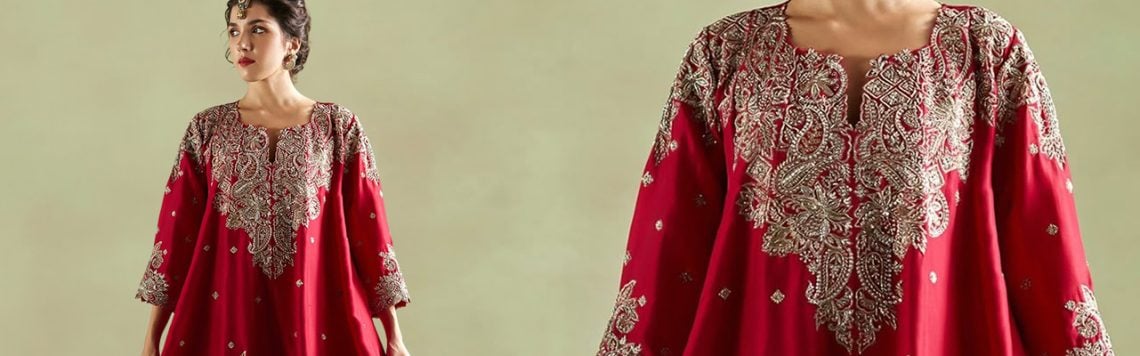
How to Steam and Store Embroidered Outfits at Home
Somewhere in your house, there is an iron. And somewhere in your house, there is an embroidered outfit that would like you to know, calmly but firmly, that the iron is not invited to this relationship.
Mostly because zari, sequins, beads and delicate embroidery don’t exactly appreciate direct heat and pressure.
Embroidered ethnic wear deserves a little more care than everyday clothing. The good news? Keeping it beautiful doesn’t require a complicated routine. It just requires knowing what to avoid, what to use instead and how to store it properly.
Put the Iron Down
You already know, deep down, that pressing a hot iron directly onto zari work is a decision you’ll regret within roughly four seconds of doing it. And yet, every festival season, someone does it anyway because the outfit is wrinkled, the event is in twenty minutes, and the iron is right there looking so confident and available.
Resist the temptation.
Direct heat and pressure can flatten embellishments, affect delicate embroidery and potentially damage certain decorative finishes. Before reaching for any heat source, check the garment’s care instructions and pay attention to the fabric and embellishments involved. Your festive outfit has survived this long. It doesn’t need to meet an iron under pressure.
What a Steamer Actually Understands That an Iron Doesn’t
A steamer gives delicate embroidery a little more breathing room than a hot iron pressed directly against the fabric. Used from the appropriate distance and according to the garment’s care instructions, it can help relax wrinkles without putting direct pressure on zari, sequins or mirror work.
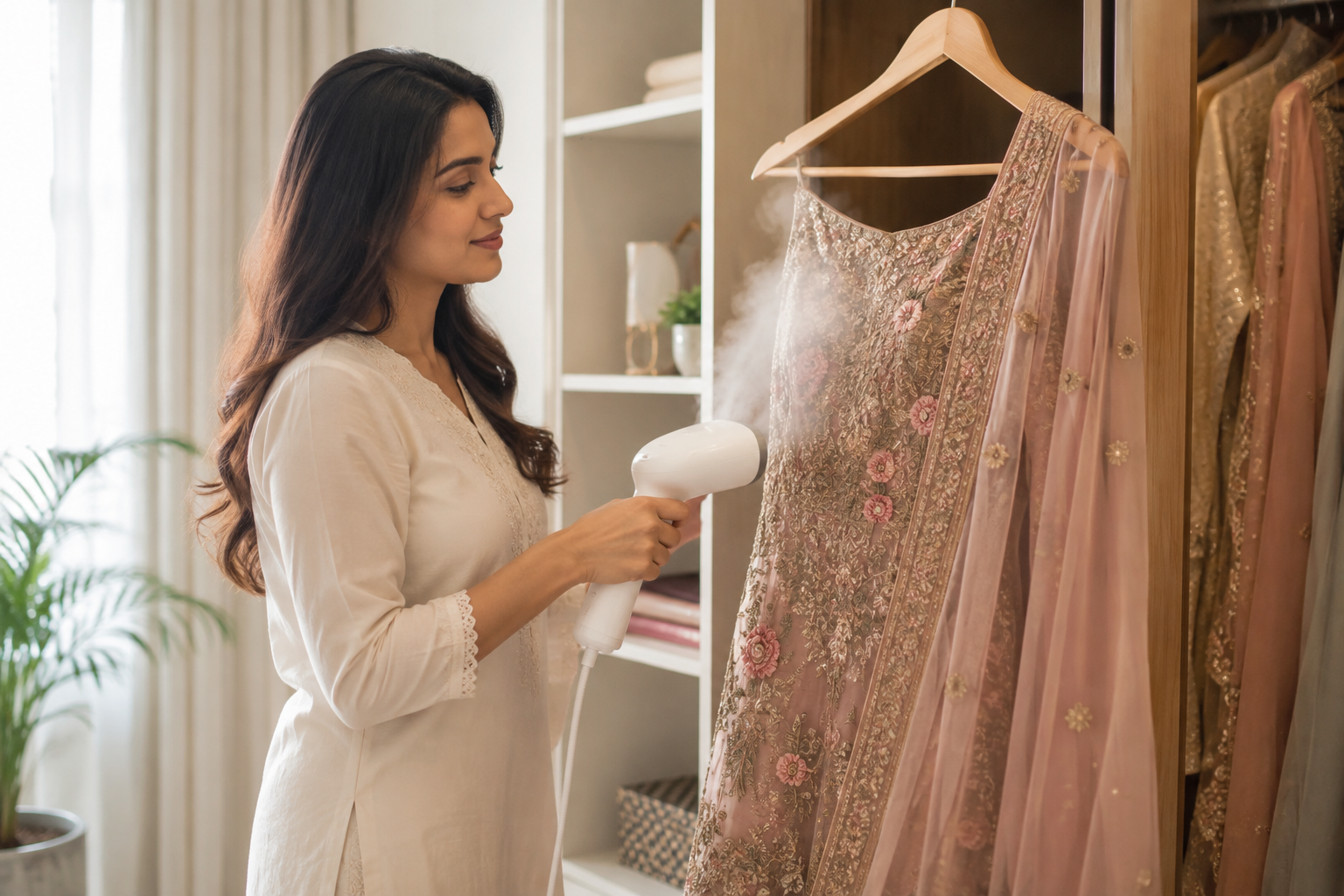
Keep the steamer moving instead of lingering over one spot for too long. If possible, work from the inside or from less visible areas, especially when dealing with heavily embellished sections. Think of steaming as giving the fabric room to relax, not forcing every wrinkle into submission.
It simply exists at a respectful distance and lets the fabric relax on its own terms, which is honestly a healthier relationship model than most of us have with our own wrinkled clothes.
The Hanger Situation
Somewhere in every closet is a wire hanger, warped into a shape that has nothing to do with shoulders, currently supporting an heirloom-worthy, embroidered kurta like it’s doing the outfit a favour. It is not doing the outfit a favour.
A padded hanger can provide better support for structured garments that are designed to be hung. Avoid thin wire hangers, which can create pressure points and distort the shape of the garment over time.
At the same time, very heavy or delicate embroidered pieces may be better stored flat or folded carefully, depending on their fabric and construction. And avoid overcrowding your wardrobe. Embellishments rubbing against neighbouring garments are exactly the kind of tiny problem that becomes a bigger one later.
Give your favourite outfit some personal space. It has earned it.
Know When to Fold and When to Hang
Heavy embroidered pieces can often benefit from padded hangers when their fabric and construction are suitable for hanging. But delicate or heavily embellished pieces may be better folded carefully so the weight of the embroidery doesn’t pull on the fabric over time.
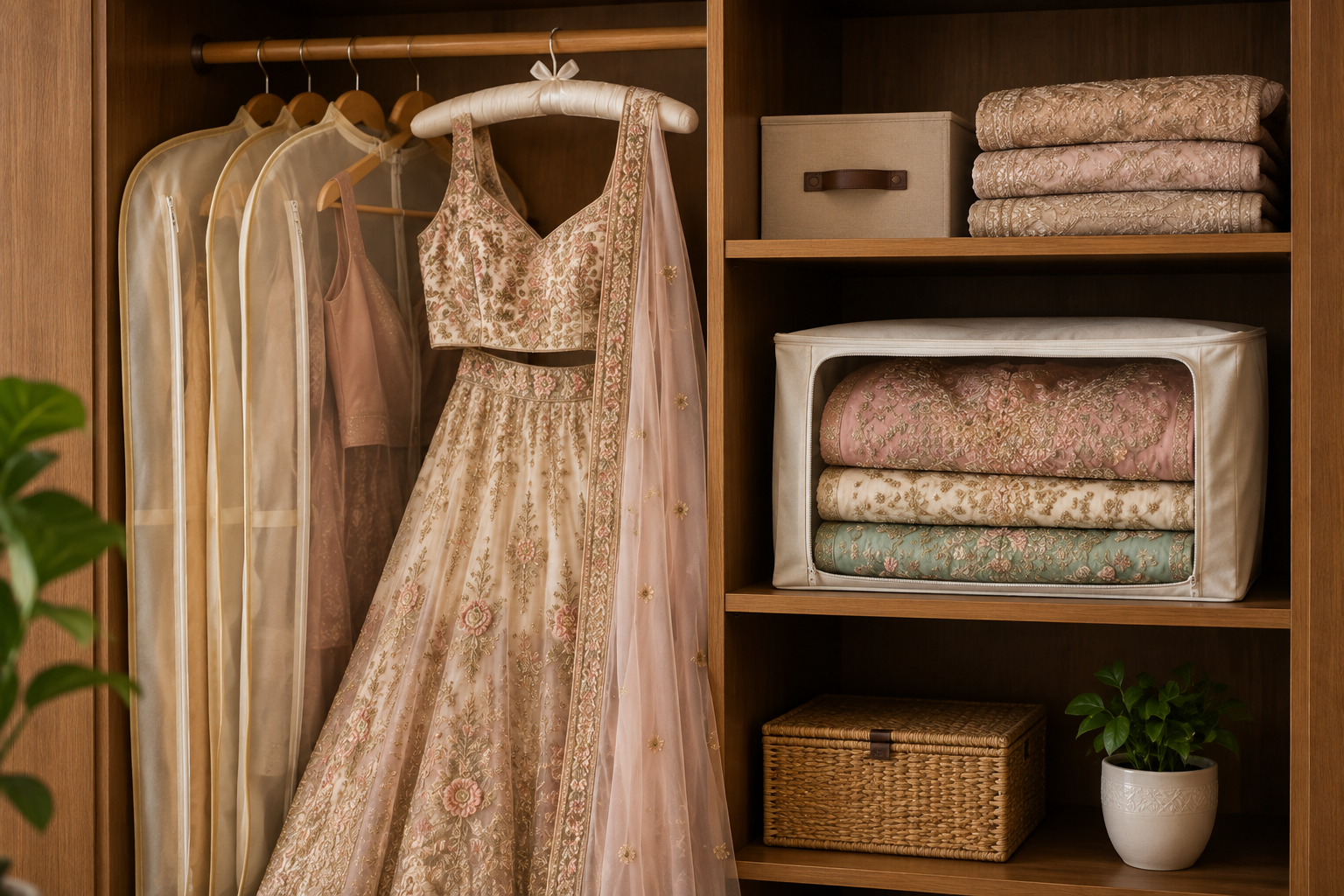
When folding, place a clean, soft protective layer between embellished sections where possible and avoid creating sharp folds directly across heavily decorated areas.
Your outfit has opinions about how it wants to be stored. It’s worth listening to.
The Plastic Bag Betrayal
That thin plastic cover your outfit came home in may be useful for short-term protection, but it isn’t an ideal long-term storage solution.
Plastic can restrict airflow and trap moisture, creating an environment where fabric problems can quietly begin. A breathable garment bag or clean fabric cover is a better choice for longer-term storage.
And before you put anything away, make sure the outfit is completely dry and clean. Storing moisture or unnoticed stains can turn a simple storage decision into a much bigger problem later.
The Sunlight Problem Nobody Warns You About
Bright, direct sunlight has a sneaky way of fading colours and weakening fabric while looking completely harmless. Your wardrobe doesn’t need to live in darkness. It just doesn’t need to sit directly in front of a sunny window either.
Store embroidered outfits somewhere cool, dry and away from direct sunlight. This is especially important for brightly dyed fabrics, where prolonged exposure can gradually affect the colour.
Your wardrobe doesn’t need to live in darkness. It just doesn’t need to sit directly in front of a sunny window either.
The Five-Minute Care Check
Before putting an embroidered outfit away, give it a quick five-minute inspection.
Check: stains, loose embellishments and areas that may need attention.
Dry: make sure the garment is completely moisture-free.
Steam: only if the care instructions allow it.
Store: fold or hang it appropriately, protect embellished areas and keep it away from direct light and moisture.
Five minutes now can save you from discovering a problem five minutes before your next festival. And that is a much nicer relationship with your wardrobe.
The Payoff
An outfit stored properly can continue looking beautiful season after season. An outfit that’s been exposed to unnecessary heat, pressure, moisture and sunlight may eventually show the effects.
You get to decide which story yours tells.
At Cbazaar, our embroidered ethnic wear is made to be noticed from intricate embroidery and zari details to sequins, embellishments and statement finishes. Giving those details the right care at home helps your favourite pieces stay beautiful season after season. And when the next celebration comes around, your festive wardrobe will be ready to step out looking just as special as it did the first time.
Explore Cbazaar’s collection. Care for the details. Keep the celebration going.


You May Also Like
How to Maintain Your Sarees and Lehengas: Fabric Care Guide for Long-Lasting Elegance

From 2010 to Today: How Cbazaar’s 99% Eid Promise Built Customer Trust
