
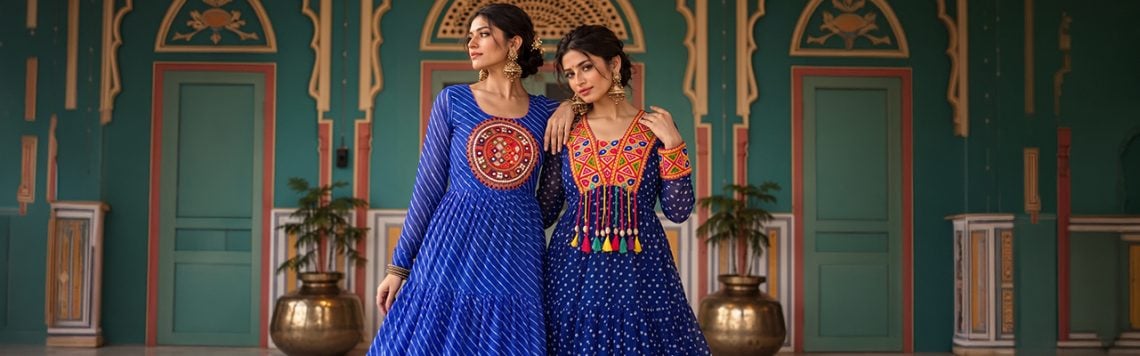
Royal Blue for Day 4: Kushmanda and How to Style Navratri’s Boldest Shade
By Day Four, Navratri has stopped introducing itself.
The lamps are already burning. The music no longer feels like a warm-up. The wardrobe has survived orange, white and red, and somewhere between the first spin and the third round of Garba, the festival has found its rhythm.
Then comes royal blue.
Sharad Navratri 2026’s fourth day falls on Wednesday, October 14, devoted to Maa Kushmanda, the fourth form of Durga. She is traditionally associated with the cosmic energy of creation, the goddess whose radiant presence is said to have brought light to the universe. If Day One was about beginning, Day Two about restraint and Day Three about power, Kushmanda brings something different to the story: abundance, radiance and the confidence of knowing exactly how much energy you carry.
Royal blue happens to understand that feeling rather well.
Royal Blue Has Never Been a Background Colour
There are colours that quietly support an outfit, and then there are colours that arrive before you do.
Royal blue belongs firmly to the second category.
It has the depth of midnight but none of midnight’s hesitation. It can look regal in silk, playful in a flared chaniya choli, almost jewel-like under Garba lights and surprisingly contemporary when paired with clean tailoring. It does not need heavy embellishment to look festive, which is precisely what makes it interesting.
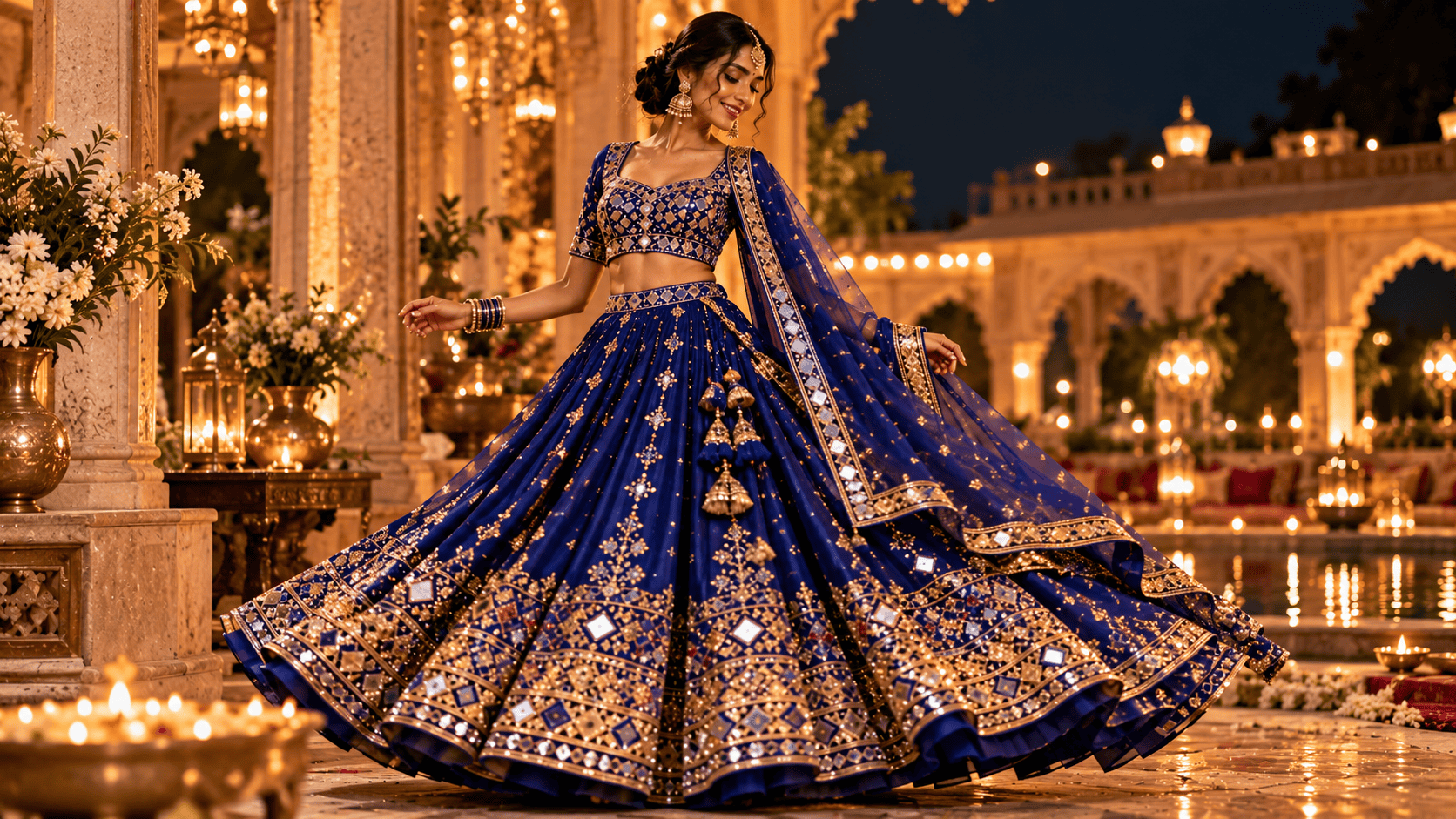
A royal blue chaniya choli with tonal embroidery can feel rich and composed. Add antique gold mirror work and suddenly the same colour becomes more traditional. Pair it with silver details and the look shifts again, becoming cooler, sharper and slightly unexpected.
That is the secret of royal blue. It doesn’t have one personality. It changes depending on what you put beside it.
Kushmanda and the Beauty of Radiance
Kushmanda is often associated with the energy of creation and the warmth of cosmic light. That makes Day Four an interesting point in the Navratri wardrobe because the idea of radiance does not necessarily have to mean sparkle.
Sometimes radiance is simply presence.
A beautifully cut royal blue skirt moving across the Garba floor can have more impact than an outfit covered entirely in sequins. A rich blue Anarkali catching the light as you walk into a family gathering can feel just as festive without relying on excessive embellishment.
The lesson is surprisingly useful for fashion: you don’t always have to add more to make something feel richer. Sometimes the colour is already doing enough.
The Royal Blue Chaniya Choli, Without the Costume Feeling
Royal blue and the chaniya choli make an obvious pairing, but obvious does not have to mean predictable.
For Garba, look for movement first. A generous flare gives the skirt energy, while mirror work, thread embroidery or a traditional border can add flashes of detail as the fabric turns. The effect is particularly beautiful when the blue remains the dominant element rather than becoming buried underneath layers of embellishment.
The blouse is where you can decide how traditional the look becomes.
A fitted blouse with structured sleeves can make the outfit feel polished and contemporary. A heavily embroidered choli can push it toward a more traditional festive mood. A contrasting blouse in gold, ivory or even a deeper shade of blue can create another layer of interest without breaking the richness of the palette.
Royal blue does not need to be dressed up in only one direction.
That is exactly why it works.
Gold or Silver, The Great Royal Blue Debate
Royal blue has an unusual talent for making jewellery choices look intentional.
Gold brings warmth to it. The combination immediately feels festive, almost regal, particularly when the outfit includes mirror work, zari or traditional embroidery. A pair of gold jhumkas, a delicate maang tikka or a temple-inspired necklace can turn royal blue into something wonderfully ceremonial.
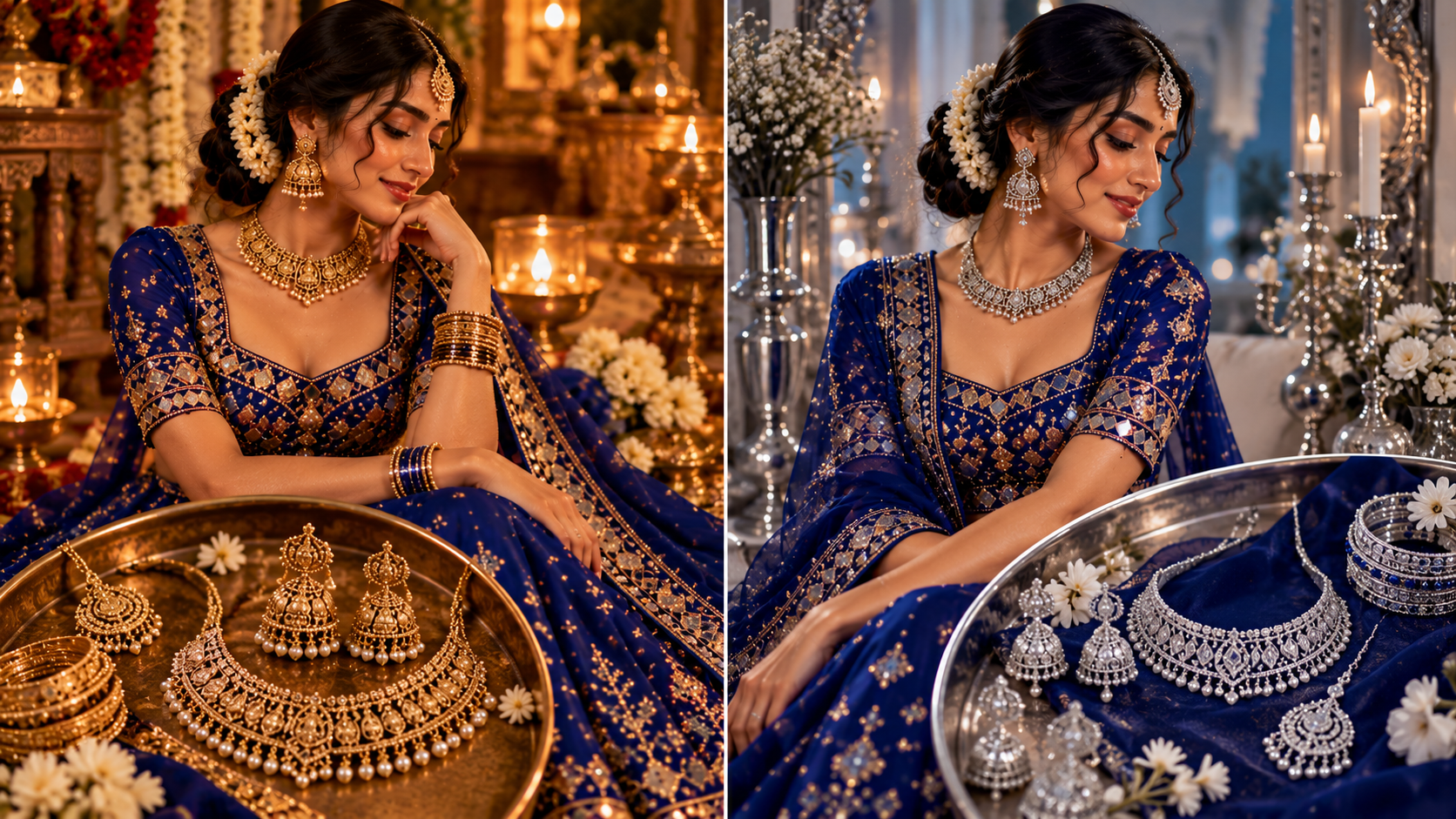
Silver takes the same colour somewhere else entirely.
The cooler finish creates contrast and makes royal blue feel cleaner and more contemporary. This is where a pair of 925 sterling silver earrings, a geometric design or even a solitaire detail can become unexpectedly effective against the depth of the fabric.
Neither needs to overpower the other.
The more interesting choice is often deciding what kind of royal blue you want to create.
The Dupatta Can Change the Entire Mood
Sometimes the most overlooked piece in a festive outfit is the one capable of changing the whole thing.
A royal blue chaniya choli with a matching dupatta feels rich and seamless. Introduce a contrasting dupatta in pink, ivory or gold and suddenly the outfit has more movement and visual contrast. Choose one with a traditional border and the look leans toward heritage. Choose something lighter and cleaner and it starts feeling much more contemporary.
The dupatta does not need to compete with the skirt.
It can simply introduce the one unexpected detail that makes the outfit feel considered.
And on a night when the colour itself is already making an entrance, that restraint can be surprisingly effective.
Royal Blue After the Garba Music Stops
Not every Day Four celebration ends on a dance floor.
Royal blue becomes particularly interesting when it leaves the chaniya choli behind.
A flowing Anarkali in the shade can look elegant for a family dinner or evening puja, especially when the embroidery is concentrated around the neckline and hem. A royal blue saree with a contrasting blouse can take the colour in an entirely different direction, allowing the drape and fabric to become the focus.
Even a simpler royal blue kurta set can carry the spirit of the day when the colour is allowed to remain the strongest element.
This is where royal blue proves that it is not simply a Garba colour. It is a festive wardrobe colour with range.
The Royal Blue Rule: Don’t Overdecorate It
There is a temptation with a colour this rich to assume it needs equally rich treatment everywhere else.
It doesn’t. If the skirt has intricate mirror work, allow the blouse to breathe. If the blouse is heavily embroidered, let the jewellery become more selective. If the dupatta already has a dramatic border, there is no need to add another layer of visual noise elsewhere.
Royal blue is powerful precisely because it has depth.
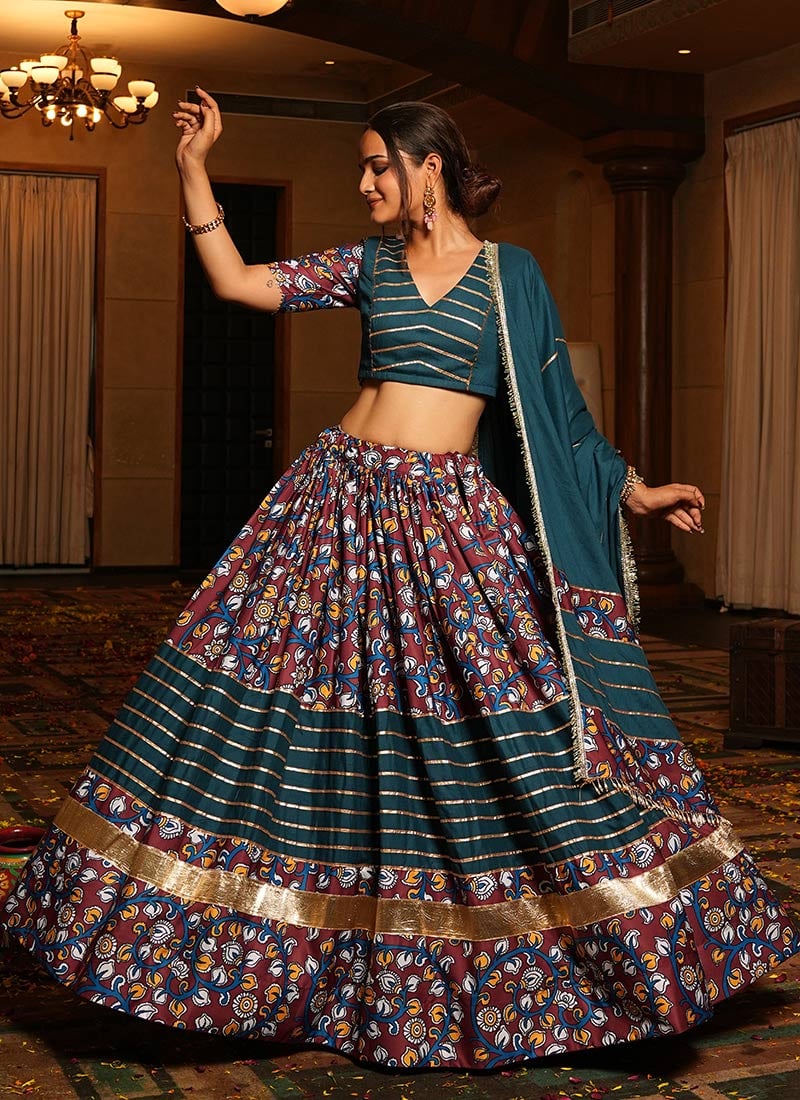
You don’t need to keep explaining the colour once you’ve put it on. Let it exist.
What Day Four Adds to the Story
Orange began the festival with optimism. White introduced restraint. Red turned the volume up.
Royal blue does something more interesting.
It doesn’t need to compete with what came before it.
It simply arrives with enough confidence to hold its own.
That makes Day Four feel like a turning point in the wardrobe. The festival is no longer about introducing colours or proving that the celebration has begun. Now it is about understanding how much personality a single shade can carry when you give it the right silhouette, the right fabric and just enough detail.
At Cbazaar, the Navratri collection brings together festive chaniya cholis, Anarkalis and other silhouettes that let royal blue take centre stage, from richly detailed traditional styles to cleaner contemporary finishes. Made-to-measure tailoring and plus-size customisation options make it easier to find a silhouette that feels right for the way you want to celebrate, while Cbazaar’s jewellery collection gives you both traditional and contemporary ways to finish the look.
Day Four doesn’t need more colour. Royal blue already knows how to make an entrance.

You May Also Like
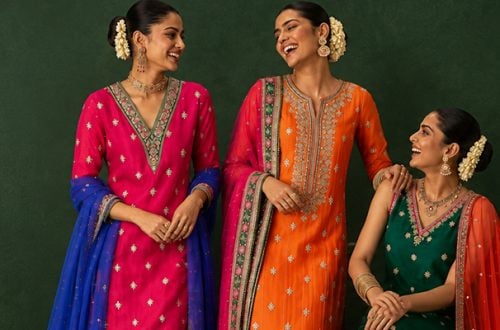
How to Style Bright Colors for Ganesh Chaturthi Without Going Overboard
Explore the Different Types of Indian Dresses
