White for Day 2: Brahmacharini and the Art of Wearing White to Garba
There’s a peculiar kind of nerve required to wear white to a dance floor. Every other night of Navratri gives you colour to hide behind a spilled drop of chai vanishes into red, a smudge of mehendi disappears into green. White offers no such mercy. It asks you to move through an entire evening of dandiya sticks and dinner plates with the quiet confidence of someone who simply does not intend to make a mess of things.
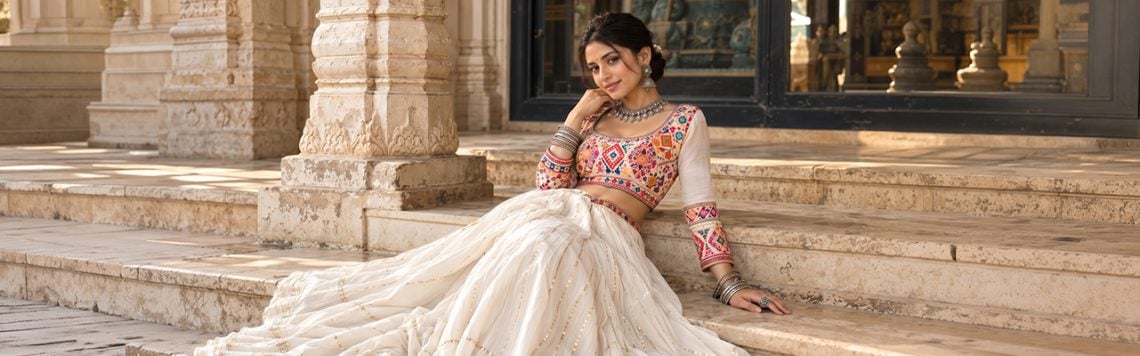
Sharad Navratri 2026’s second day falls on Monday, October 12, devoted to Maa Brahmacharini, the ascetic form of the goddess, traditionally associated with a long period of austere penance and unwavering devotion. If Shailputri has the courage to begin, Brahmacharini represents the perseverance to continue. White, traditionally associated with her day, brings that same sense of composure to the wardrobe but composure doesn’t have to mean boring.
In fact, white might be one of the most interesting colours to wear to Garba precisely because it gives you nowhere to hide. The colour stays quiet. The silhouette, the fabric, the blouse and the jewelry have to do the talking.
Brahmacharini, But Make It Fashion
The qualities associated with Brahmacharini devotion, perseverance and quiet strength offer an unexpectedly beautiful fashion direction.
Instead of reaching for the most heavily embroidered chaniya choli in your wardrobe, think about what happens when the outfit has more space to breathe. A white skirt with controlled mirror work. An ivory choli with a sharp jewel-toned blouse. A flowing dupatta that introduces just enough embroidery without turning the entire look into a catalogue of embellishment.
The result can still be festive, still photograph beautifully and still hold its own under Garba lights. It simply doesn’t need every possible detail to prove that it belongs at Navratri.
White, Which Is Never Actually Just White
White has far more range than it gets credit for.
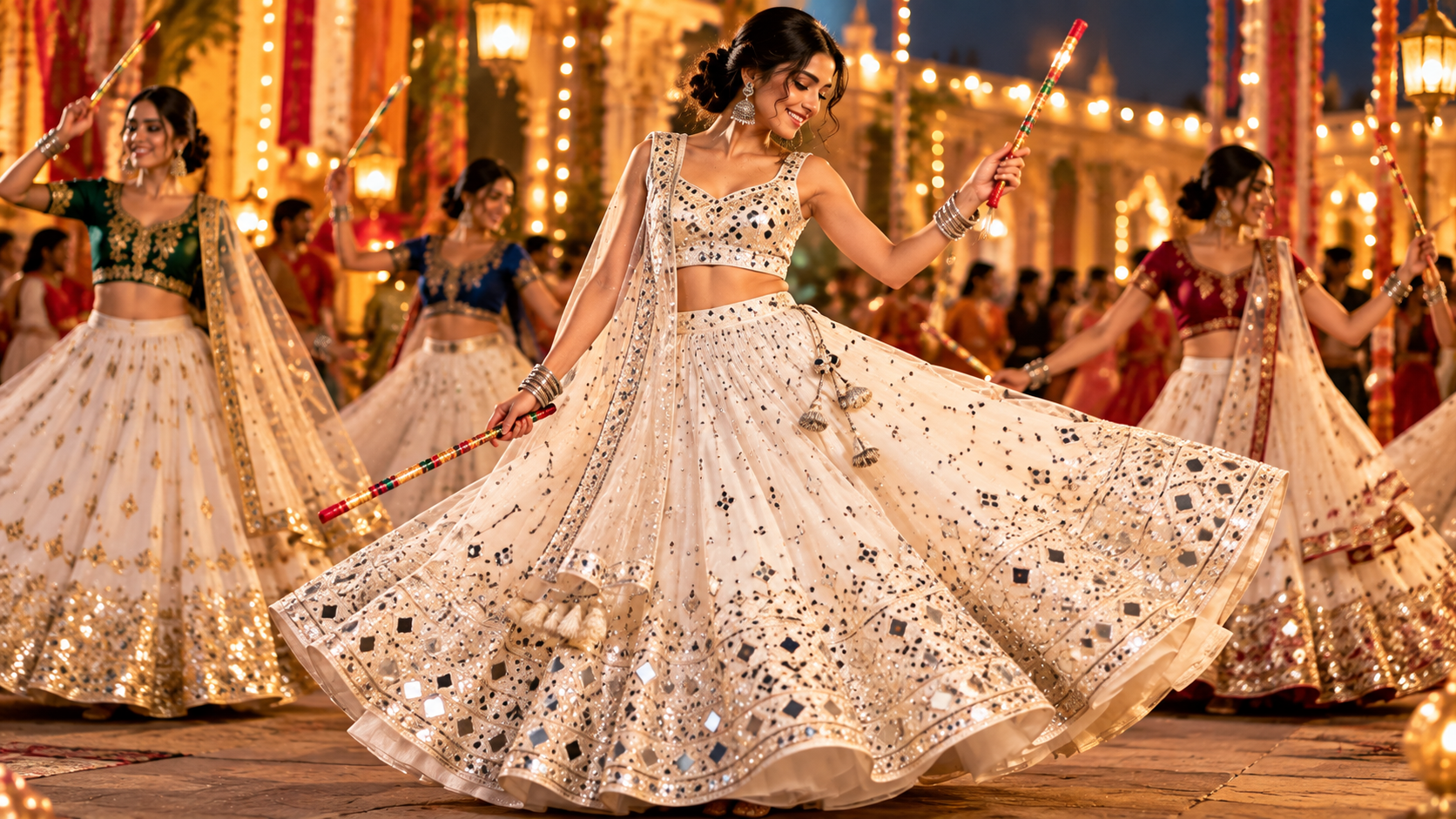
Pure white with silver mirror work feels crisp and luminous, especially once the Garba lights begin moving across the floor. Ivory with gold thread feels warmer and more traditional. Pearl white can look softer, while cream gives the outfit an almost vintage richness.
Even the fabric changes the personality.
A crisp cotton chaniya choli feels youthful and effortless. Georgette gives the skirt more movement. Silk immediately makes the same white palette feel more luxurious. Organza can bring a little structure to the dupatta or blouse while keeping the overall look light.
So don’t think of white as one colour. Think of it as an entire wardrobe conversation.
Let the Skirt Do the Dancing
A Garba outfit should look good standing still, but it should become better the moment you start moving.
A skirt with generous flair becomes part of the evening once the dancing begins. Mirror work or embroidery placed along the hem catches the light beautifully as the silhouette turns, while a lighter construction keeps the movement effortless through several rounds of dancing.
The fabric changes that movement too. Structured cotton or georgette can hold its shape beautifully, while a more fluid fabric creates a softer, more dramatic effect. The best choice is the one that allows the silhouette to move with the evening rather than making the outfit something you have to constantly manage.
There is nothing fashionable about spending three hours worrying about where you can sit without touching your skirt
The Blouse Is Where White Gets Its Personality
If the skirt is white, the blouse doesn’t have to be.
This is where emerald, royal blue, deep maroon or even gold can completely change the character of the outfit. A white skirt with an emerald blouse feels rich and dramatic. Royal blue makes it sharper. Maroon gives it warmth.
And the blouse doesn’t need heavy embroidery to make an impact.
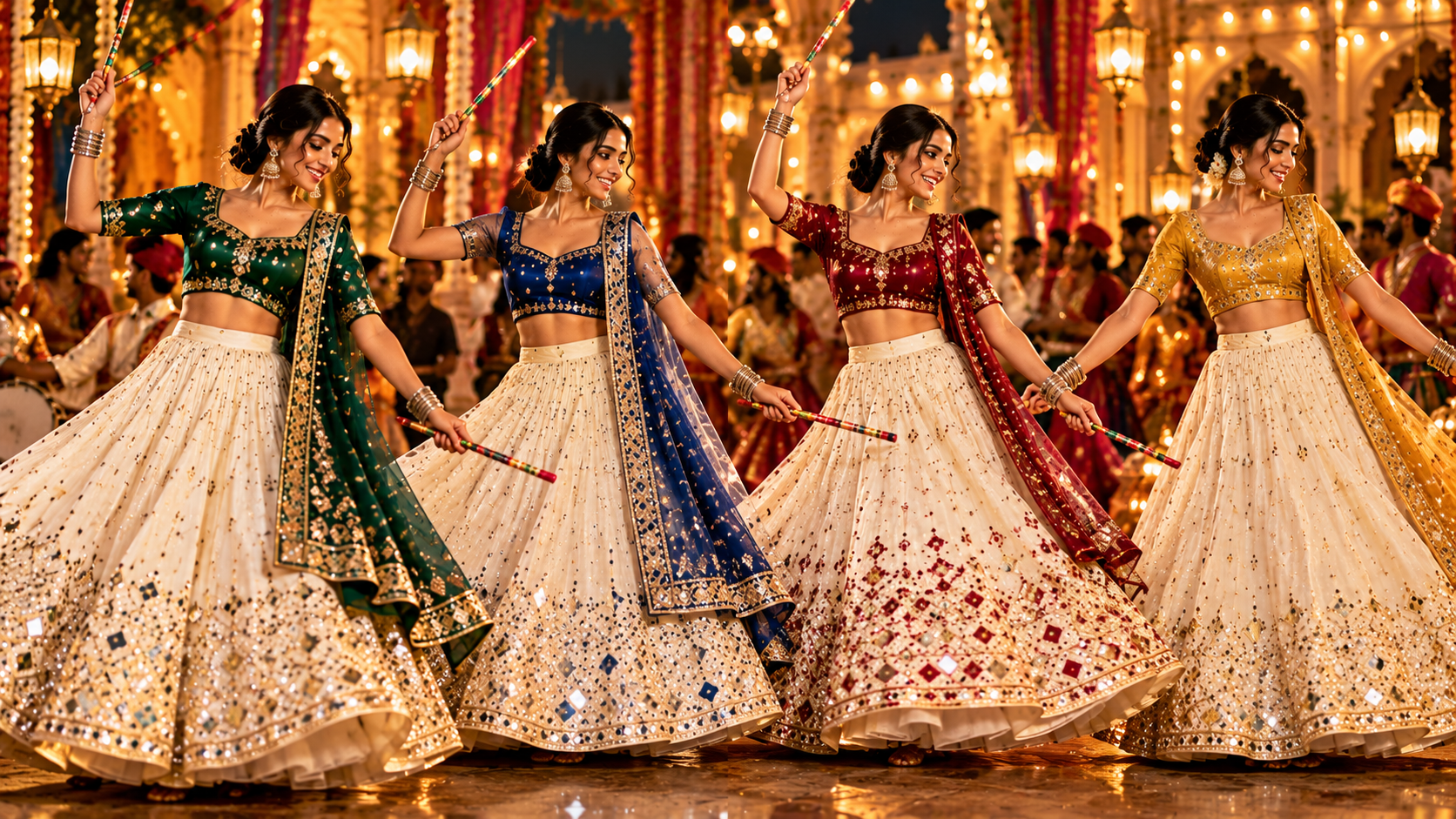
A sculpted neckline, interesting sleeves, a structured back or an unexpected cut can be enough. In fact, when the skirt already carries mirror work, a cleaner blouse can make the entire outfit feel more contemporary.
Think of the white skirt as the calm part of the conversation. Let the blouse have personality.
And Then There’s the Dupatta
The dupatta is where you can add another layer without making the outfit feel heavier.
A white or ivory dupatta with a delicate embroidered border keeps the look tonal and elegant. A contrasting dupatta can make the same chaniya choli feel much more dramatic. Even the way you drape it changes the mood pinned neatly for a more composed look or left freer for an evening built around dancing.
This is also where small details such as mirror work, tassels or a traditional border can connect the outfit back to the festive mood without covering every inch of fabric in embellishment.
Jewellery That Understands the Assignment
White gives jewellery an unusually good canvas.
Silver works particularly well because its cooler finish reinforces the clean quality of the colour. Oxidised silver can make a white chaniya choli feel more earthy and traditional, while polished silver creates a cleaner, more contemporary effect.
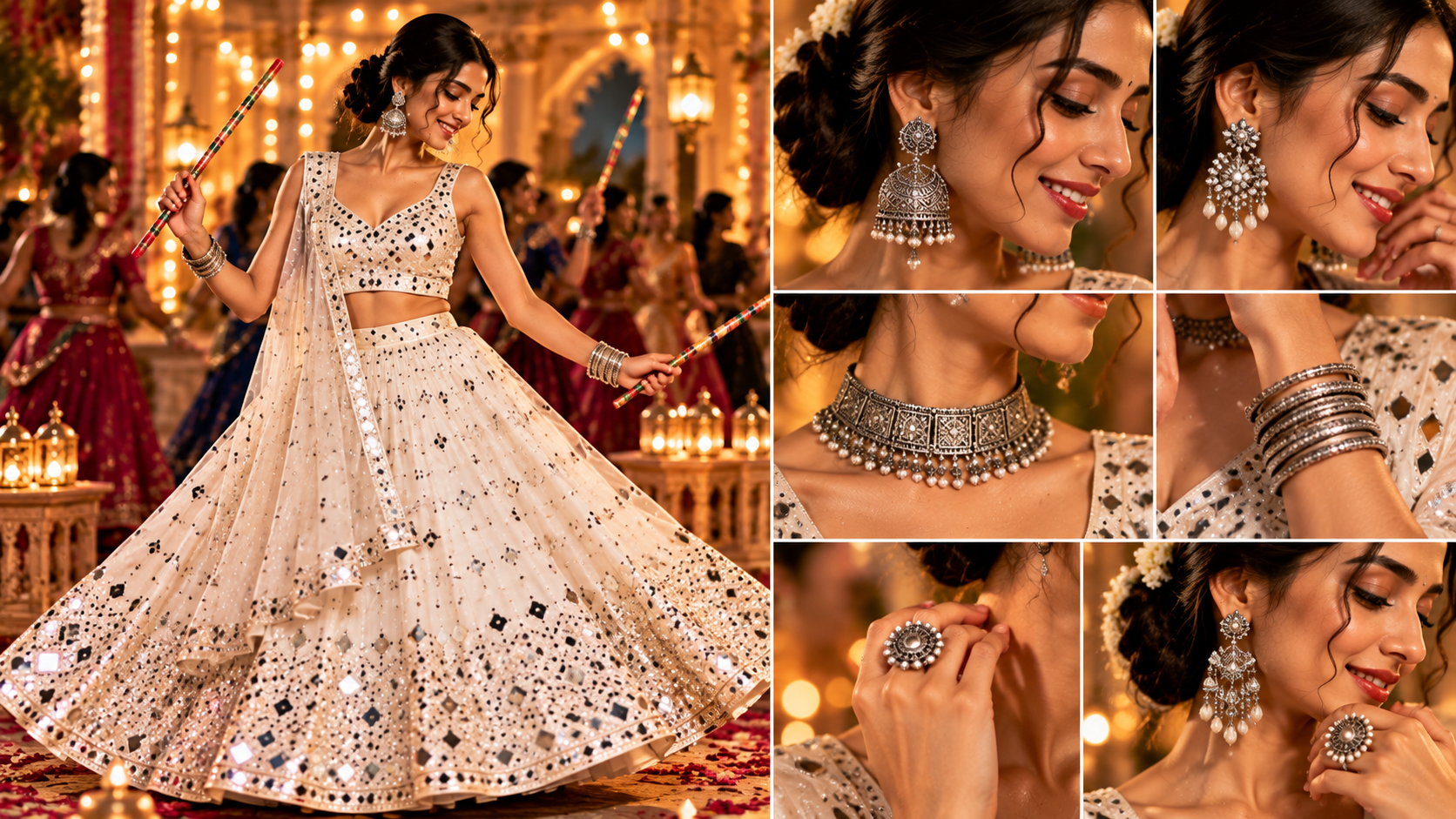
If your outfit already has substantial mirror work, a pair of distinctive earrings may be enough. If the clothing is simpler, this is where an ear climber, floral earring or statement ring can become the detail people remember.
And this is one of those nights where jewellery doesn’t need to match the outfit perfectly. Sometimes the contrast is what makes the styling feel intentional.
When White Isn’t the Garba Outfit
Not everyone is heading to a Garba ground on Day Two.
If your evening is a family gathering, puja or festive dinner, white can move into a completely different wardrobe. An ivory Anarkali with delicate embroidery can feel elegant without becoming formal, while a white or cream saree with a contrasting blouse gives you a quieter interpretation of the day’s palette.
The same principle still applies let the white create the base, then decide where you want the personality to come from.
It could be the blouse. It could be the border. It could be the earrings.
It doesn’t have to be everything at once.
What Night Two Actually Teaches You
Day Two doesn’t need to compete with Day One.
If the first night arrived in orange with all the energy of a festival finally beginning, the second night can afford to be more considered. White gives you that opportunity. It lets the silhouette, the movement and the styling choices become more visible.
By Night Three, the palette turns loud again, and rightfully so. But there’s something worth carrying forward from tonight: you don’t need more colour to make a look more interesting. Sometimes, you simply need to style the colour you already have better.
At Cbazaar, the Navratri collection brings together festive chaniya cholis, white and ivory silhouettes, mirror-work details and jewellery that can move between traditional and contemporary styling. With made-to-measure tailoring and plus-size customization options, the silhouette can be shaped around the way you actually want to wear it.
White does not need to be loud to be unforgettable.

You May Also Like
6 Unique Sherwani Designs to Make You Stand Out This Eid
Staple Islamic Wear Styles