Sherwani, Kurta, or Suit? A Guide for Grooms and Guests
The wedding invitation has arrived. The date is saved, the venue looks impressive, and somewhere in the invitation there is a line that simply says “Festive Attire.”
And now you’re staring at your wardrobe thinking, what exactly does that mean?
The sherwani looks impressive, but perhaps a little too grand for a guest. The kurta feels safe, but maybe too familiar. The suit looks sharp, but is it traditional enough for an Indian wedding?
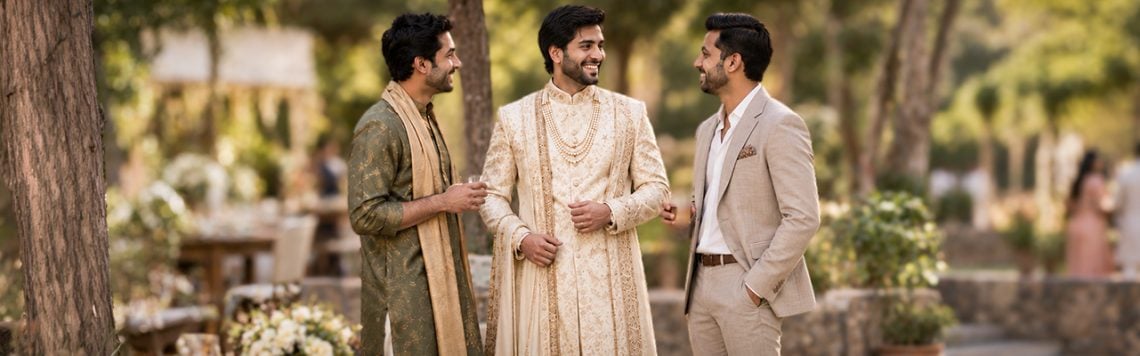
Suddenly, choosing an outfit has become almost as complicated as choosing the wedding gift. The truth is, none of these three is automatically the right answer. A sherwani, kurta, and suit each have their own moment. The trick is figuring out which moment you’re dressing for.
Because the best wedding outfit isn’t simply the one that looks great in photographs. It’s the one that still feels right when you’ve been sitting through a ceremony for two hours, greeting relatives you haven’t seen in years, carrying a plate of food, and eventually getting pulled onto the dance floor.
At Cbazaar, we believe menswear should make that decision easier. So, let’s put these three wedding favorites into the situations where they actually shine.
The Sherwani: When You Want to Make an Entrance
Some outfits make you look dressed up. A sherwani makes you feel dressed up.
The structured silhouette, detailed embroidery, elegant collar, and layered styling have a way of changing your entire posture. You button it up, straighten your stole, look in the mirror, and suddenly the wedding feels a little more important. That is exactly why the sherwani belongs to the groom’s biggest moment.
For the main wedding ceremony, especially when the celebration is traditional and grand, the sherwani has the presence to match the occasion. Rich embroidery, intricate detailing, statement colours, and carefully chosen accessories can create a look that feels ceremonial without becoming overwhelming.
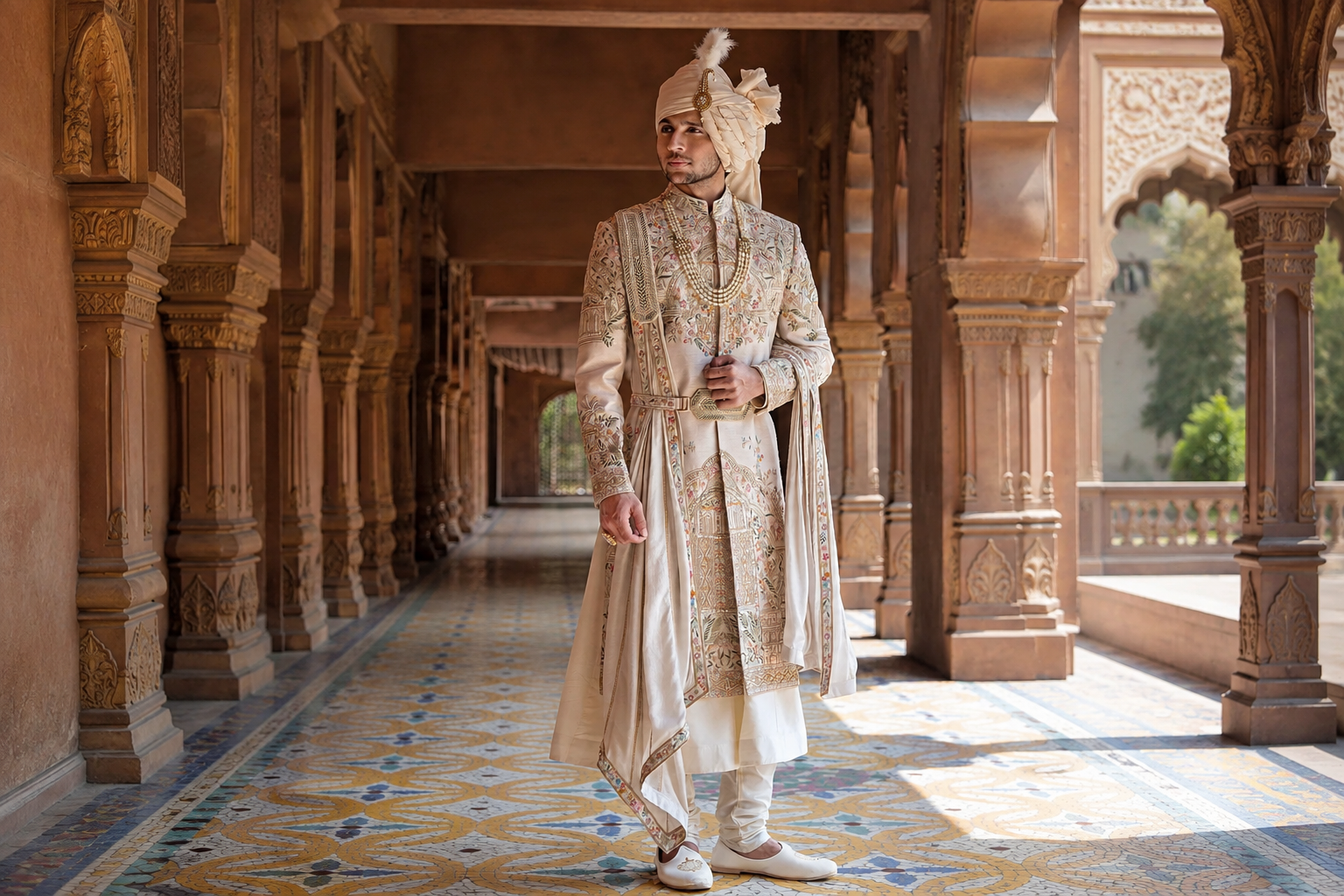
For guests, however, the sherwani needs a little more thought. If you’re the groom’s brother, close family, or part of the wedding party, a sophisticated sherwani can work beautifully. If you’re attending as a regular guest, though, you may want to keep the embroidery and styling slightly more understated. The goal is to look wedding-ready without having someone mistake you for the groom before the ceremony has even started.
The Kurta: The One Outfit That Keeps Showing Up
The kurta is the dependable friend who somehow gets invited to every single function.
Mehendi? Kurta. Family lunch? Kurta. Festive ceremony? Kurta.
Last-minute invitation when you’ve already worn everything in your wardrobe? Somehow, still kurta. And that’s precisely what makes it such a smart choice.
A well-fitted kurta can change personality depending on how you style it. Keep it light in cotton or linen for a daytime celebration. Move towards silk or richer fabrics when the occasion becomes more formal. Add a Nehru jacket, change the footwear, introduce a stole, and suddenly the same basic silhouette feels completely different.
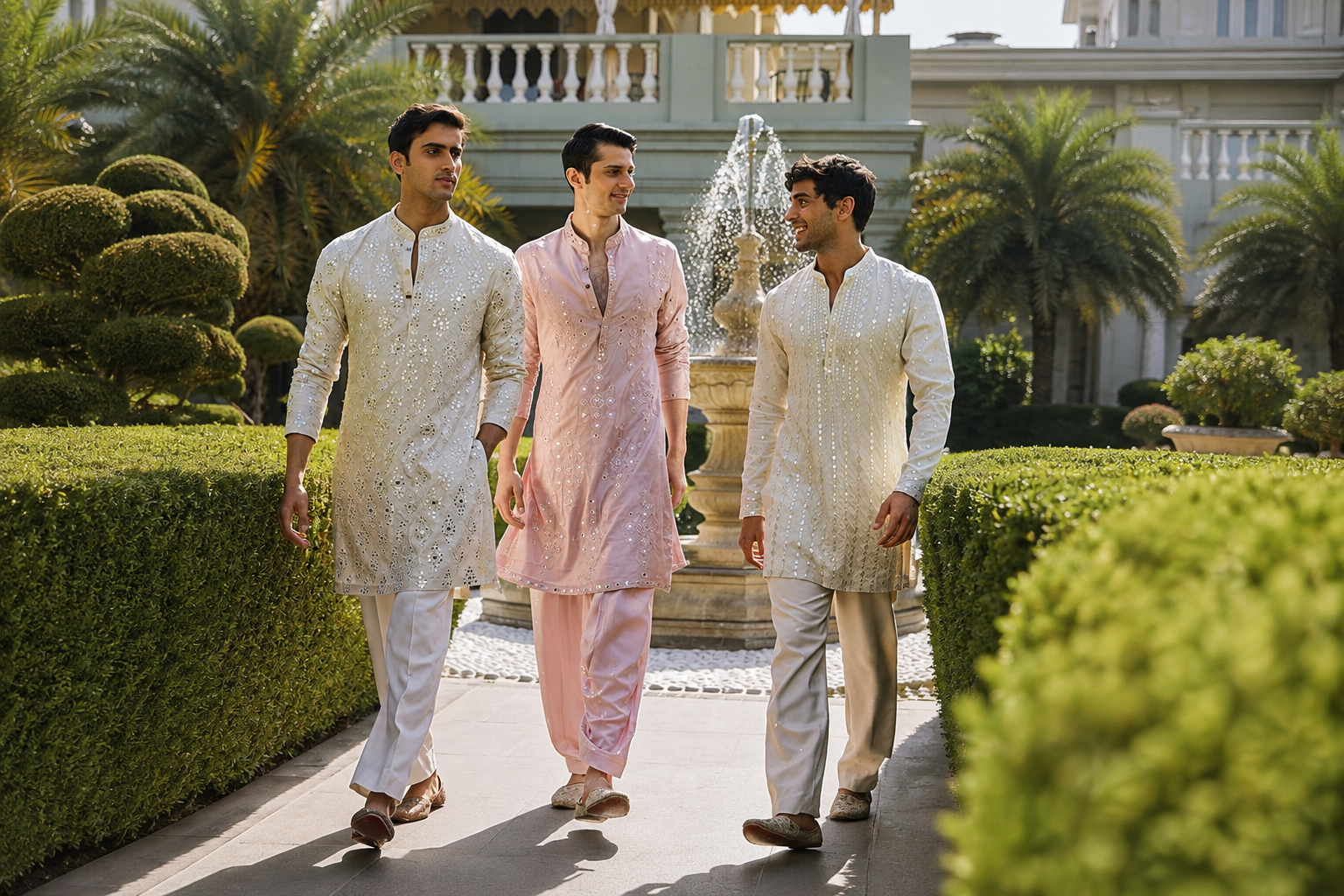
For guests attending multiple wedding functions, this flexibility is a lifesaver. You don’t necessarily need five completely different outfits simply because there are five events on the invitation.
Sometimes, one really good kurta can do more work than an entire wardrobe full of outfits. And perhaps the best part is that you can actually move in it. Sit comfortably. Eat comfortably. Walk around. Dance when someone inevitably pulls you onto the floor.
The Suit: When the Wedding Takes a Modern Turn
The venue is a luxury hotel. The reception begins at 8 PM. The décor looks contemporary. The invitation has more of a black-tie feel than a traditional wedding-card aesthetic.
This is where the suit walks in.
A well-tailored suit can look incredibly polished at contemporary Indian weddings, particularly for evening receptions, cocktail celebrations, and fusion events where Western and Indian dressing naturally meet. And if you want something that sits comfortably between the two worlds, the bandhgala is an especially interesting option. It gives you the structure and sharpness of formal tailoring while retaining a distinctly Indian character.
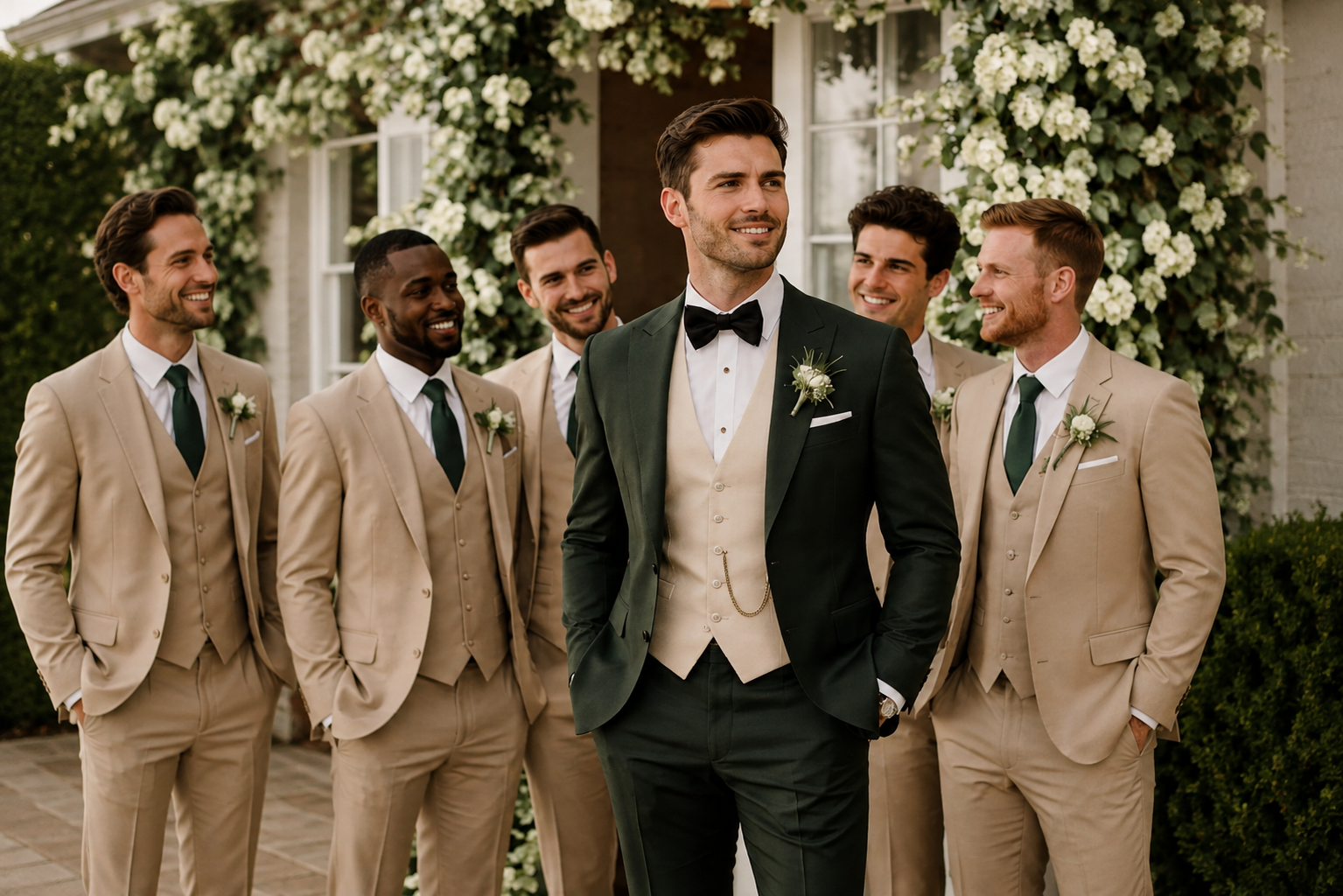
The key here is simply to read the invitation. If the couple has specifically asked guests to wear traditional or ethnic clothing, the suit may not be the right move. But when the dress code allows a more contemporary interpretation, a sharp suit can look every bit as wedding ready as traditional Indian wear.
Now Picture the Wedding Day
Instead of standing in front of three outfits wondering which one is “best,” imagine where you’ll actually be wearing them.
It’s a sunny afternoon at the Mehendi. People are moving around, food is everywhere, conversations are happening simultaneously, and nobody has managed to sit in one place for more than five minutes. You want something festive, but you also want to be able to move freely. A comfortable kurta suddenly makes perfect sense.
Then comes the wedding ceremony. The atmosphere changes. Everyone is dressed a little more formally, the photographs become more frequent, and the occasion carries a certain significance. This is where a sherwani or a richer kurta paired with a Nehru jacket can step up beautifully.
Later that evening, the reception begins. The lights are warmer, the music is louder, and the atmosphere is unmistakably celebratory. A sophisticated bandhgala, sharp suit, or contemporary kurta-jacket combination suddenly feels right.
Nothing about your personal style changed.
The occasion did.And sometimes, that’s all the guidance you need.
If You’re the Groom, Your Rules Change
There is one person at the wedding who can quite literally get away with being the most dressed-up person in the room.The groom.
If you’re getting married, the main ceremony is your moment to embrace the sherwani fully. Intricate embroidery, rich fabrics, layered textures, statement stoles, traditional detailing the occasion gives you permission to go all in. But even then, you don’t need to look like you’re attending the same wedding at every function.
A lighter kurta can keep a Mehendi or Haldi comfortable and relaxed. A contemporary Indo-western or bandhgala look can bring a sharper edge to a cocktail or pre-wedding evening. Then comes the main ceremony, where the sherwani gets its grand entrance.
It makes the entire wedding wardrobe feel more intentional.
Instead of wearing one outfit repeatedly, each look becomes part of the story.
One Wedding Doesn’t Need Five Completely Different Outfits
Here’s something nobody tells you when the invitation lists four or five separate celebrations.
You don’t need four or five completely different wardrobes.
The smarter approach is to build around a few versatile pieces and let the styling do the work. A simple kurta can become a daytime look with minimal accessories and transform into an evening outfit with a Nehru jacket. A richer kurta can work beautifully for a ceremony and take on a different personality with another layer. A bandhgala can move from a formal family gathering to an evening reception simply by changing the footwear and accessories.
Dress for the Moment, Not Just the Photograph
Indian weddings have a funny way of ignoring your plans. You might arrive intending to stay for an hour and still be there three hours later. You might promise yourself you’re not dancing and somehow end up in the middle of the dance floor.You might plan to take five photographs and leave with 150.
That’s the beauty of them.
At Cbazaar, our men’s wedding collection brings together sherwanis, kurta sets, Nehru jackets, bandhgalas, Indo-western styles, and formal looks for every kind of wedding celebration. With made-to-measure tailoring and worldwide delivery, finding something that fits the occasion while still feeling completely like you becomes easier. Because ultimately, the best-dressed man at the wedding isn’t the one wearing the most elaborate outfit.
He’s the one who looks good, feels comfortable, and is still ready to dance when the music starts.

You May Also Like
Indian Ethnic Wear for Plus-Size Women: Best Online Options in the USA
Elevating Men’s Ethnic Wear with the Right Accessories