
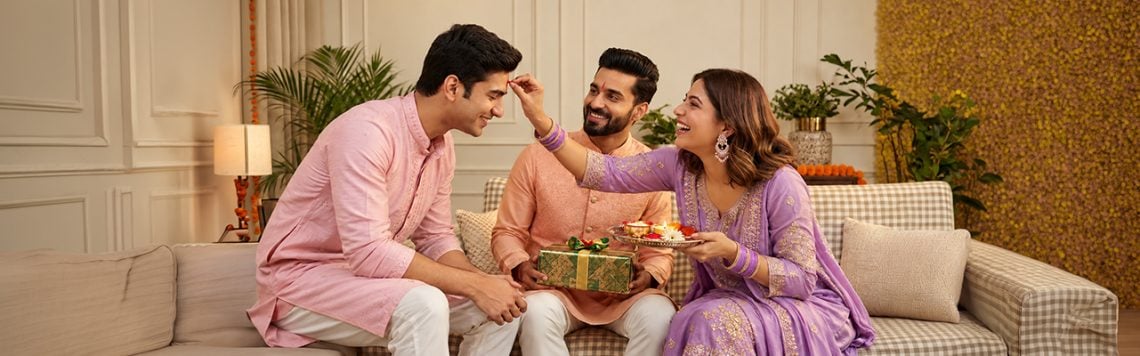
Bhai Dooj Outfit Ideas 2026: Stylish Ethnic Looks for Family Celebrations
There’s a particular kind of photograph that every family collects without ever quite planning to the one from Bhai Dooj, with a sister and her brother standing a little awkwardly in the window light, a thali between them, both dressed just slightly better than an ordinary Tuesday.Nobody remembers choosing to take it. It just happens.Someone brings out the phone after the tilak. Someone else tells the siblings to stand closer. The brother fixes his kurta at the last second. The sister checks whether her dupatta is sitting properly. And somehow, that becomes the photograph everyone keeps. On Wednesday, November 11, 2026, that photograph was taken again. Bhai Dooj falls on the second day of the bright fortnight of Kartika, with sisters traditionally applying tilak to their brothers and families coming together for food, gifts and celebration.So perhaps the more interesting Bhai Dooj fashion question isn’t about wearing the most festive thing possible. It’s about wearing something that looks like you, only slightly more dressed for the occasion.
Bhai Dooj Is Not Trying to Be Diwali
Bhai Dooj has a completely different energy from the bigger Diwali celebrations that came before it.
The day is built around the people who already know you best, siblings, parents, grandparents and cousins, gathered at home for the tilak, gifts, food and the conversations that somehow continue long after everyone has finished eating. There is celebration, but it tends to feel more intimate than the grander evenings that came before it.That changes the wardrobe.A heavily embellished lehenga can be beautiful, but it may feel like too much when you’re sitting cross-legged for the puja and then spending the afternoon at the family dining table. A simpler silk saree, elegant Anarkali or well-cut kurta can feel much more appropriate because it belongs to the scale of the celebration.Bhai Dooj doesn’t need a grand entrance. It needs a good outfit that feels at home.
For the sister: Let the Outfit Feel Like You
This is perhaps the nicest part of dressing for Bhai Dooj: there is no pressure to follow one particular festive formula.
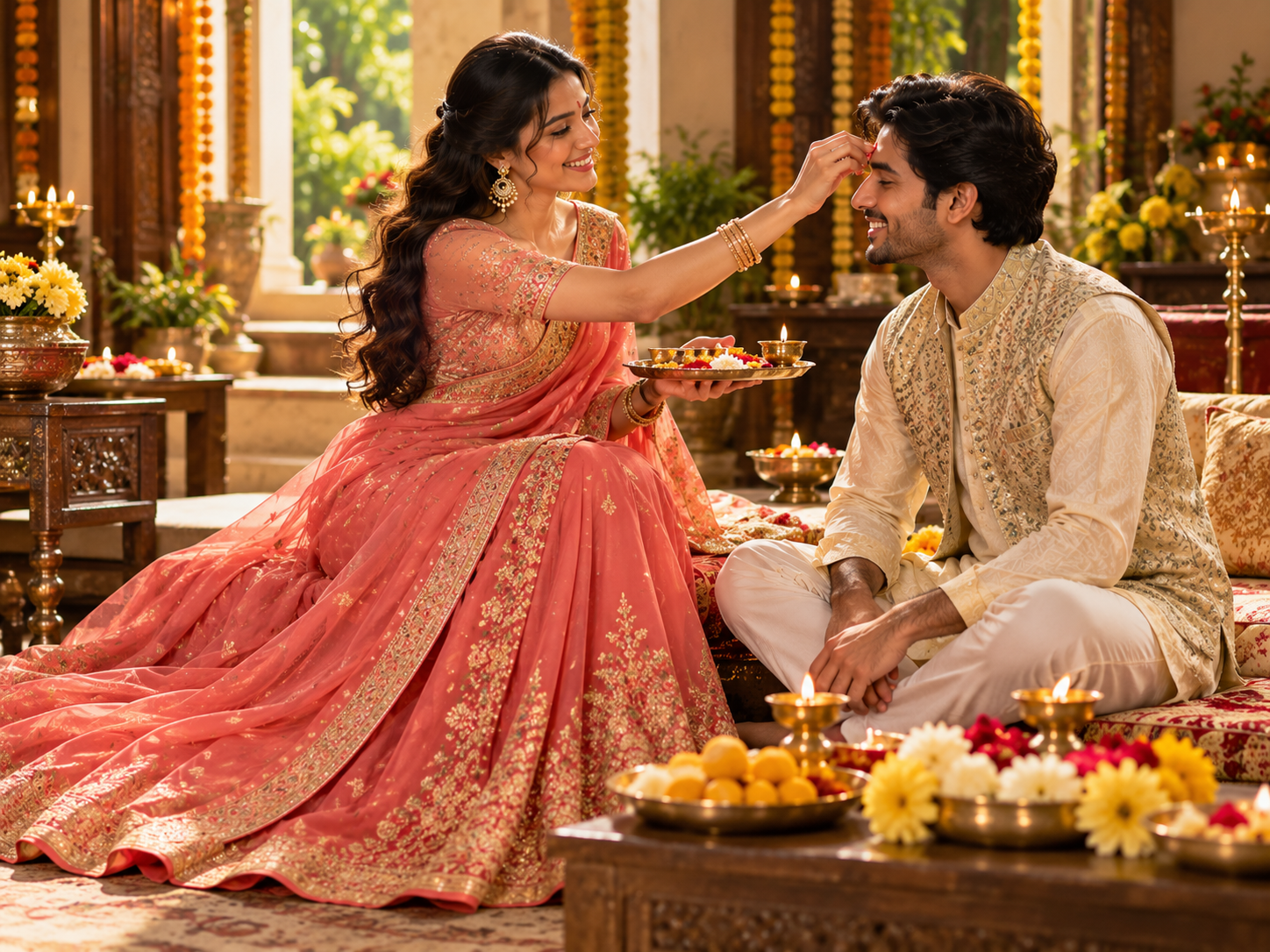
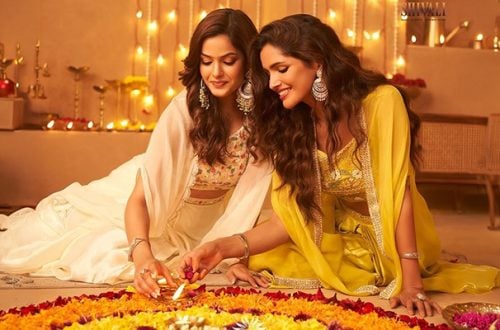
If you are someone who reaches for sarees, a soft silk or lightweight festive saree in coral, rose, maroon, emerald or muted gold can make the day feel special without making it feel overly formal. Keep the blouse relatively clean if the saree already has a strong border and let a pair of earrings or bangles provide the finishing detail.If sarees aren’t really your thing, an Anarkali can bring the same festive feeling with considerably less fuss. A flowing silhouette, an embroidered neckline and a dupatta with just enough detail can look beautiful for the morning ritual and still feel comfortable when the family settles down for lunch.And if your wardrobe personality is more understated, don’t force yourself into something elaborate simply because it is a festival. A beautifully cut straight suit in a jewel tone can be every bit as festive. The best Bhai Dooj outfit isn’t the one that looks the most festive. It’s the one that still looks like you.
For the brother: The Kurta Gets the Job Done
Brothers have it slightly easier.
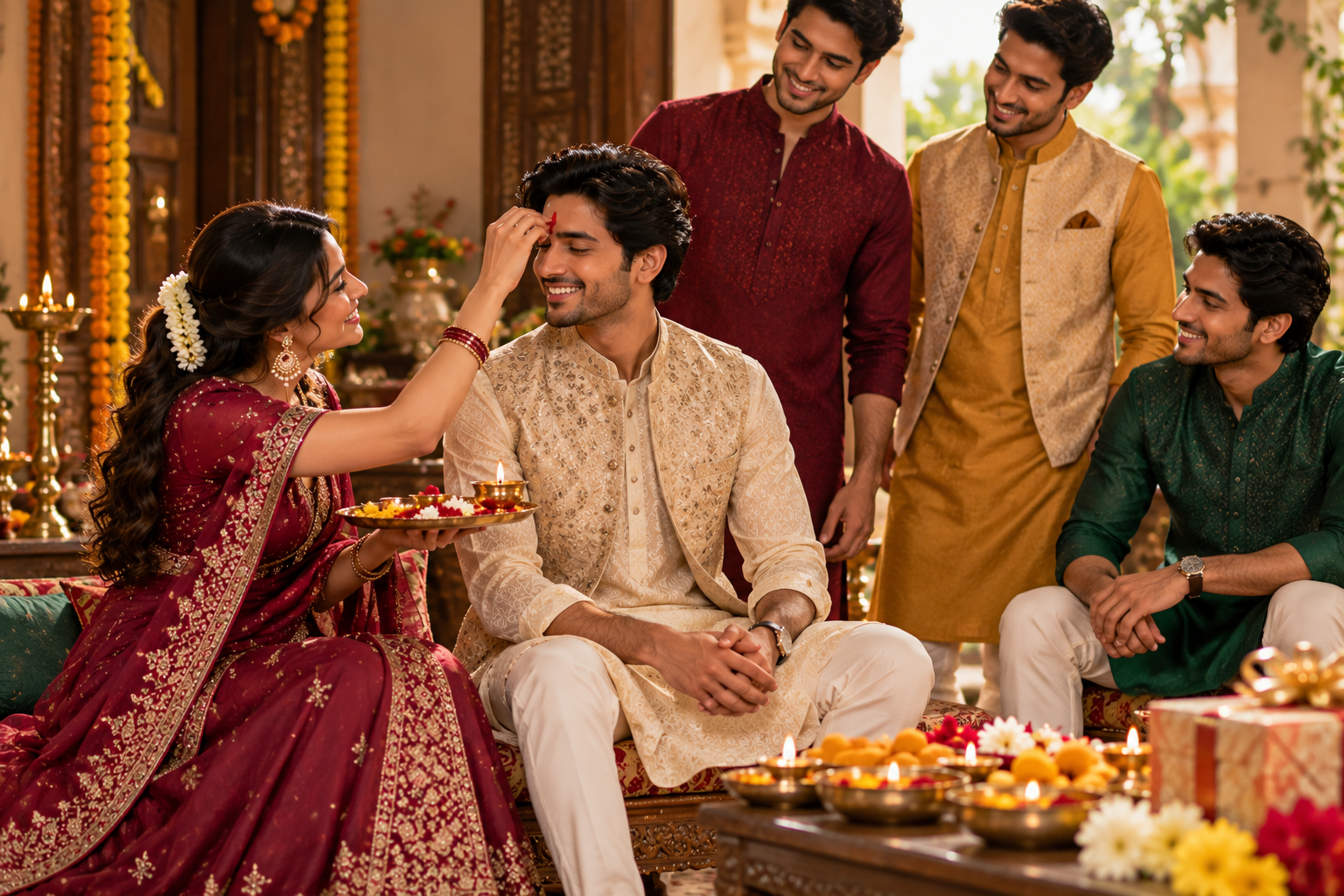
A good kurta already knows how to handle a family festival. The real challenge is making it look considered rather than like something you remembered to take out of the wardrobe fifteen minutes before the tilak.A solid or subtly textured kurta in deep maroon, mustard, cream, olive or navy works beautifully. Add a Nehru jacket if the family gathering is a little more formal or keep the kurta on its own if the celebration is happening entirely at home.The details don’t need to be complicated. A well-fitted kurta, clean footwear and one layer that gives the outfit some structure are usually enough. Bhai Dooj is not the occasion to discover how many embroidered elements can coexist on one kurta.The goal is simple: look like you made an effort without looking like you made a production out of it.
The Best Family Photos Aren’t Perfectly Matched
This is where Bhai Dooj gets interesting from a styling point of view.The entire family doesn’t need to wear matching outfits. In fact, photographs usually look more natural when everyone belongs to the same colour story rather than wearing the same colour.Think of it as a family palette.
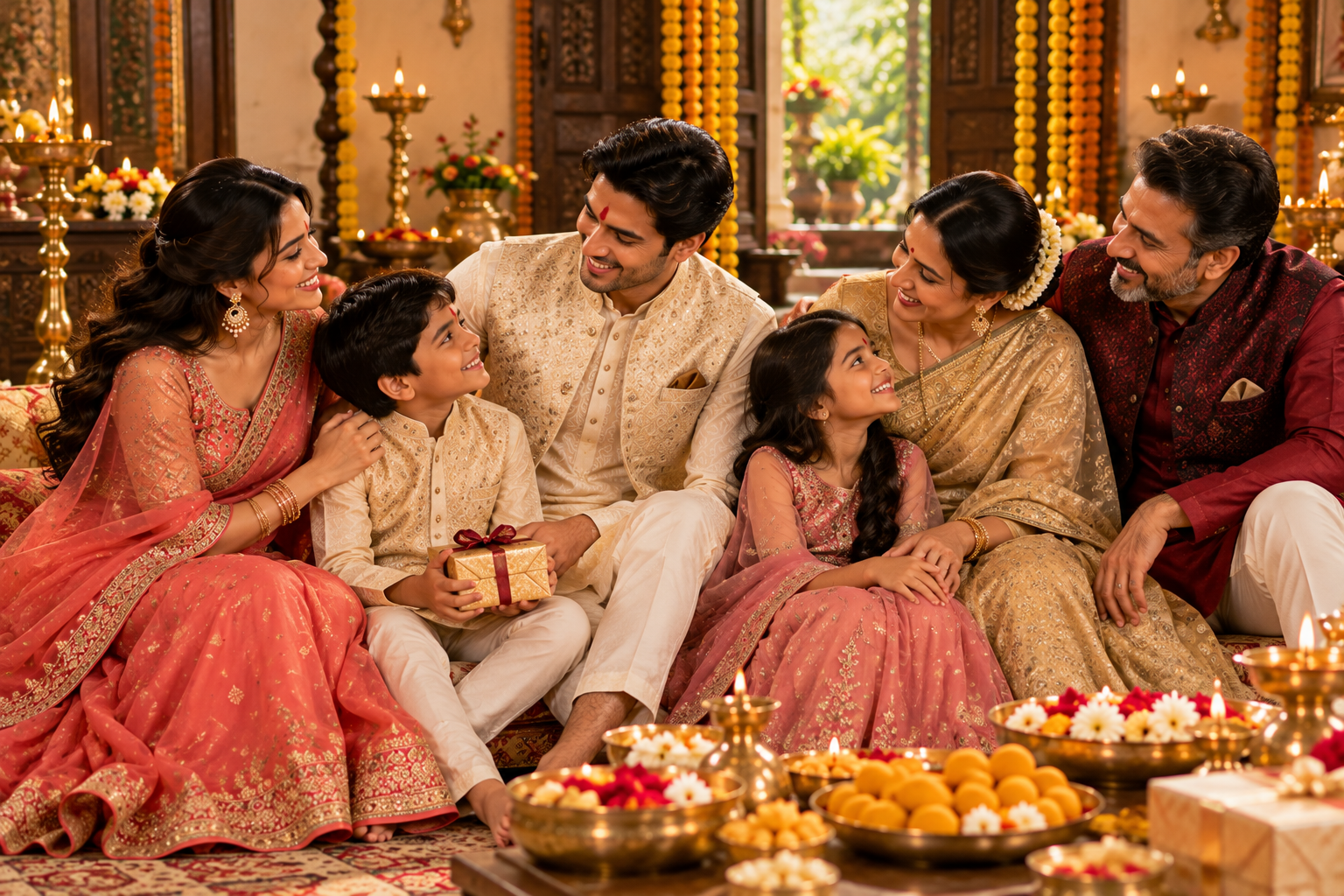
A sister in deep coral, a brother in cream, a mother in muted gold and a father in maroon can look beautifully connected without anyone appearing deliberately coordinated. Add children in softer versions of those colours and the whole photograph starts to feel cohesive without looking staged.Warm golds, maroons, coral, cream, emerald and muted pinks work particularly well together because they create enough contrast while still feeling festive. Family photographs look better when everyone belongs to the same palette, not the same outfit.
What Actually Works for a Day at Home
Bhai Dooj is one of those occasions where your outfit needs to do more than look good in a photograph. It needs to work through the morning tilak, a long family lunch, cups of tea, conversations that stretch into the afternoon and, inevitably, a few more photographs.
For sisters, lightweight sarees, flowing Anarkalis and comfortable suit sets can look festive without feeling restrictive. For brothers, a breathable kurta with an optional Nehru jacket offers an easy balance between looking dressed up and feeling relaxed. Choose fabrics that move comfortably and silhouettes that don’t need constant adjusting.After all, nobody wants to spend a family celebration worrying about a slipping dupatta or an outfit that feels too heavy by lunchtime.
The best Bhai Dooj look is one you can enjoy wearing long after the morning rituals are over.
The Little Details That Make the Outfit Personal
Bhai Dooj is also a good excuse to let small details carry more meaning.A sister might choose a colour her brother loves. A brother might wear a kurta his sister once picked for him. A pair of earrings passed down through the family can become part of the outfit. Even a familiar dupatta or a traditional piece of jewellery can make the day’s look feel connected to previous celebrations.They may never make it into the photograph, but they are often the details you’ll remember when you look at its years later.Festive dressing doesn’t always have to be about making a visual statement. Sometimes the most meaningful part of an outfit is the reason you chose it in the first place.
Dress for the Photograph You Didn’t Plan
By the time the tilak is applied and the thali is put away, nobody is going to remember whether the sister’s saree had the most elaborate border in the room or whether the brother’s kurta was the most embroidered. They’ll remember the photograph.The two of you standing together. The slightly awkward smile. The family in the background. The diya light. The outfit that made everyone look a little more festive than they normally would on an ordinary afternoon.
That’s what makes Bhai Dooj different. It isn’t asking you to dress for spectacle. It’s asking you to dress for a memory.At Cbazaar, the festive collection brings together sarees, Anarkalis, suit sets and men’s kurta styles that work for everything from the morning tilak to a full family gathering. Made-to-measure and plus-size customisation options allow you to choose a silhouette around the fit you actually want, while worldwide shipping to over 170 countries make it easier to bring a little of the celebration into homes around the world.
Wear something festive. Keep it personal. And make sure you’re ready when someone says, “Come, let’s take one photo.”

You May Also Like
Dhanteras Outfit Ideas 2026: Festive Looks to Welcome Diwali in Style

Outfit Ideas For Teej
