
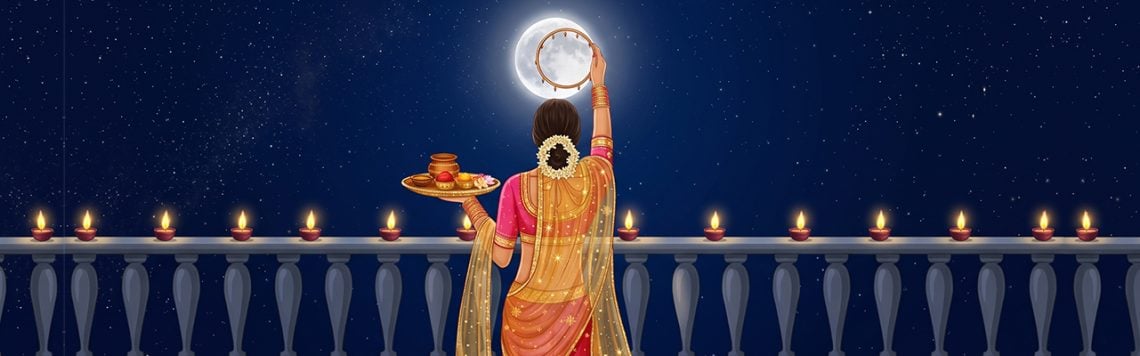
How to Style Your Karwa Chauth Look from Puja to Dinner
Karwa Chauth isn’t one outfit’s worth of a day.
There’s a very specific kind of day that starts before sunrise and doesn’t actually end until you’ve eaten your first bite of food, surrounded by family, the moon safely spotted and the sieve retired for another year. It’s a celebration that moves through several different moments, and your wardrobe has to move with it.
Karwa Chauth 2026 falls on Thursday, October 29, which means your outfit needs to carry you from the early hours of sargi through the fasting hours, evening preparations, moonrise and finally dinner. The trick isn’t finding one look that simply photographs beautifully. It’s choosing outfits and styling details that make sense for the entire day.
Phase One: Sargi, Before the Sun Has Fully Committed
Let’s be honest about sargi it happens at an hour most outfits shouldn’t be expected to show up for. This is not the moment for your heaviest silk or your most elaborate jewellery. A soft cotton kurta set, a lightweight printed suit or a simple Anarkali works particularly well for sargi, especially when the morning begins with family rituals and you’re not quite ready for a heavily embellished festive look.
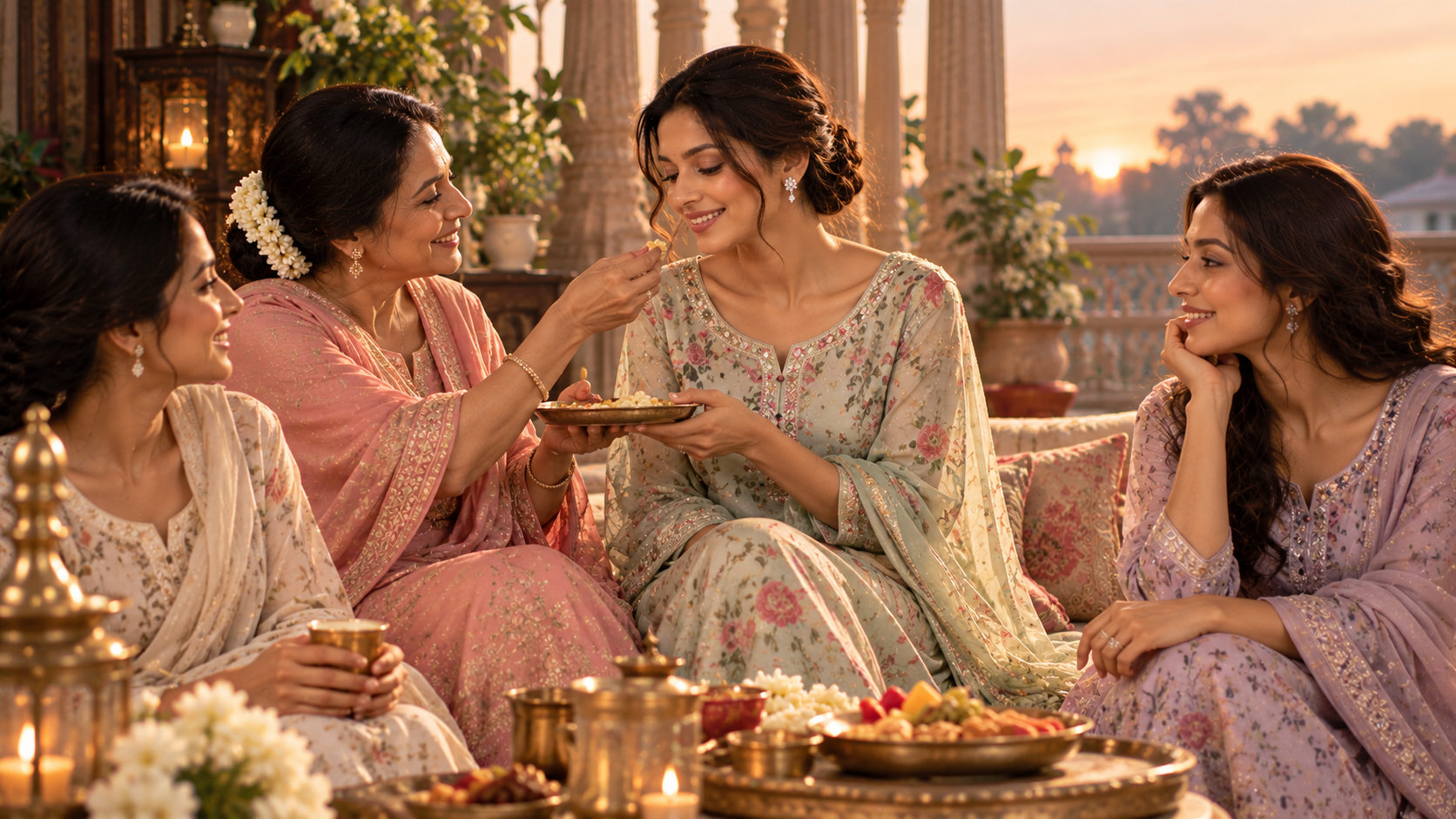
Soft fabrics and relaxed silhouettes work particularly well at this stage. You want something that feels easy enough for an early start but still looks put together for the family moments that come with the ritual. A pastel kurta with delicate earrings can feel festive without looking overdressed, while a simple printed suit keeps the look relaxed enough for an early morning gathering. Think of this as the outfit that gets the day started comfortably rather than the one that needs to make a statement.
Phase Two: The Fasting Hours, When Comfort Quietly Becomes Everything
Here’s what nobody warns you about in the middle of the day: you’ll be moving, hosting, possibly cooking despite not eating a bite of it, and doing all of this without food or water. This is precisely the wrong moment for a heavily structured blouse or a waistband with opinions.
A relaxed kurta set, lightweight Anarkali or easy-fit palazzo suit can give you enough room to move through the day without losing the festive feel. Soft fabrics and breathable silhouettes become particularly useful if you’re visiting family, preparing for the evening puja or simply moving around the house. The last thing you need is to be negotiating with your waistband while you’re already negotiating with hunger.
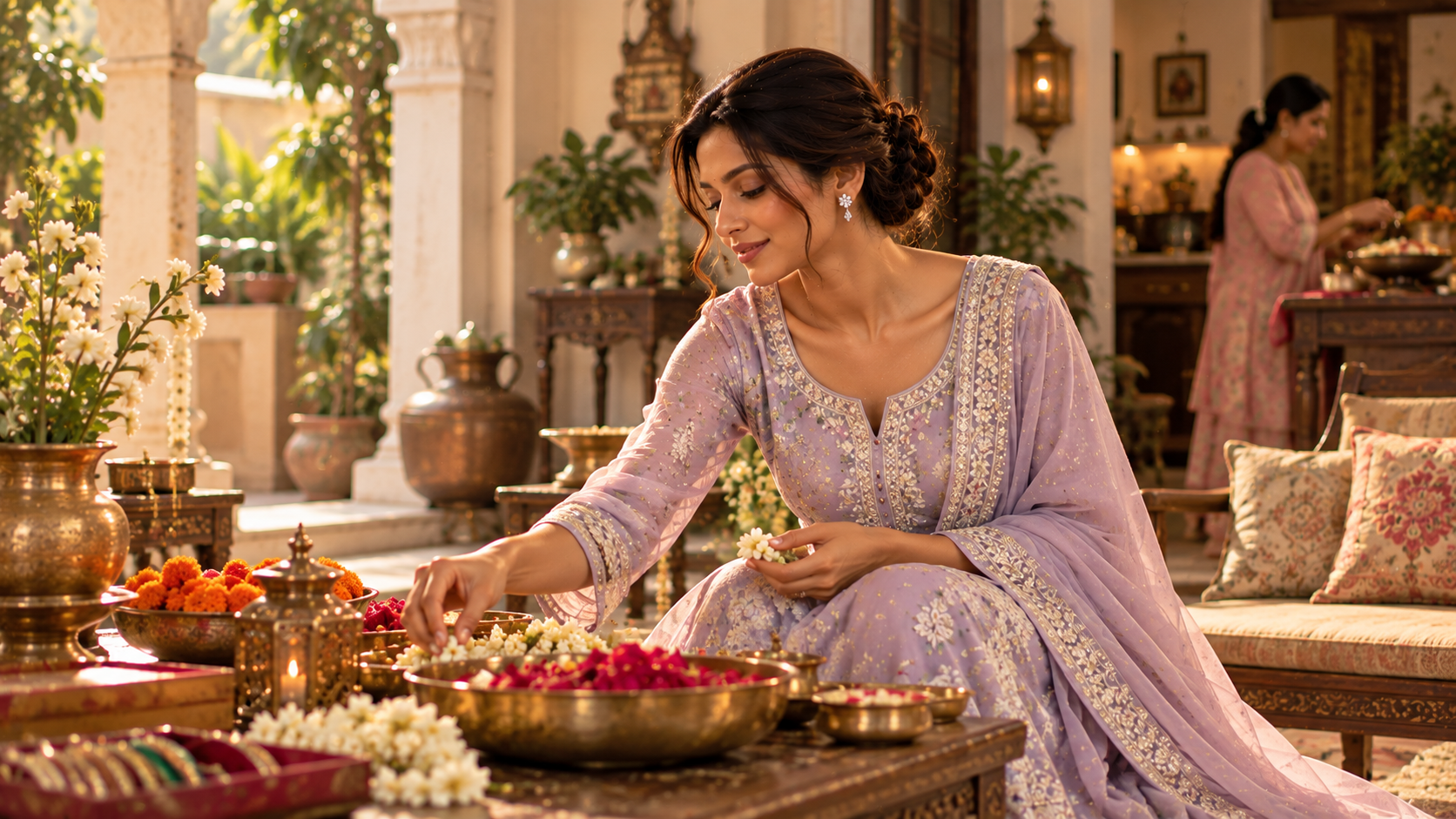
The idea isn’t to skip the festive dressing altogether. It’s to leave the full transformation for when the evening actually begins. Small silver studs or a delicate ring can keep the look polished without adding weight or requiring constant adjustment, while the rest of the styling can stay comfortably understated.
Phase Three: The Transformation Before Evening
Somewhere in the late afternoon, the day shifts. This is when the beauty rituals and Solah Shringar-inspired details begin to come together: the sindoor, the mehendi already dried in, the bangles going on one by one, and finally, the outfit you’ve actually been planning for weeks.
Whether it’s the classic red saree, a rich maroon lehenga, or a rani pink or emerald alternative, this is the moment the outfit gets to feel as significant as the day itself. For a family puja, a richly bordered saree can feel traditional without becoming overly elaborate, while a maroon or emerald lehenga can take you naturally into the evening celebrations. If you’re attending a larger family gathering or dinner after the puja, a statement blouse, refined jewellery and a carefully draped dupatta can give the look more presence without making it difficult to wear.
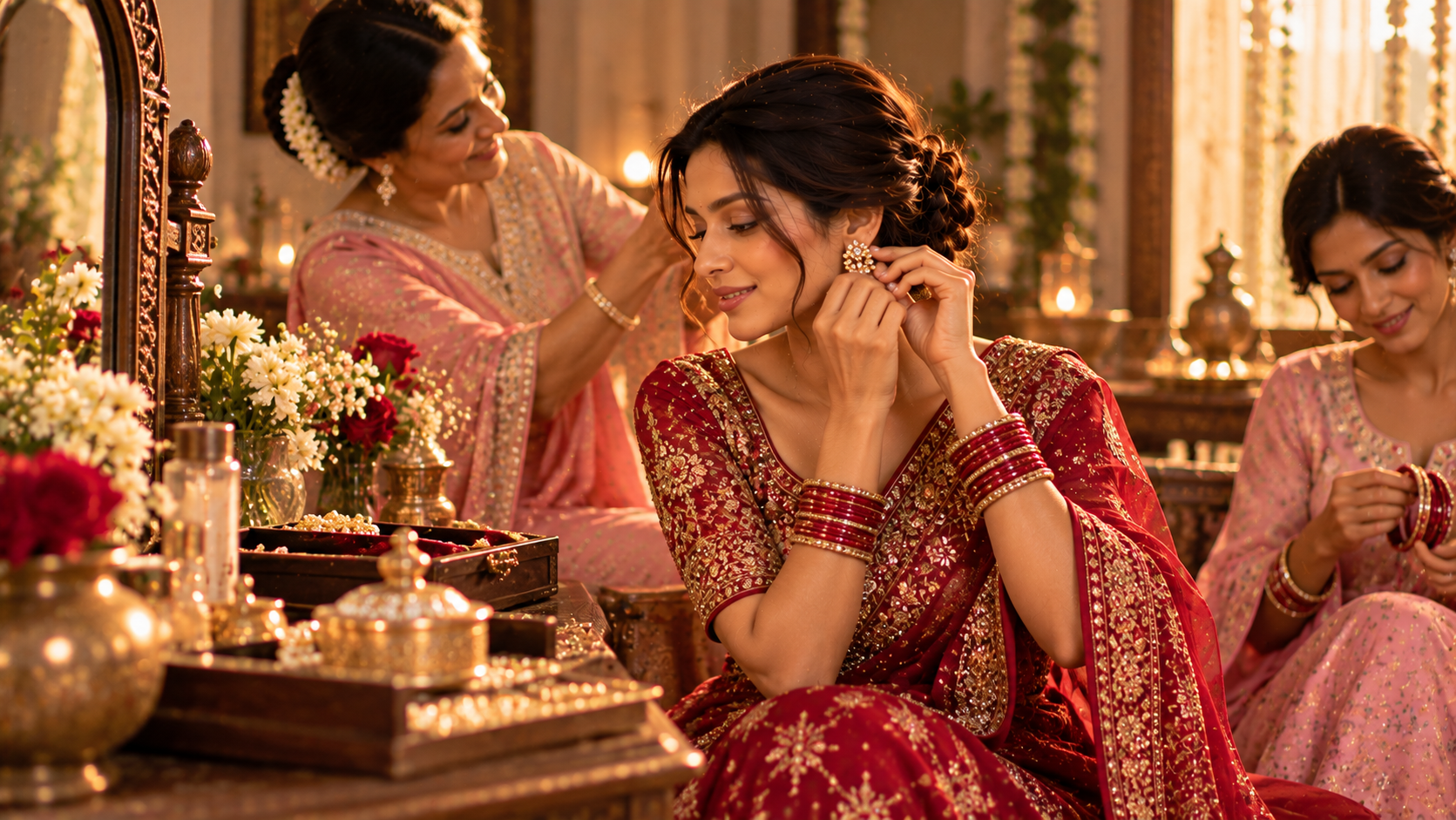
This is also when jewellery starts doing more of the work. Statement silver earrings, delicate studs or a distinctive ring can add sparkle without requiring an entire jewellery set, particularly when the saree or lehenga already has enough embroidery to carry the look. A clean geometric earring can bring a contemporary edge to a traditional saree, while a floral or solitaire design can keep the overall look softer and more classic. Pair that with a well-fitted blouse, a saree that sits securely or a lehenga with enough room to move, and the evening look feels considered rather than rushed.
Phase Four: The Moonrise, When the Outfit Has One Job Left
By the time you’re standing with a sieve, looking for the moon, your outfit has already done most of its work for the day. What matters now is that you can actually see clearly, move your arms to hold the sieve and diya steadily, and not spend this genuinely significant moment adjusting a slipping dupatta.
A well-secured drape, jewellery you’re not fidgeting with, and a dupatta pinned rather than precariously balanced may sound like small details, but they’re the difference between a meaningful moment and a distracted one. A pair of lightweight statement earrings can also be easier to manage than heavily layered jewellery when you’re holding the sieve, diya and puja thali.
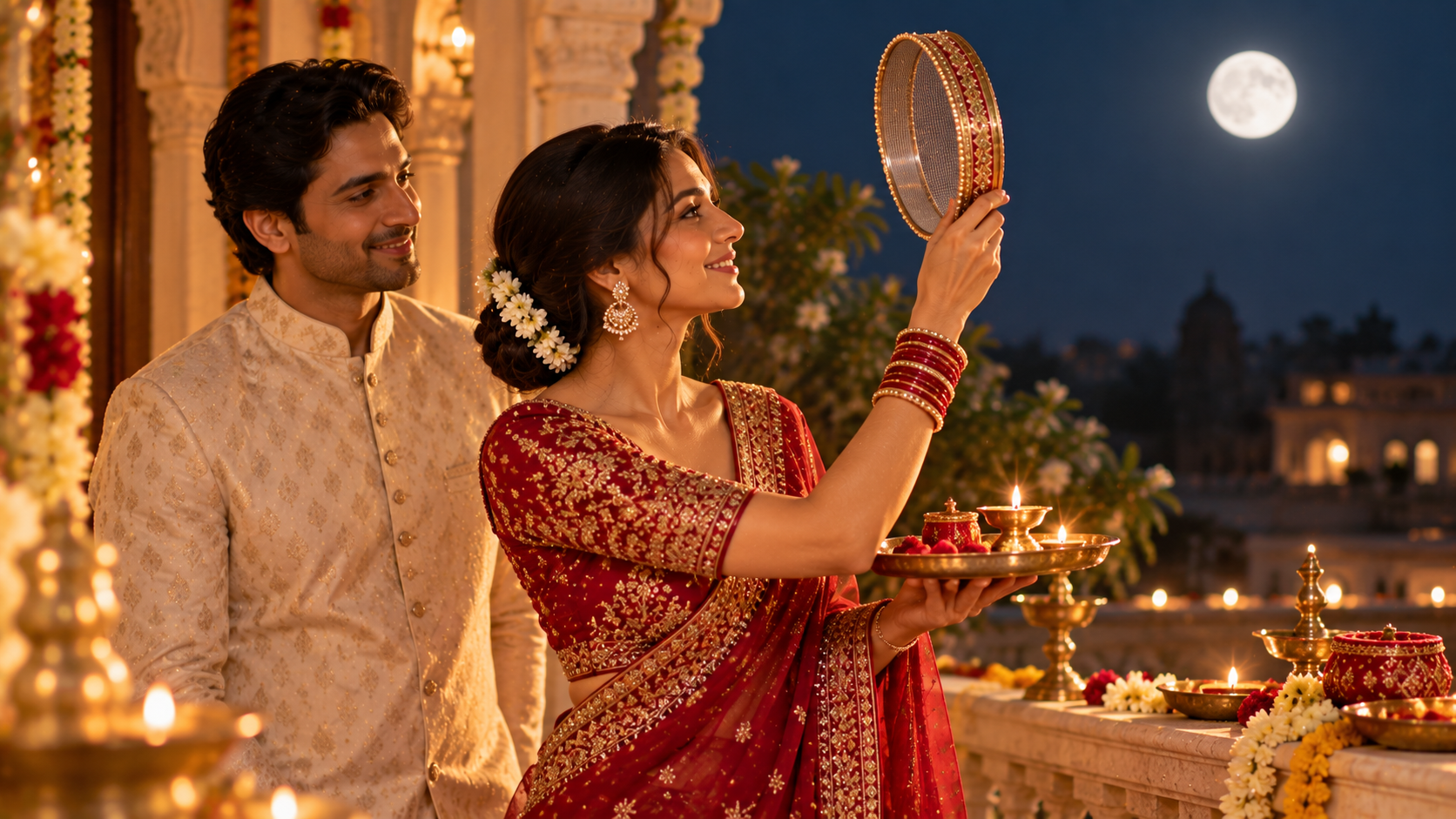
This is one reason a thoughtfully styled saree or lehenga works so well for Karwa Chauth. The outfit can still look elaborate in photographs while the details that actually matter: a secure drape, comfortable blouse and jewellery that stays in place quietly do their job.
Phase Five: Dinner, When the Outfit Finally Gets to Relax With You
The fast is broken, the moon has been seen and now comes the part everyone’s been quietly looking forward to since sargi: actual food, actual family time, actual sitting down. This is where a heavily structured lehenga can start to feel less glamorous and more like a decision you’re regretting.
If your evening outfit has some flexibility built in a comfortable blouse, a saree that photographs beautifully without fighting you while seated, or a lehenga that still allows you to move freely, dinner becomes what it’s supposed to be: a celebration, not an endurance test. A statement earring or distinctive ring can keep the look feeling finished even after you’ve taken a more relaxed approach to the rest of your styling.
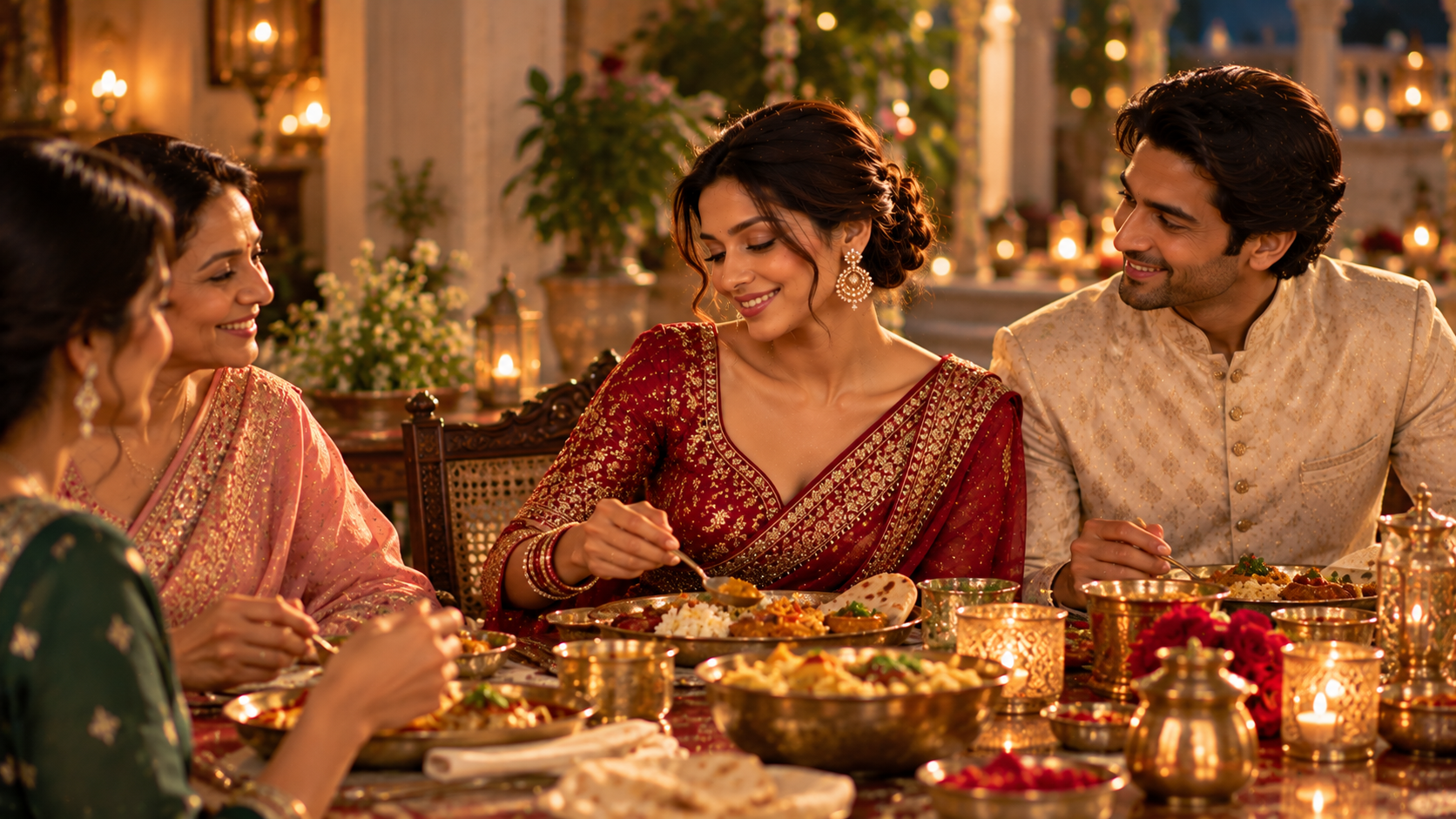
After a long day, comfort doesn’t take away from the glamour. It makes it easier to actually enjoy it.
The Secret to Surviving All Five Phases in Style
You don’t need a new outfit for every phase. You need something comfortable for sargi and the fasting hours, and something significant for the evening that can carry you through moonrise and dinner.
The outfit that photographs beautifully at 7pm and still feels fine at 10pm was never an accident. It was chosen with the whole day in mind, not just the one perfect moment everyone is going to see in the photos. Comfort, fit and practical details matter just as much as colour, fabric and embellishment when your celebration stretches from dawn well into the evening.
Think of the day as a gradual shift rather than a complete wardrobe change: keep the earlier hours soft and easy, then let the evening bring in richer fabrics, stronger colours, more considered jewellery and the details you’ve been saving for the celebration.
Dress for the Whole Day, Not Just the Moment
At Cbazaar, the festive collection brings together comfortable suits for the earlier part of the day alongside sarees, lehengas and Anarkalis designed for the evening celebrations. With made-to-measure tailoring and plus-size customisation options, you can choose a festive look with fit and comfort in mind, not just how it photographs.
Whether your Karwa Chauth look is a classic red saree, an emerald lehenga, a maroon Anarkali or a softer contemporary interpretation, the goal is to choose pieces that feel beautiful in the moment and comfortable enough to stay with you until the evening is over.
Because on a day this long, the best outfit isn’t simply the one that looks beautiful at moonrise. It’s the one you’re still happy to be wearing when dinner arrives.
Explore Cbazaar’s festive collection and find an outfit that can keep up with the whole celebration from the first moments of sargi to dinner after moonrise.

You May Also Like

Eid Dresses for Girls: A Fusion of Culture and Modern Fashion

Navratri, The Festival Of Nine Nights
