Diwali Fashion Trends 2026: 7 Festive Looks to Watch This Season
Every festive season has a mood before it has a wardrobe. This year’s festive mood feels quieter than the last less about how much a look can hold, more about how precisely it can say what it means.
The shift is subtle but noticeable. Rich fabrics are still having their moment, embroidery hasn’t gone anywhere, and festive dressing is still very much about colour and craft. But the styling is becoming more intentional: one striking detail instead of five, tonal layers instead of competing colours, and silhouettes that let you actually move through the celebration.
Here are seven fashion directions to watch this Diwali all pointing toward the same idea: restraint can be its own kind of spectacle.
I. Tone-on-Tone, or the Art of Saying Less Loudly
The most interesting festive outfit in the room isn’t necessarily the one with the most colour. It’s the one where the embroidery matches the fabric so precisely that the richness only reveals itself when you move.
Think monochrome silk, self-toned zari, tonal embroidery and textures that reveal themselves differently under changing light. A deep wine saree with matching embroidery, an emerald lehenga with tonal threadwork or an ivory Anarkali with subtle ivory-on-ivory detailing can look understated from across the room and remarkably detailed up close.
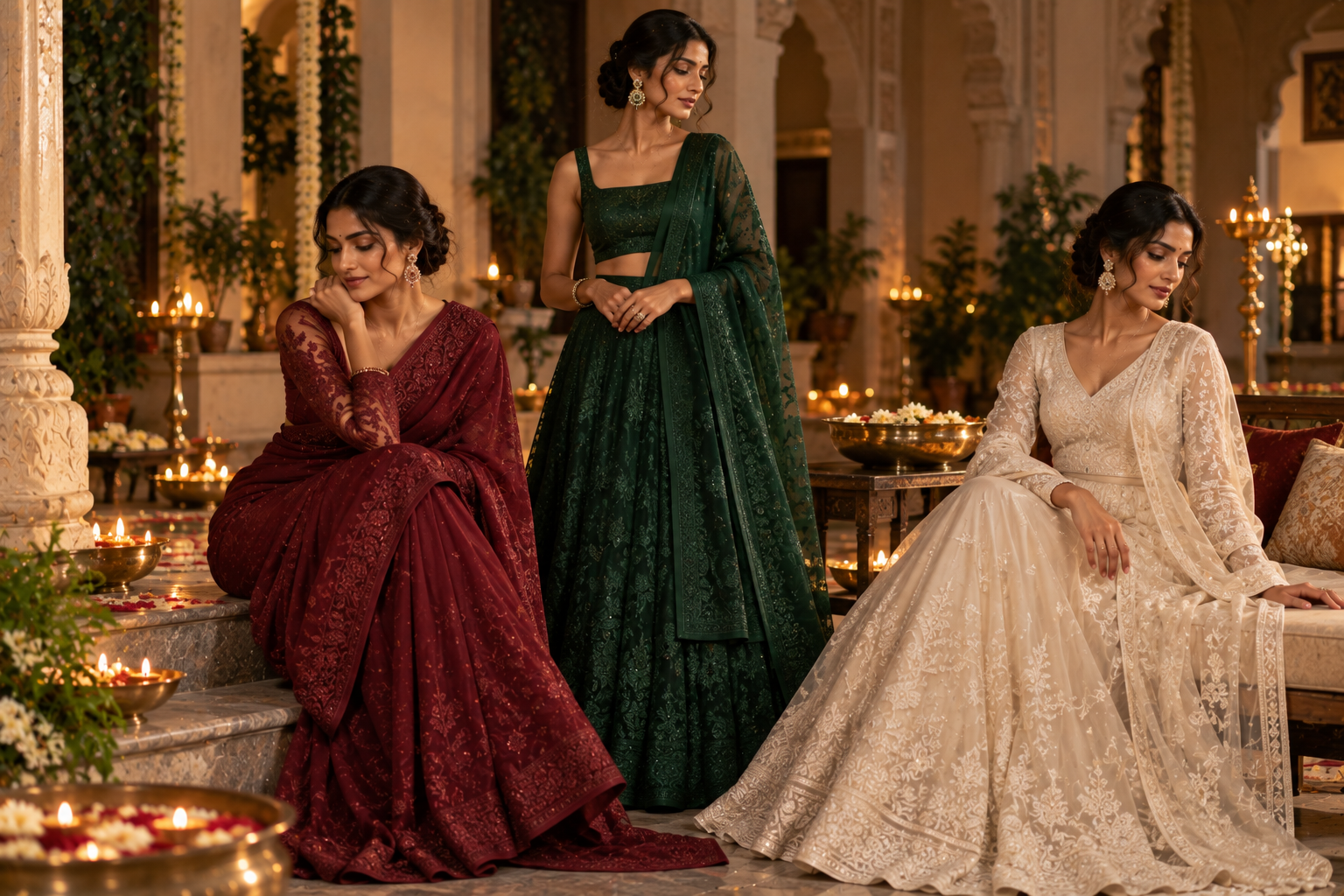
It’s festive dressing that doesn’t need to announce itself. The beauty is in discovering the detail rather than seeing all of it at once.
II. Minimal Metallic, the Quiet Cousin of Maximalist Gold
Gold isn’t going anywhere. It’s simply learning when to stop.
Instead of covering an entire outfit in metallic embellishment, festive dressing is leaning toward more controlled placement: a single metallic thread tracing a border, neckline, sleeve or hem and stopping there. Silver and rose-gold accents can bring the same festive glow while giving the outfit a fresher, more contemporary feel.
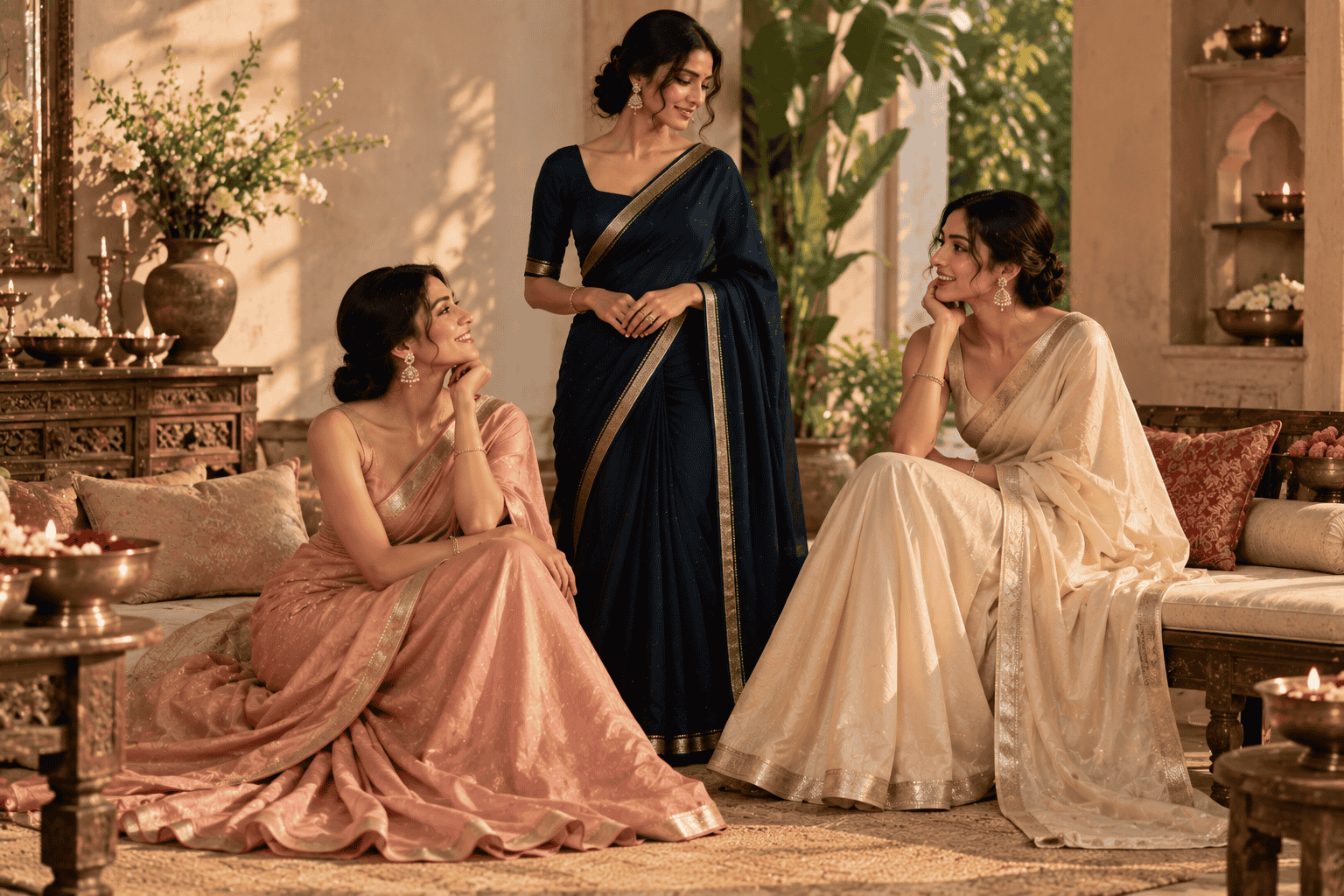
The appeal is in the negative space. A solid silk saree with a restrained metallic border can feel just as special as a heavily embellished one, particularly when the rest of the styling stays clean. It’s the difference between wearing gold and letting gold make a point.
III. Modernized Mirror Work, Smaller and Sharper
Mirror work isn’t disappearing. It’s simply getting a little more precise.
Instead of sprawling clusters covering every available inch, smaller mirrors and geometric arrangements create a cleaner, more contemporary effect. Linear patterns carefully placed motifs and structured borders allow the mirrors to catch the light without making the entire outfit compete for attention. And that’s exactly why the trend works for Diwali.
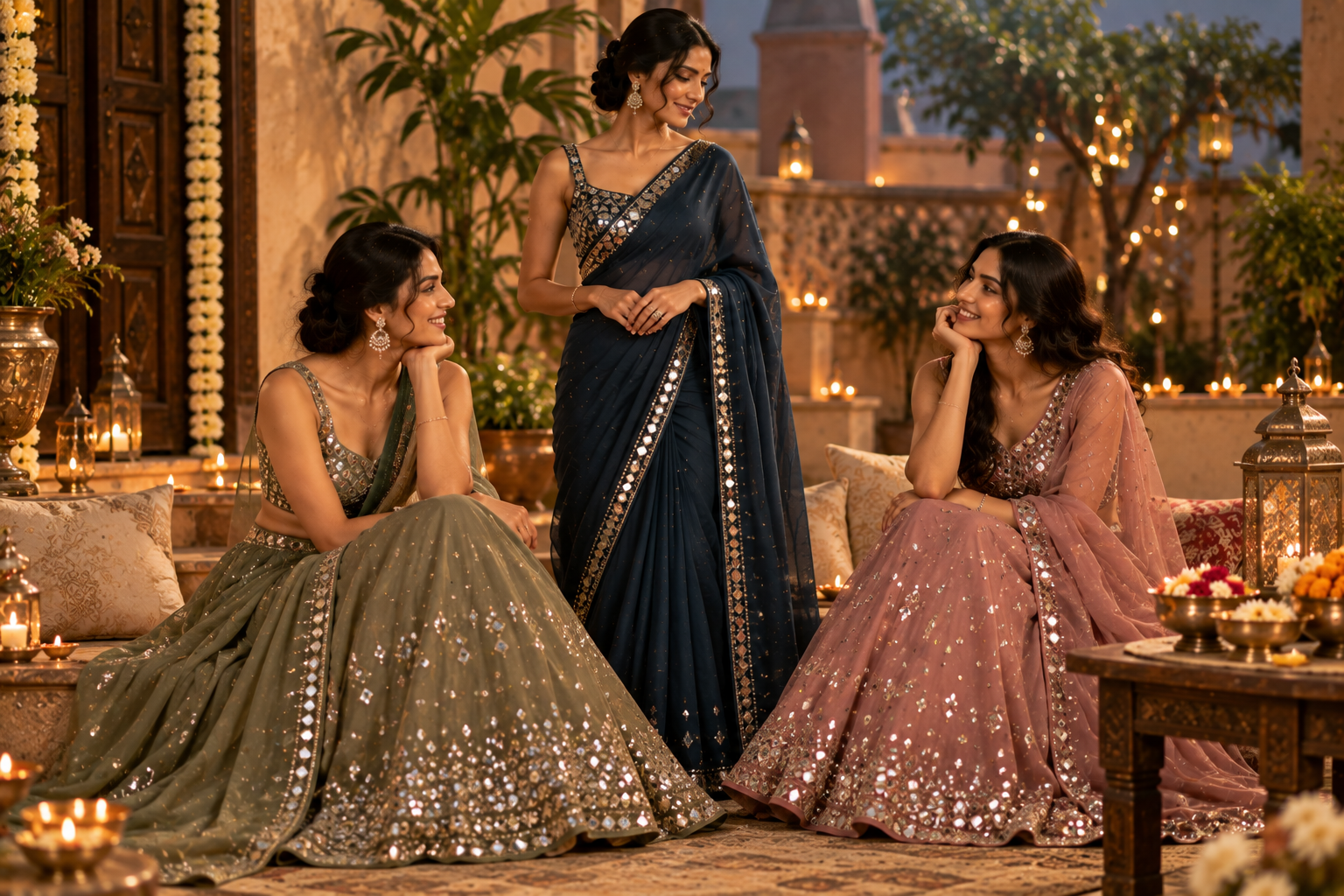
A mirror-work blouse paired with a relatively clean saree can make the detailing feel intentional, while a lehenga with mirror work concentrated around the borders and neckline gets the same festive effect without becoming overwhelming.
The diyas can provide the sparkle. Your outfit doesn’t have to do all the work.
IV. The Gota Patti Revival, Lighter Than You Remember
Gota patti has always known how to make an outfit look festive. What’s interesting now is how light and wearable it can feel when the embellishment is used thoughtfully.
The traditional metallic ribbon embroidery brings texture and shine without necessarily adding the visual weight of heavy embellishment. That makes it particularly appealing for a Diwali wardrobe where one outfit might need to survive several hours of standing, sitting, greeting relatives and eating far too much.
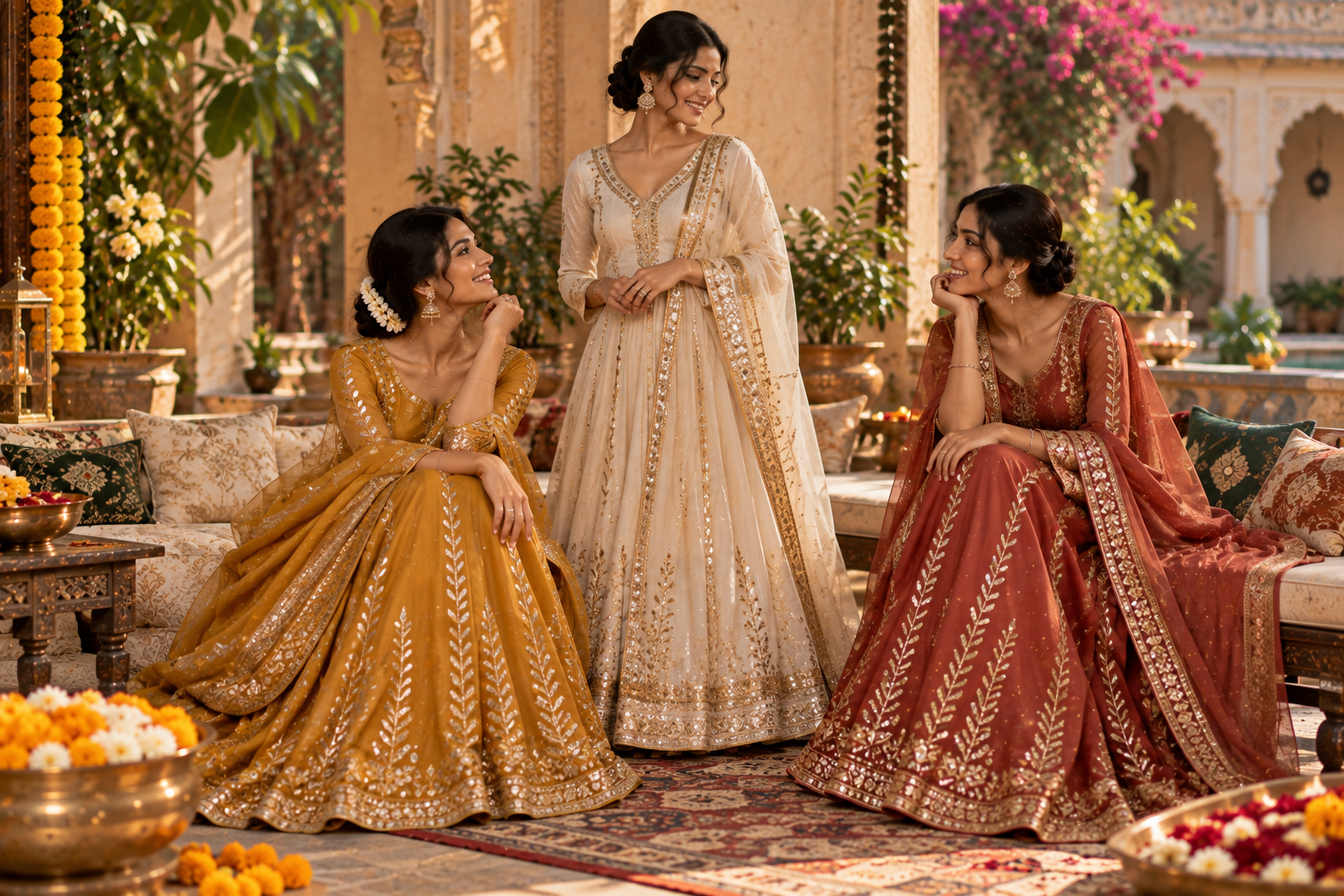
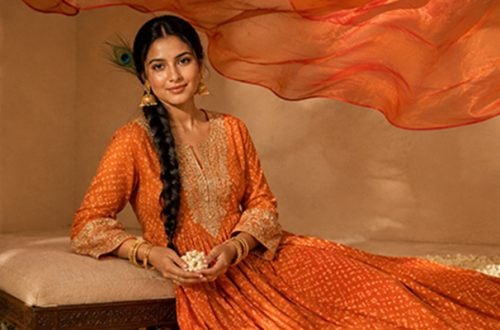
A gota-detailed Anarkali, lightweight lehenga or festive kurta set in rust, mustard, ivory or deep green can deliver plenty of occasions without making you feel like you’re carrying the occasion around with you.
Richness doesn’t always have to come with weight.
- Soft Floral Threadwork, for the Quietly Romantic
Where some festive looks go straight for drama, soft floral threadwork takes a more romantic route.
Fine resham embroidery, delicate vines, leaves and floral motifs bring a handcrafted feel to sarees, Anarkalis and lehengas without overwhelming the silhouette. Pastels work particularly well here blush, lavender, powder blue and ivory especially when paired with subtle metallic accents.
The result feels feminine without becoming overly sweet, and festive without relying on heavy embellishment. It’s the kind of outfit that doesn’t need a dramatic entrance. It simply looks beautiful when you notice it.
VI. Dimensional Embroidery, for the One Statement Piece
Sometimes an outfit only needs one unforgettable detail.
Raised threadwork, layered appliqués and three-dimensional floral or architectural motifs are particularly effective when they’re given room to stand out. Instead of covering the entire outfit with dimensional embellishment, place the drama where you want the eye to go.
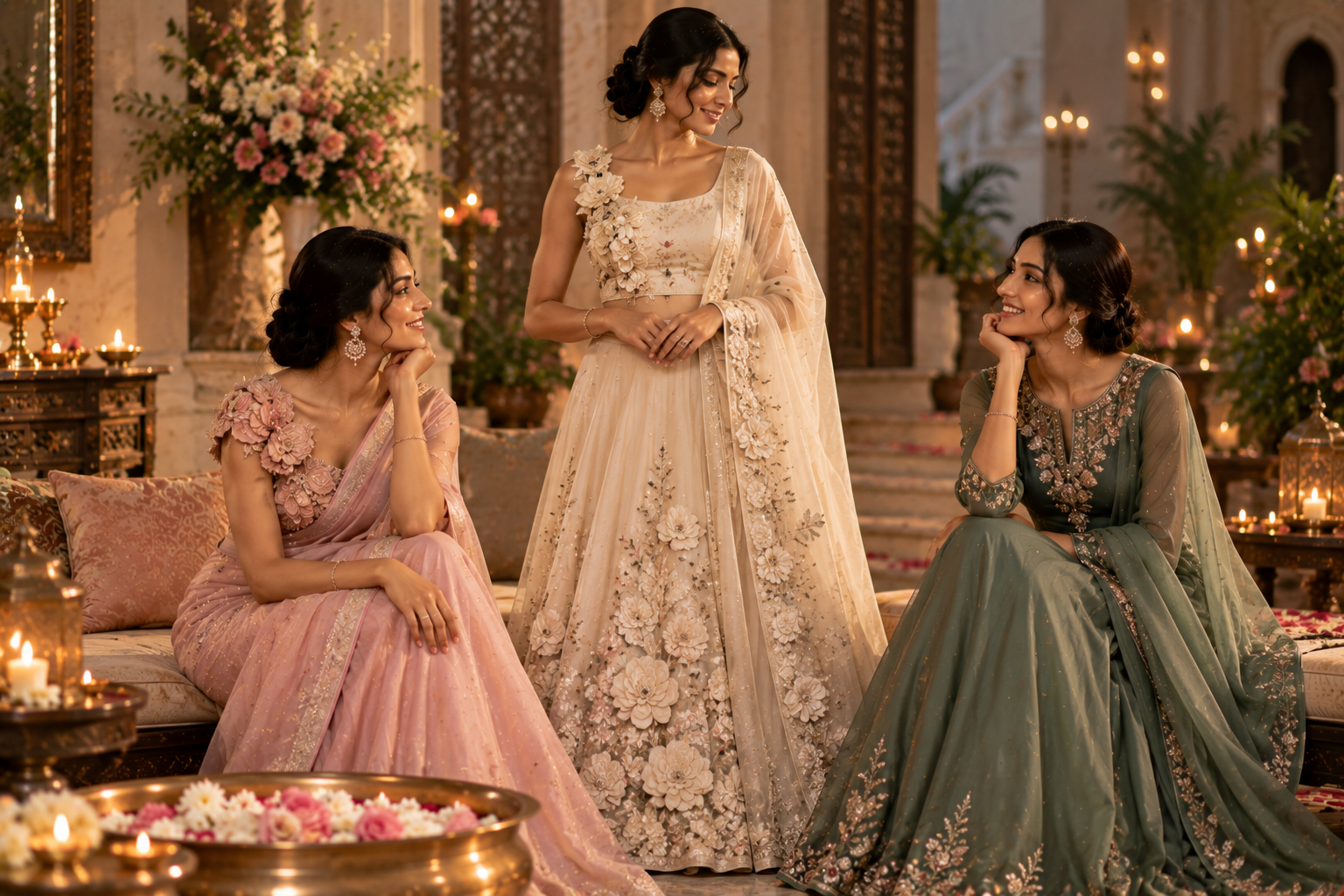
A statement blouse can transform a simple saree. A dramatic border can give a clean lehenga its entire personality. An embroidered neckline can make an otherwise understated Anarkali feel special.
The secret is knowing where to stop.
One dramatic detail is memorable. Five dramatic details are usually just competing for the same photograph.
VII. The A-Line Silhouette, Structure Without a Single Ounce of Drama
The most quietly relevant trend of the season isn’t a fabric or embroidery technique at all. It’s the silhouette.
The A-line’s easy, no-cinch flare is finding its way into festive dressing from lehengas and Anarkali’s to kurta sets and contemporary ethnic silhouettes. It creates structure without feeling restrictive and movement without making the outfit feel overly dramatic.
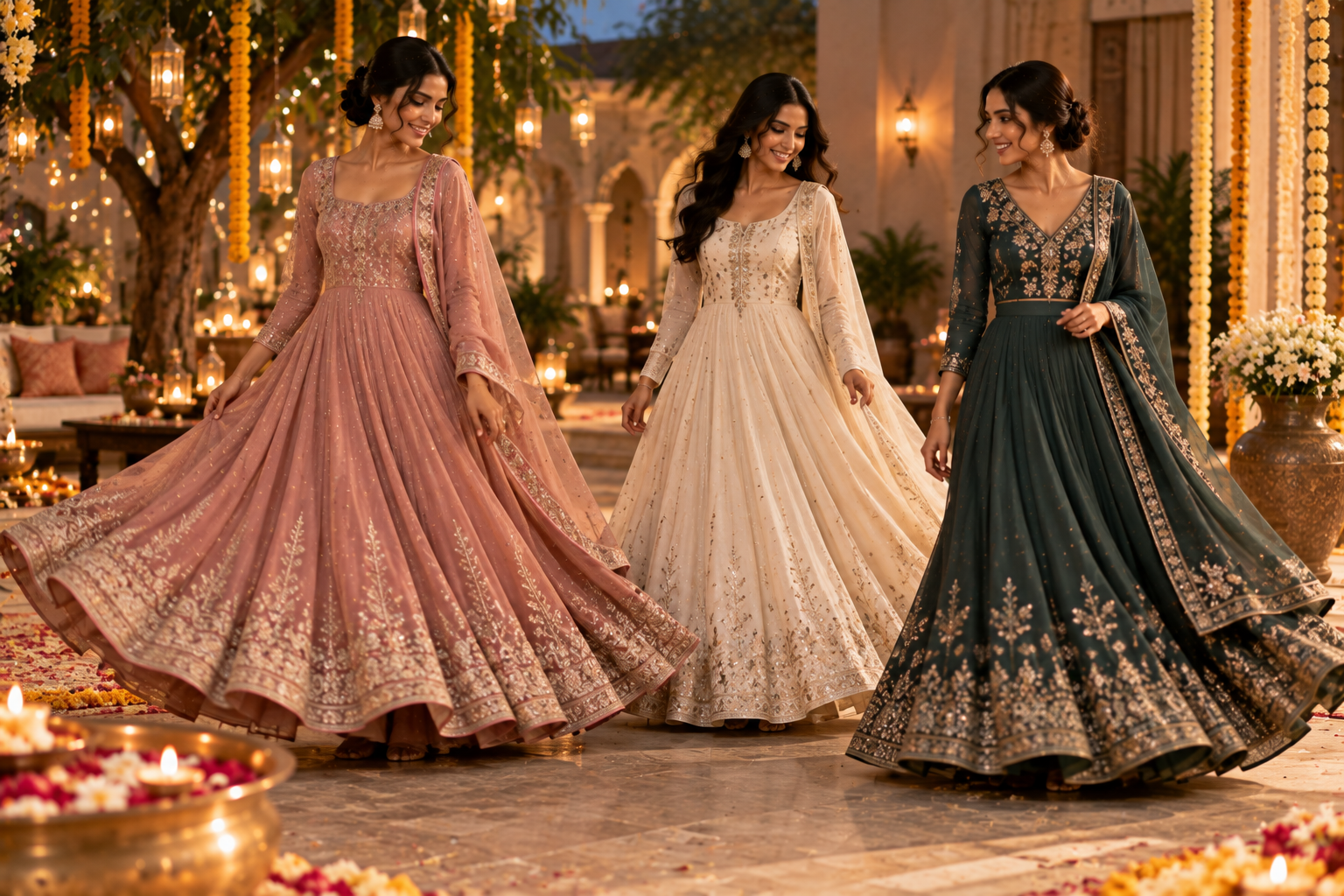
That’s particularly useful during Diwali, when looking good is only half the job. You also need to sit through dinner, move between rooms, greet approximately forty relatives and somehow avoid stepping on your own hem. Sometimes the most sophisticated silhouette is the one that lets you forget you’re wearing it.
The Thread Connecting All Seven
None of these directions are really about doing more.
They’re variations on the same idea: precision over volume, one detail over ten, and silhouettes that move with you instead of announcing themselves before you’ve even entered the room.
Tone-on-tone dressing creates richness through texture. Minimal metallics use shine strategically. Mirror work becomes sharper. Gota patti gets lighter. Floral embroidery becomes softer. Dimensional detailing gets its moment by being used sparingly. And the A-line silhouette brings structure without unnecessary drama.
In other words, Diwali dressing in 2026 doesn’t have to be louder to be memorable.
At Cbazaar, our festive collection brings these directions into contemporary ethnic dressing from tone-on-tone silks and minimal metallic detailing to mirror work, gota patti, floral threadwork, dimensional embroidery and A-line silhouettes across sarees, lehengas and suits. With made-to-measure tailoring and plus-size customization, the idea is simple: the outfit should not only look right but feel right on you.
Whether you’re dressing for Lakshmi Puja, a family gathering, a Diwali party or the inevitable round of photographs, there’s room for both tradition and a more contemporary interpretation of it.
Let the trend be restrained. Let the outfit be unforgettable anyway.

You May Also Like

The “Destination Eid” Lookbook: Lightweight Outfits for Celebrating Abroad
What to Wear for Janmashtami 2026: Festive Ethnic Looks With a Modern Twist