
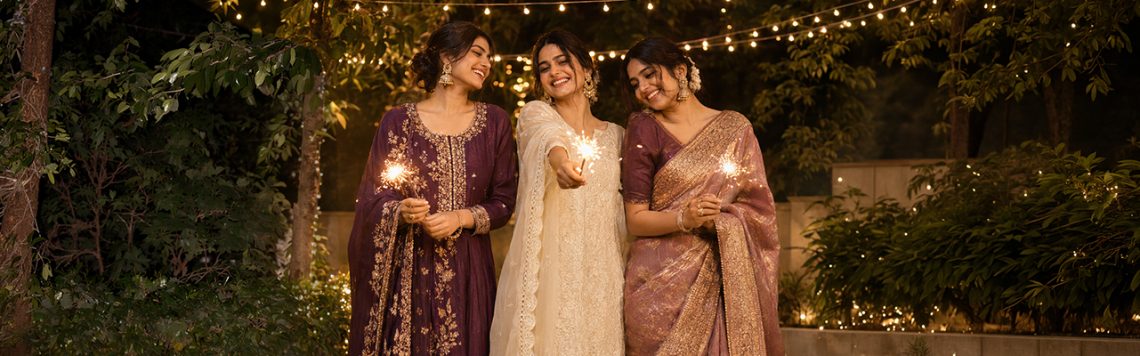
How to Build a Complete Diwali Look from Outfit to Jewellery
A beautiful Diwali outfit can still feel incomplete. The saree is right, the colour works and the blouse fits perfectly, but something feels missing. Sometimes, it’s the jewellery. Sometimes, it’s the way the dupatta falls or how one detail competes with another.That’s because a complete Diwali look isn’t created by choosing beautiful things individually. It’s created by making them work together.
Think of a wine silk saree with a gold zari border, an embroidered blouse, a heavy necklace, oversized earrings and an embellished clutch. Suddenly, every element is asking for attention. Keep the saree, simplify the blouse and let one striking piece of jewellery lead instead. The entire look changes.From fabric to jewellery, every choice influences the next. Here’s how to bring everything together for a festive look that feels polished and unmistakably yours.
Step One: Let the Fabric Set the Mood
Before choosing colour or embellishment, consider what you want the fabric to bring to your outfit. Silk offers richness and structure, making it a beautiful choice for sarees worn to evening pujas and family gatherings. Georgette creates a softer, flowing effect, ideal for Anarkalis and lehengas that need movement. Velvet brings depth and a richer finish to evening celebrations.
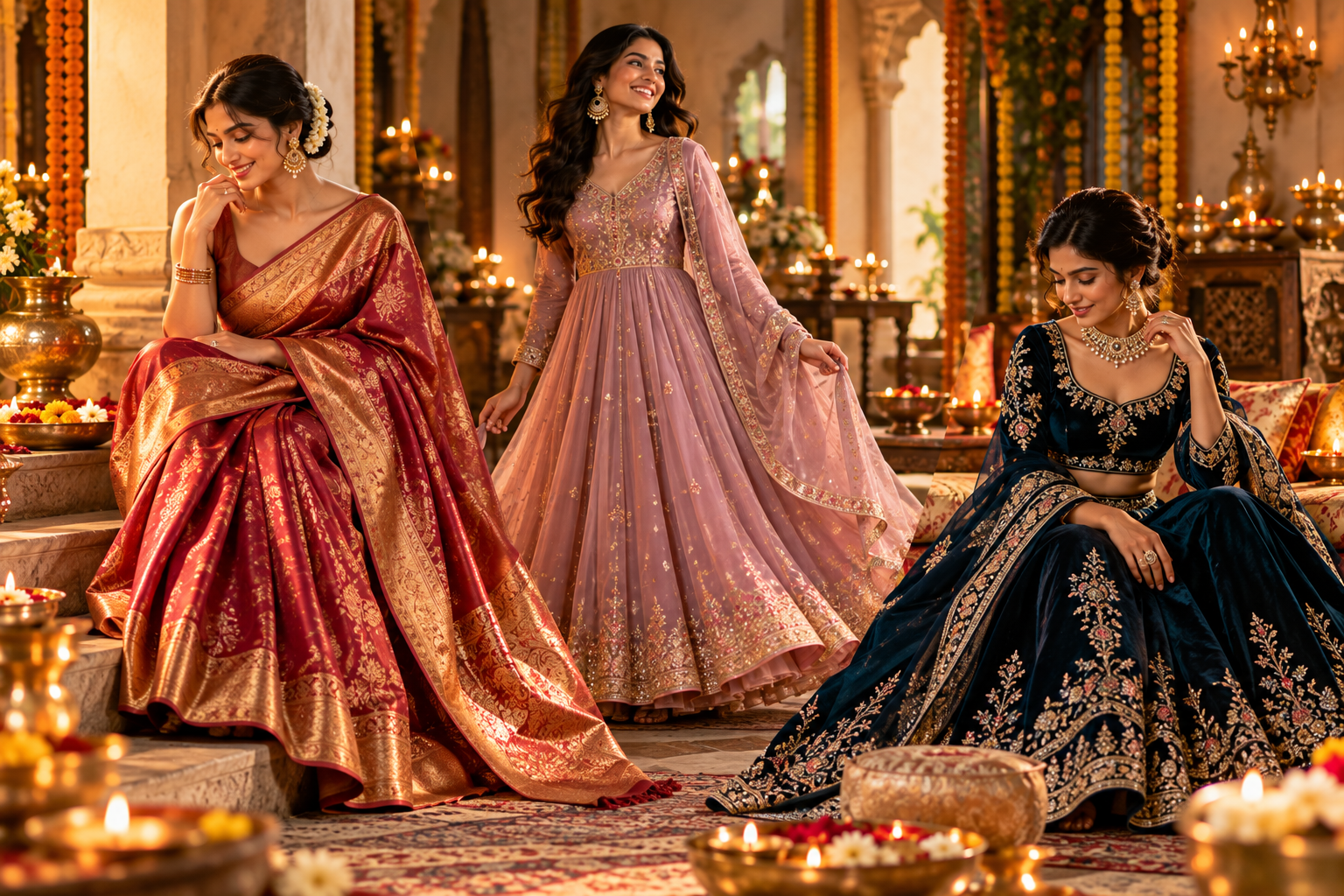
Each fabric also responds differently to light. Silk has a subtle sheen, georgette moves gracefully, and velvet creates a deeper visual effect. If your fabric already features an intricate weave or rich texture, keep the remaining details relatively restrained. Simpler fabrics give you more freedom to experiment with embroidery and statement jewellery.
Step Two: Choose a Silhouette for Your Celebration
A saree, lehenga and Anarkali each bring a different personality to Diwali dressing.A saree offers timeless elegance for a family puja or a formal gathering. A lehenga brings celebratory movement to parties and evenings filled with music and dancing. An Anarkali offers a flowing, polished alternative that can work beautifully for celebrations moving from puja to dinner.
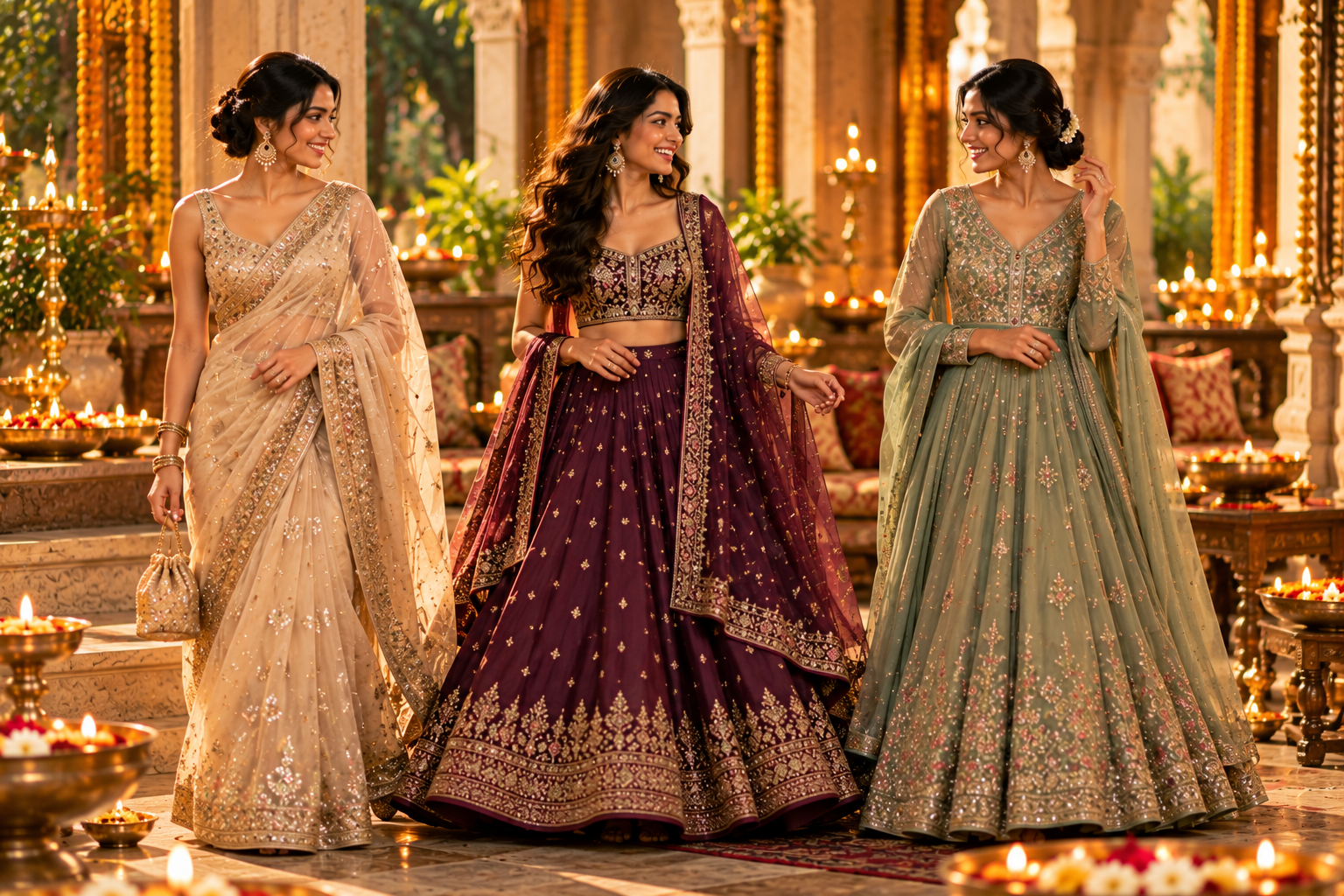
Imagine an emerald silk saree for an intimate family gathering, a wine lehenga for an evening party or a blush Anarkali for a festive dinner. None is automatically more appropriate than the others; it depends on your personal style and plans.Consider comfort, too. Choose a silhouette that allows you to sit, move and enjoy the evening without constantly adjusting pleats, sleeves or waistbands. The best outfit looks good and feels right throughout the celebration.
Step Three: Choose a Colour That Sets the Mood
Maroon, wine, emerald, royal blue and deep red bring richness to festive dressing, while gold and bronze details add warmth. These shades work particularly well with silk and velvet.But Diwali style doesn’t have to revolve around jewel tones. Ivory, blush pink, lavender and other pastels can look equally festive when paired with thoughtful textures and metallic accents. An ivory lehenga with gold embroidery or a blush silk saree with a defined border can feel elegant without relying on bold colour.
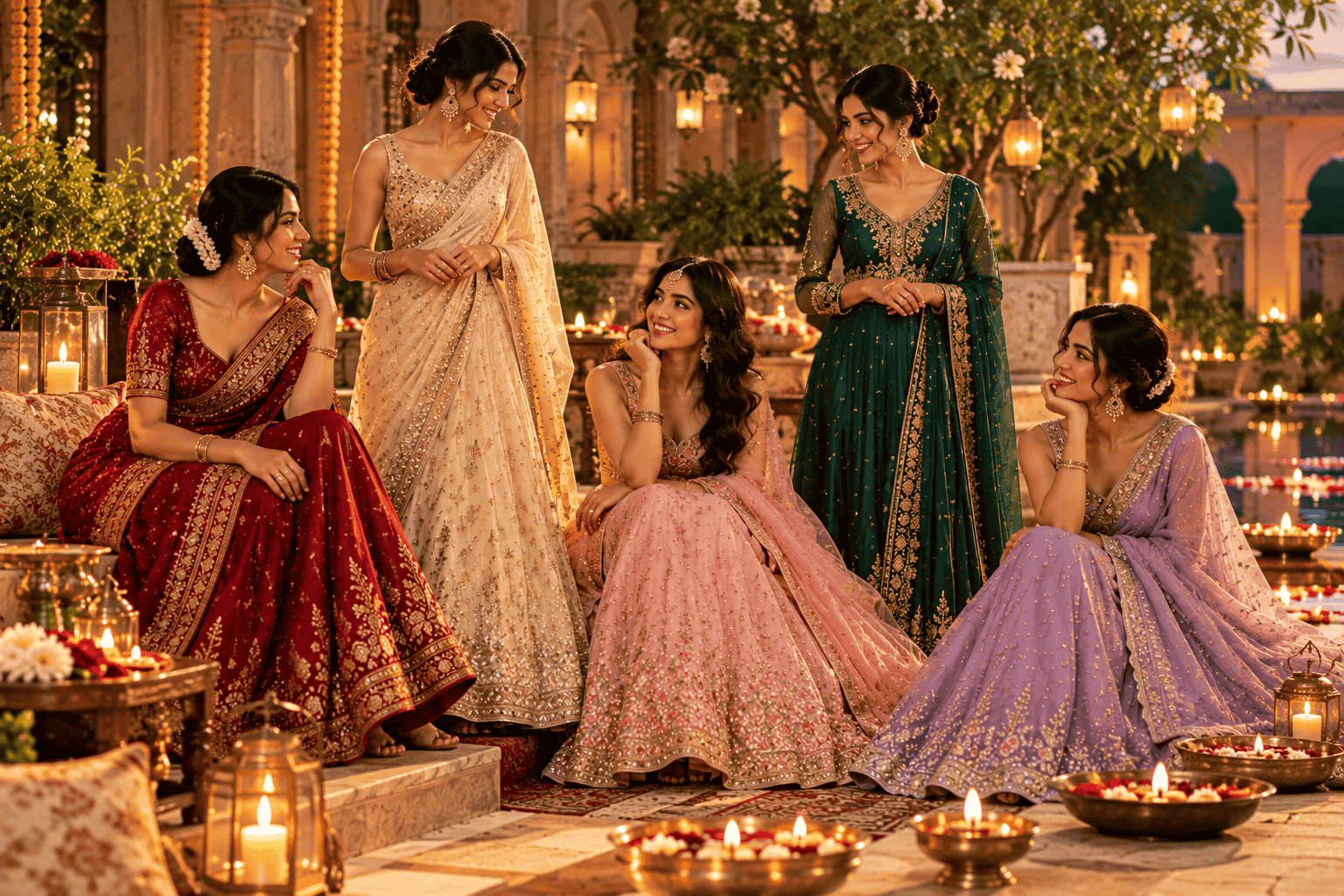
Choose one dominant shade, then introduce contrast through the blouse, dupatta or embroidery. Deep colours create drama, while lighter shades bring softness. Both can work beautifully when the details complement the overall mood.
Step Four: Give the Blouse Its Own Personality
The blouse can transform a saree or lehenga without changing the entire outfit.With a richly embroidered saree, a clean blouse in a complementary colour allows the border to take centre stage. A simpler silk saree, meanwhile, can gain character from a structured blouse, distinctive neckline or contrasting embroidery.
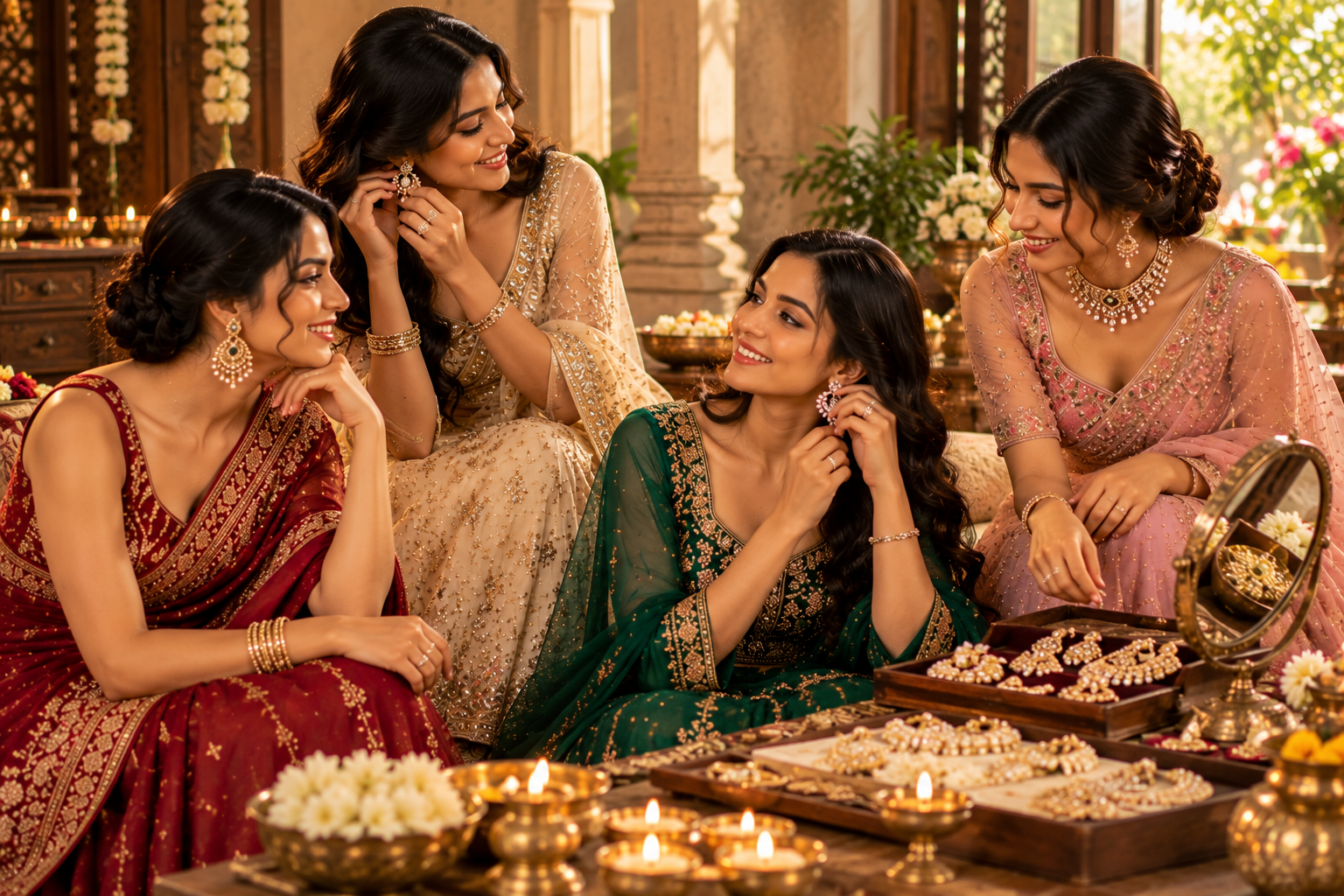
The same principle applies to lehengas. Pair a heavily embellished skirt with a relatively understated choli to create balance or let a detailed blouse lead when the skirt is simpler.A deep maroon saree with a gold border and a matching blouse creates a classic look. Introduce subtle gold embroidery or a contrasting neckline, and the outfit takes on a different personality. The aim is to add dimension without making every element compete for attention.
Step Five: Build the Jewellery Around the Outfit
Jewellery should complement the outfit rather than compete with it. Start with the neckline and embroidery before deciding which pieces deserve attention.
Gold jewellery pairs naturally with silk, zari and warm festive colours. Kundan and polki designs bring ceremonial richness, while coordinated earrings and bangles create a classic finish.
For a contemporary approach, 925 sterling silver jewellery with moissanite offers a distinctive alternative. Geometric earrings add clean lines, floral designs soften structured outfits, and solitaire studs introduce subtle brilliance. Ear climbers can bring a modern edge to a simpler blouse or sleek neckline.
Picture an emerald Anarkali with geometric silver earrings. Their clean lines contrast with the rich green fabric without competing with its embroidery. Alternatively, delicate moissanite studs can add a quieter sparkle when you want the outfit to remain the focal point. An ivory outfit with minimal embellishment might benefit from a statement necklace or striking earrings.
Rings offer another way to finish the look. A single silver ring can add a subtle point of interest without overcrowding an outfit that already features statement earrings.
The secret is to give each piece a purpose. If the neckline is elaborate, let the earrings lead. If the outfit is minimal, a statement necklace can become its focal point.
Step Six: Bring the Finishing Details Together
The dupatta, footwear and clutch may seem like smaller decisions, but they can change how polished the final outfit feels.
A structured dupatta drape creates a formal finish, while a softer drape introduces movement. If the neckline is heavily embroidered, position the dupatta so it doesn’t hide the detailing. An embroidered border can become a feature when styled thoughtfully.
Juttis complement many traditional outfits, while embellished sandals or heels create a dressier finish. Try your footwear with the saree or lehenga before finalising the drape or hemline.
For accessories, choose a clutch that picks up a shade from the embroidery or introduces a complementary metallic finish. Everything doesn’t need to match exactly; the aim is to create a connection between the details.
Before heading out, look at the complete outfit. If several elements compete for attention, remove an accessory. If the look feels too understated, introduce one detail that adds personality.
Sometimes, the finishing touch isn’t another piece. It’s knowing when to stop.
The Look, Finally, as a Whole
A complete Diwali look isn’t about collecting expensive pieces or making every element stand out. It’s about giving each decision a purpose. Fabric sets the mood, the silhouette suits the celebration, colour establishes the personality, and the blouse and jewellery bring definition. The finishing details make everything feel connected.
At Cbazaar, the Diwali collection brings together sarees, lehengas and Anarkalis for different festive occasions. Made-to-measure tailoring is available for eligible outfits, with plus-size customisation options offering further flexibility. The 925 sterling silver and gold-toned jewellery edits provide traditional and contemporary ways to complete your look, with worldwide shipping to over 170 countries.
A complete Diwali look doesn’t need every detail to stand out. It needs every detail to belong. Choose the outfit. Find the detail that makes it yours. Let the jewellery finish the thought.


