
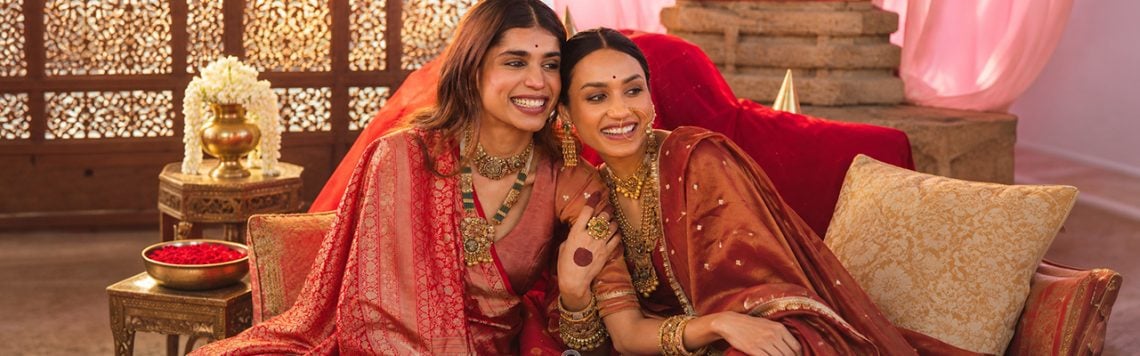
Jewelry Trends That Keep Coming Back and Why We Still Love Them
You’ve probably looked at a piece of jewellery and thought, Wait, haven’t I seen this before?
You have. Probably more than once. The funny thing about jewellery is that it rarely disappears for good. A silhouette fades for a few years, gets rediscovered by a new generation, appears on a few fashion feeds, and suddenly we’re all wondering why we ever stopped wearing it.But not everything makes that journey. Some pieces return because they’re nostalgic. Others return because they’re genuinely useful. And then there are those rare designs that keep finding new ways to look relevant, no matter what the rest of fashion is doing. That’s where jewellery trends get interesting
Why Moissanite Keeps Showing Up
If you’ve been noticing moissanite across contemporary jewellery, there’s a reason. Moissanite is a lab-created gemstone made from silicon carbide, known for its brilliance, distinctive flashes of fire and durability. With a Mohs hardness of 9.25, it is well suited to jewellery designed for regular wear.But its appeal isn’t only technical. Moissanite has a distinctive sparkle that catches light beautifully, making even relatively simple jewellery feel more considered. Set in 925 sterling silver, it creates a clean, polished combination that can feel luxurious without becoming overly formal. And that’s what makes it particularly interested in modern jewellery. The stone brings the sparkle, while the design determines the personality.
Solitaires: When Minimalism Stops Feeling Minimal
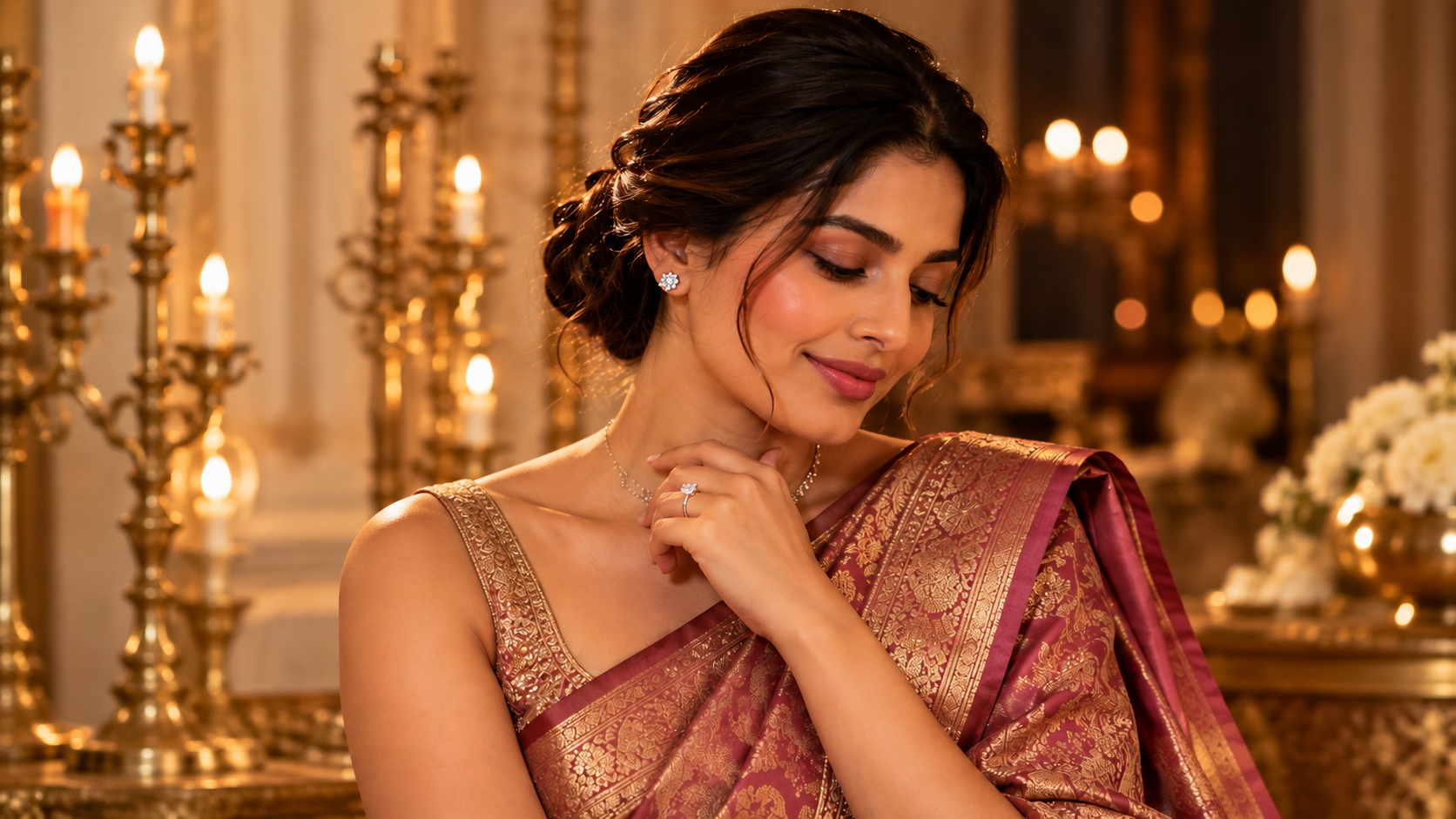
There was a time when wearing one small stone felt like the opposite of making an effort. Now, that’s precisely the appeal.The solitaire has survived because it understands something most statement pieces don’t: you don’t always want your jewellery to announce itself before you do. A single moissanite set in 925 sterling silver can sit quietly against a white shirt, then look equally at home with a silk saree later that evening. Nothing about the design demands a particular occasion.And perhaps that’s why the solitaire keeps returning. Not because it’s exciting, but because it’s dependable. It solves a problem fashion keeps creating: how to look polished without looking overdone. And dependable fashion has a surprisingly long memory.
Ear Climbers: When Placement Becomes the Design
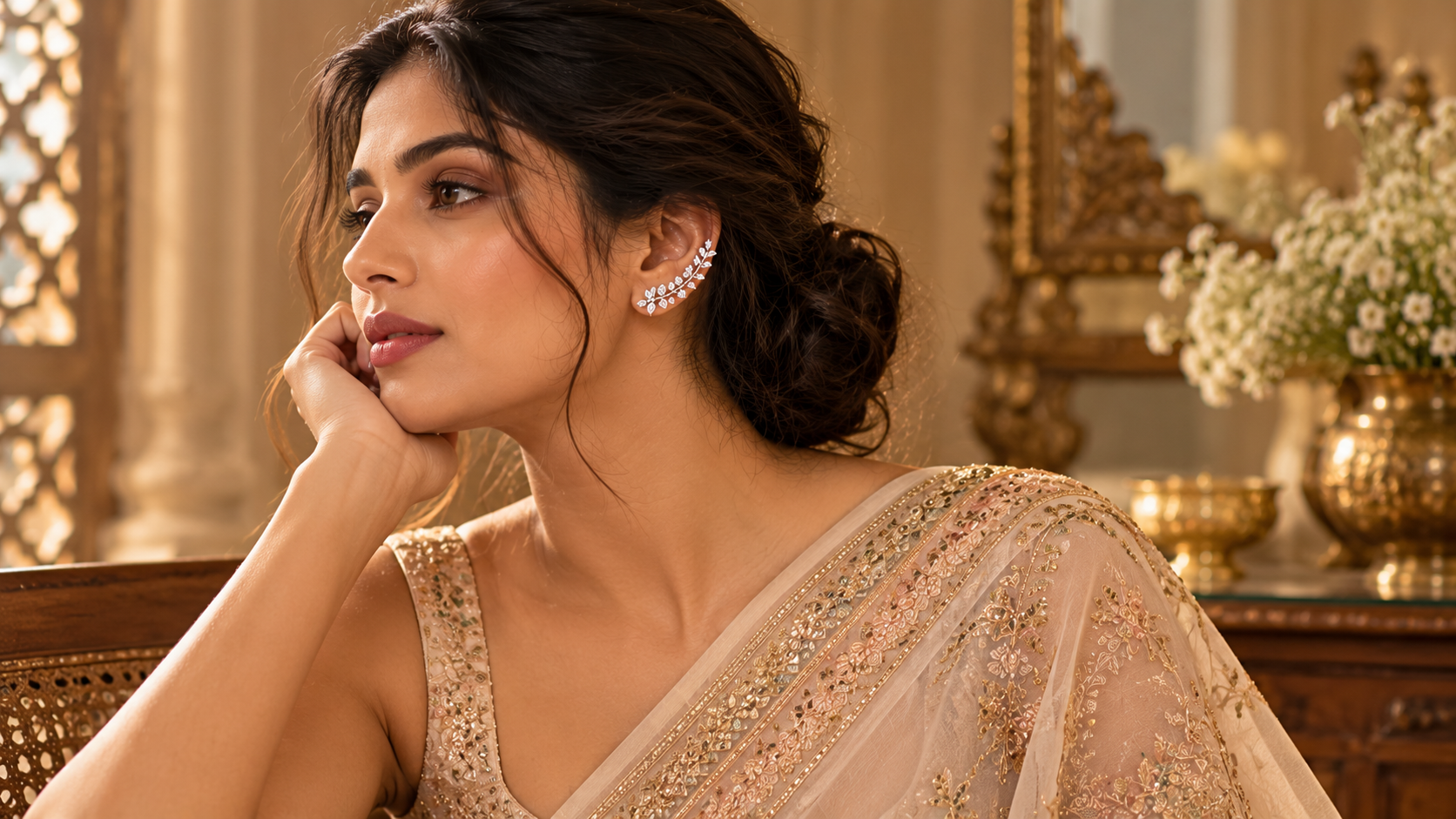
For a long time, the earring had one obvious destination: the earlobe. Then someone looked at the ear and apparently decided there was much more real estate available.Ear climbers changed the conversation by turning placement into part of the design. Instead of hanging beneath the ear, the jewellery follows its curve. Suddenly, the shape of the ear becomes part of the visual story.That’s a bigger shift than it sounds. Because once jewellery starts playing with where it sits, familiar designs begin to feel completely different without actually becoming complicated. A curved moissanite climber can feel architectural, while a floral cascade can feel softer. The idea stays simple.The placement does the work.
Halo Settings: A Little Drama, Fully Controlled
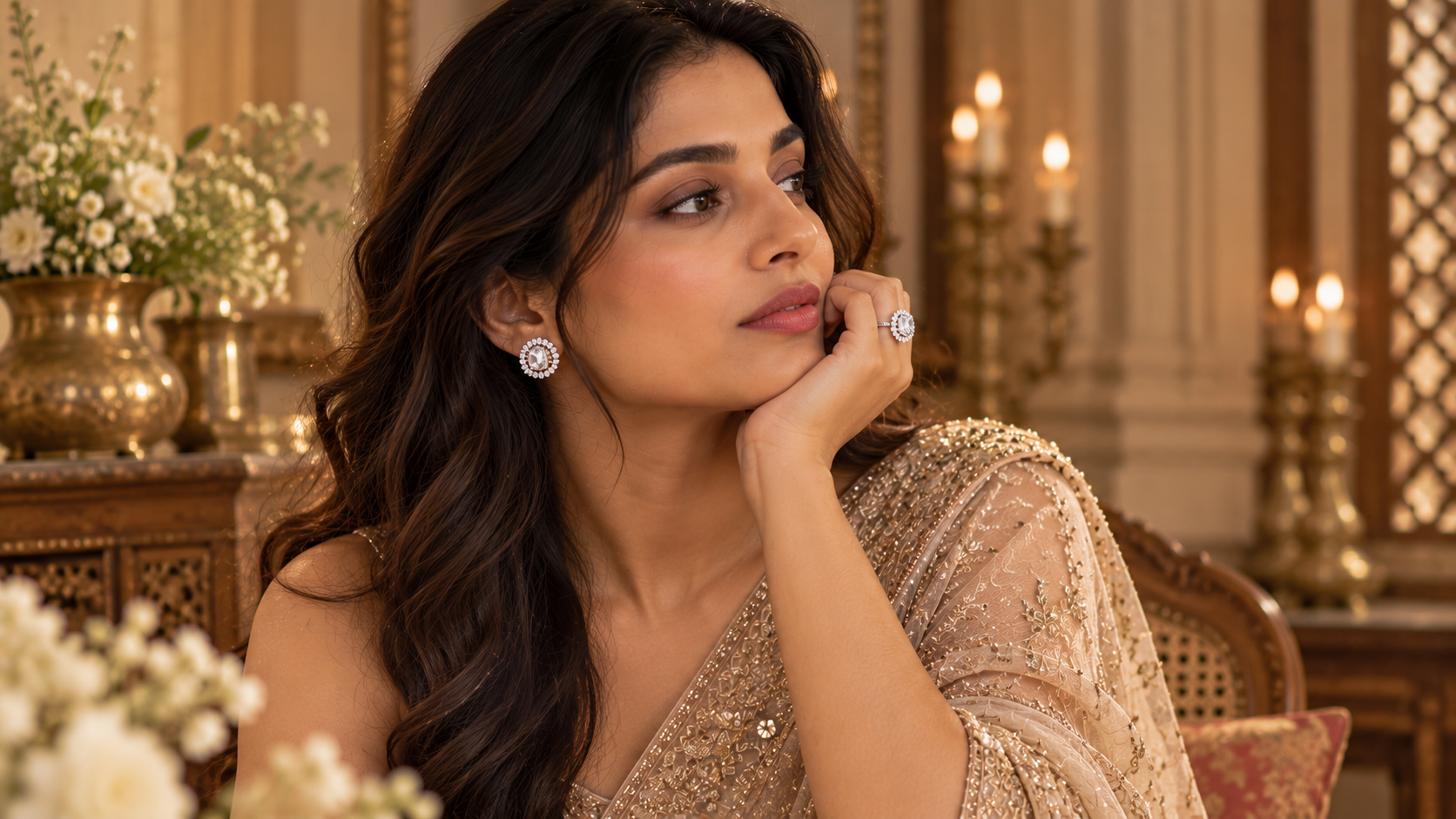
Jewellery has always had a clever trick for making something feel bigger without actually making it bigger. That’s where halo settings come in.Put a central stone in a halo of smaller stones and suddenly the whole design has more presence. The centre looks more pronounced, the sparkle feels fuller, and the piece appears to have far more going on than its individual elements suggest. Cushion, emerald-cut and round halo designs all play with that same visual idea.It’s not necessarily about wearing something enormous; it’s about creating a little more impact from what is already there. Think of it as jewellery’s version of turning up the volume without changing the song.And perhaps that’s why halo designs keep finding their way back. They offer drama, but with considerably more control than going all-out.
Stacking: Because One Piece Was Never Really Enough
There is something slightly addictive about stacking jewellery.
One ring looks finished.
Two look intentional.
Three suddenly look like a styling decision.
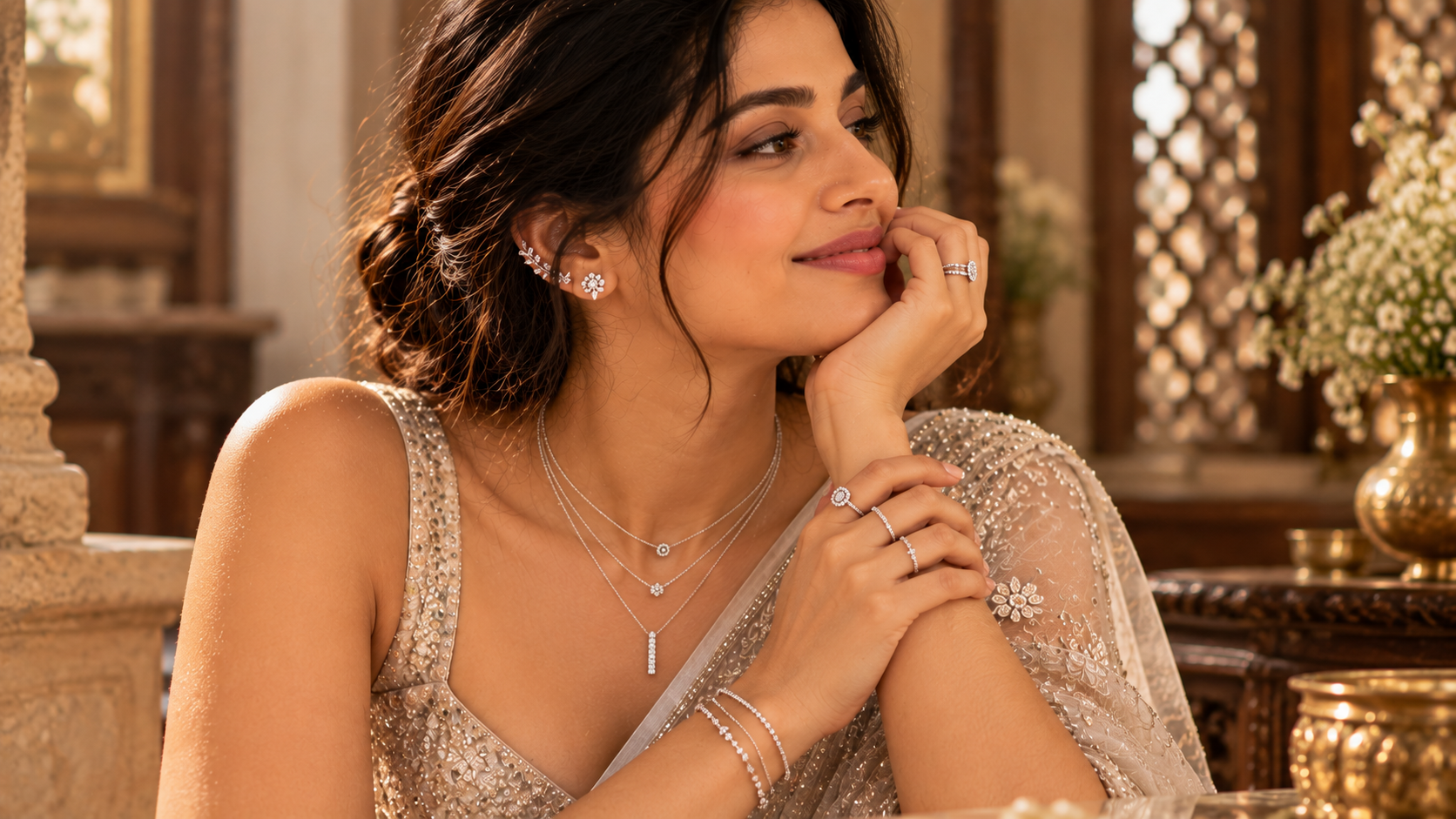
Layering and stacking have become a recurring part of jewellery fashion because they allow familiar pieces to become something new simply by changing how they’re worn. A delicate 925 sterling silver ring can stand perfectly well on its own. Add another band and the same piece takes on a completely different character.The same idea works beyond rings. Layer a fine necklace with another chain, or pair subtle earrings with a more detailed ear climber, and suddenly the jewellery feels personalised rather than simply selected.That’s the real appeal of layering: you don’t necessarily need a completely new design. Sometimes you just need a different combination.And unlike a trend that depends on one very specific silhouette, stacking keeps reinventing itself because the wearer gets to decide where it goes next.
Geometric Jewellery: When Florals Get Too Predictable
Florals will probably never disappear completely. But fashion has a habit of swinging between softness and structure. That’s where geometric jewellery gets its moment.Triangles. Circles. Sharp lines. Deliberate proportions.These designs appeal to a different instinct. They don’t ask you to notice the ornamentation first. They ask you to notice the shape.A geometric moissanite earring can make a simple outfit feel more considered without adding layers of decoration. It works particularly well when everything else is already clean: a structured blazer, a minimal saree blouse or a sharply cut neckline.Sometimes the most interesting detail is simply a line going somewhere unexpected.
Floral and Botanical Designs: Nature Finds Its Way Back
And just when everything becomes too structured, jewellery remembers flowers exist.Floral and botanical motifs have survived because they can be reinvented almost endlessly. A sculpted leaf can feel modern, a sunflower-inspired design can feel playful, a floral cluster can feel delicate and a cascade can become dramatic.The motif hasn’t changed much.The treatment has.That’s why calling florals a “trend” almost feels unfair. They’ve been part of jewellery for so long that they’re less of a trend and more of a language designers keep speaking differently.And that may be the secret to their longevity: nature gives designers an idea that can be softened, sharpened, simplified or made extravagant without ever feeling completely unfamiliar.
Why the Pieces We Keep Are Usually the Pieces That Work
Maybe that’s why the pieces that keep returning don’t really feel like trends anymore. They’ve become shortcuts to a certain feeling: a solitaire when you want things uncomplicated, a halo when the outfit needs a little more presence, an ear climber when the familiar feels too familiar, and layering when you want the jewellery to feel distinctly yours. Geometry brings structure when everything else feels a little too soft, while florals bring the look back to something more organic. Different personalities, different occasions and different ways of wearing jewellery, but all built around ideas that continue to work long after the trend cycle has moved on.At Cbazaar, that idea comes through in the 925 sterling silver jewellery collection, where moissanite appears across solitaire, halo, floral, geometric and ear-climber styles. Fashion will keep introducing something new, and jewellery will keep quietly bringing something old back and we’ll probably call it a trend again.Explore Cbazaar’s 925 sterling silver jewellery collection and enjoy our latest CVG offer to bring a little more sparkle to your jewellery box.

You May Also Like

Igniting Earring For Exquisite Ethnic Outfits

Jhumka Meaning: The Story Behind India’s Iconic Earrings
