How to Style Blue, Yellow & Green for Janmashtami 2026
Three colours. One festival. Roughly infinite combinations, if you actually stop to think about it.
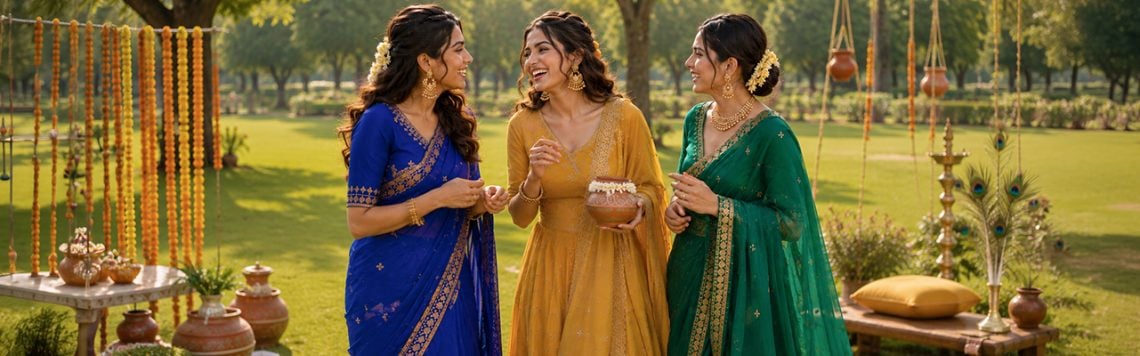
Most people default to the obvious move on Janmashtami: one solid-colour outfit, maybe with a bit of gold, done. And honestly, that works perfectly well. But if you’ve got Krishna-inspired colours sitting right their familiar peacock blue, traditional pitambar-inspired yellow, and jewel-toned peacock green there’s a genuinely fun styling exercise hiding in how you combine them, not just which one you pick.
Janmashtami 2026 falls on Friday, September 4 for most households, with ISKCON and Vaishnava communities celebrating a day later on Saturday, September 5. Whichever date is yours, here’s how to actually play with these three colours like a stylist would, instead of just picking your favourite and calling it done.
Start With the Question: Anchor or Accent?
Before you touch a single outfit, decide this one thing: is one colour going to be your anchor, the dominant shade covering most of the outfit while the others show up as accents? Or are you going for a genuine colour-block effect, where two or three colours share the spotlight almost equally?
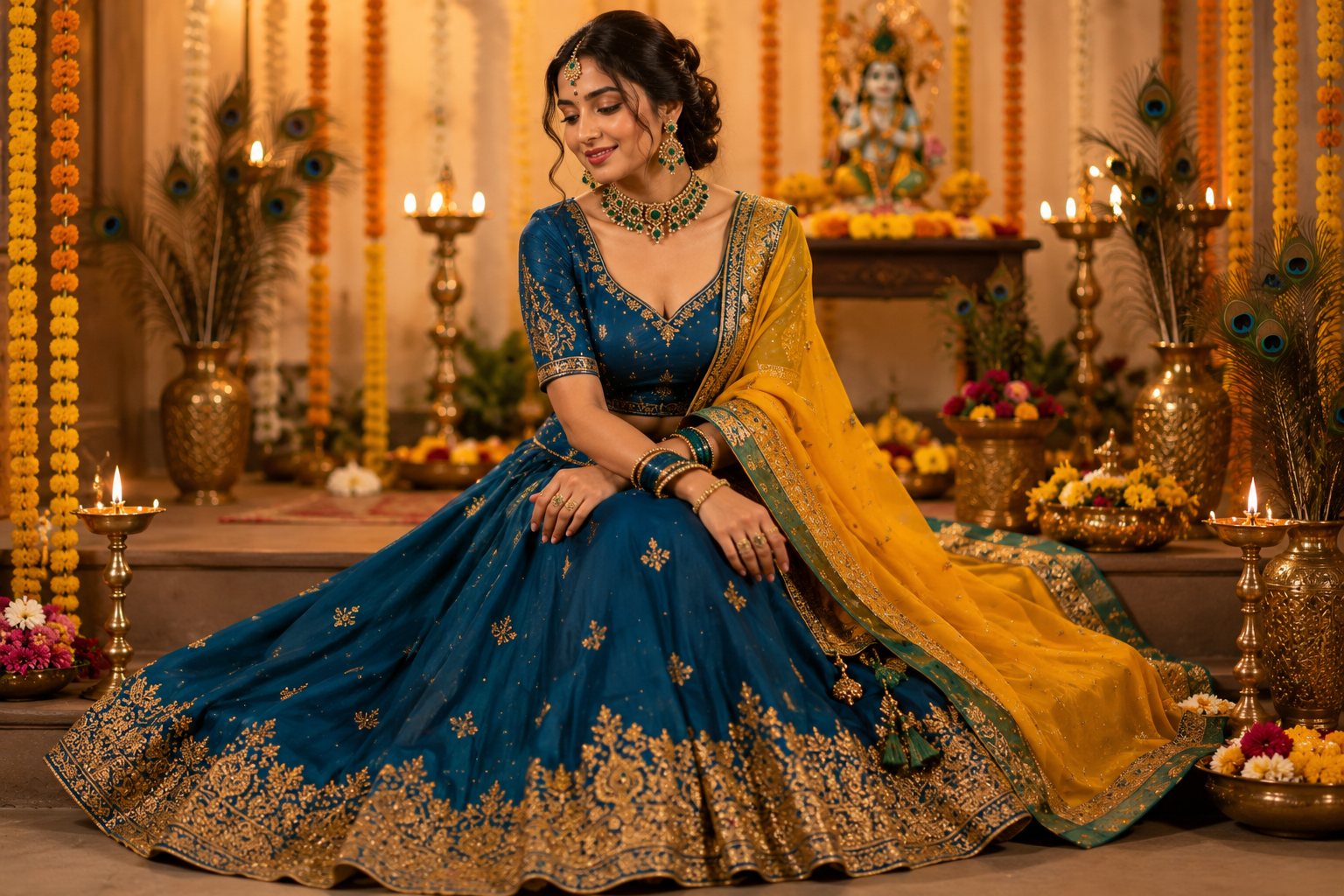
The most successful Janmashtami looks usually let one colour take the lead. It’s simply easier to execute well, and it keeps the outfit from feeling visually chaotic. Once you’ve chosen your anchor, the other two colours become your styling tools: the dupatta, the border, the jewellery, or the accessories.
Blue as the Anchor: Let Yellow and Green Do Supporting Work
If peacock blue is your base, a lehenga, an Anarkali, or a kurta you have two beautiful directions to take the accents.
Pair it with a yellow dupatta or stole for a classic, instantly recognizable Krishna-inspired combination. It is one of the most recognizable colour pairings associated with the festival, and for good reason: the warm yellow creates a striking contrast against the rich blue.
Alternatively, bring in peacock green through jewellery or embroidery rather than yellow, and you get a moodier, jewel-toned effect: two cooler colours playing off each other instead of the warm-cool contrast blue and yellow create.
A peacock-blue saree with a green-bordered pallu and gold jewellery is a quietly sophisticated way to wear the festival’s colour story without leaning on the most obvious pairing.
Yellow as the Anchor: Warm, Radiant, Easy to Build Around
A yellow base, the traditional pitambar-inspired choice, especially for men’s dhoti-kurtas pairs beautifully with peacock-blue accents for that classic festive combination. But don’t overlook green here either.
A mustard-yellow kurta with a peacock-green Nehru jacket creates a rich, warm-meets-jewel-toned look that feels distinctly more contemporary than the standard blue-and-yellow pairing, while still staying rooted in Krishna-inspired colours.
For women, a yellow salwar suit with green embroidery along the neckline and hem, finished with a blue dupatta thrown loosely over one shoulder, uses all three colours in a single outfit without feeling overdone as long as one colour, in this case yellow, does most of the visual work.
Green as the Anchor: The Unexpected Choice
Peacock green is often treated as an accent but making it the hero colour instantly gives your Janmashtami look a richer, more distinctive feel.
A peacock-green saree or lehenga, styled with a blue-and-gold border and yellow bangles or a yellow potli bag, creates a look that still clearly belongs to the Janmashtami colour story while standing out from more predictable blue-and-yellow combinations.
Green also pairs beautifully with gold as a near-solo combination. A rich peacock-green outfit with heavy gold zari work needs very little else to feel complete, letting the colour itself carry the festive weight.
The Colour-Block Approach: All Three, Deliberately
If you want to genuinely wear all three colours at once rather than picking one as a clear anchor, colour-blocking is your best tool. Think a blue blouse with a yellow skirt and a green dupatta, or a lehenga with a blue-to-green ombre skirt paired with a solid yellow blouse.
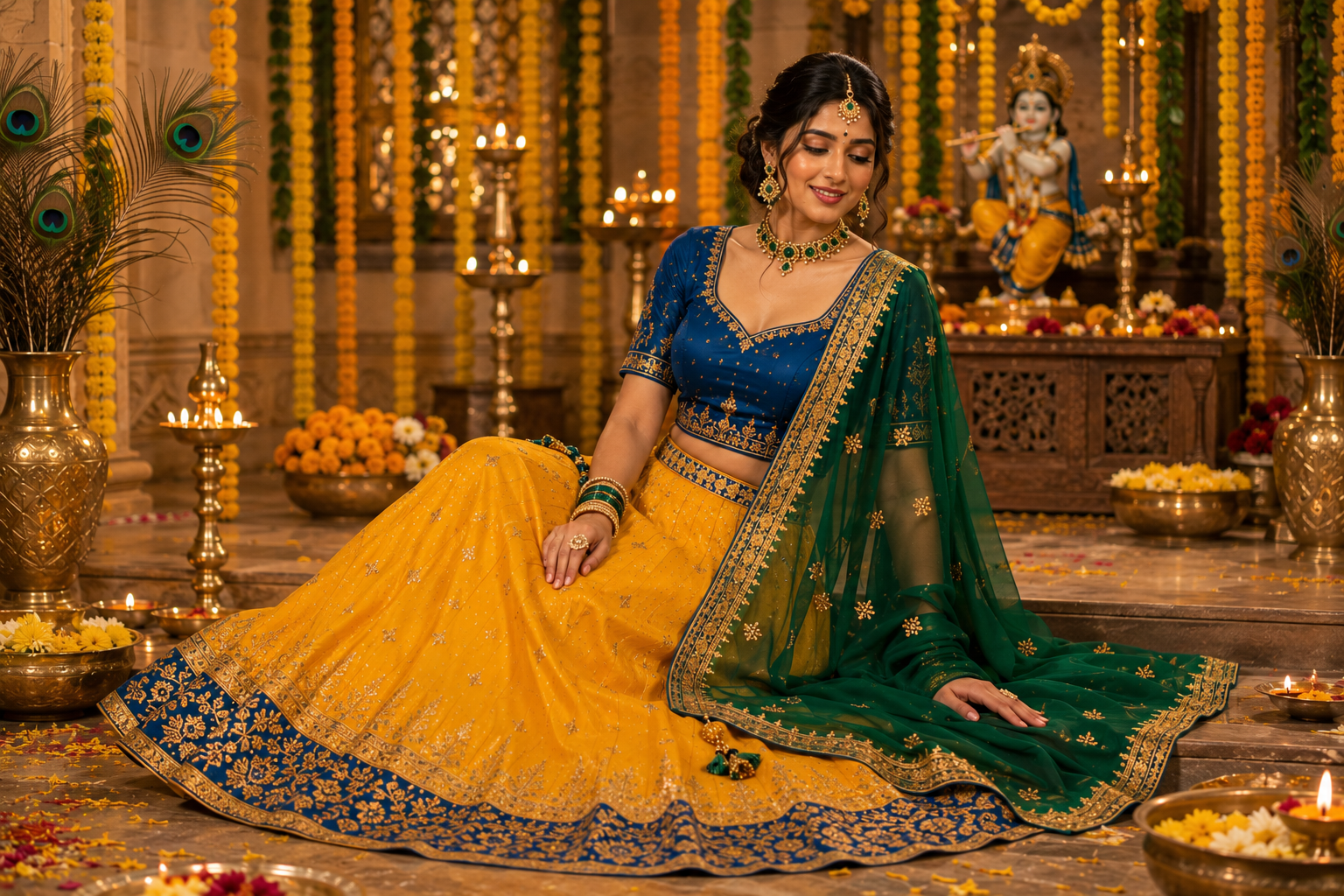
The key to making this work without looking chaotic is balance. Let one colour take up the most visual space, usually through the skirt or main body of the outfit, and let the other two show up in smaller, clearly defined blocks: a blouse, a border, or a dupatta rather than all three fighting for attention in equal measure.
Let Accessories Bridge the Colours
Jewellery and accessories are your easiest tools for tying two or three colours together without needing the outfit itself to do all the work.
A mor pankh-inspired accessory naturally bridges blue and green, bringing both shades together in a single detail. Gold jewellery, meanwhile, sits beautifully against all three colours, which is exactly why it works as the connective thread in so many well-styled Janmashtami looks.
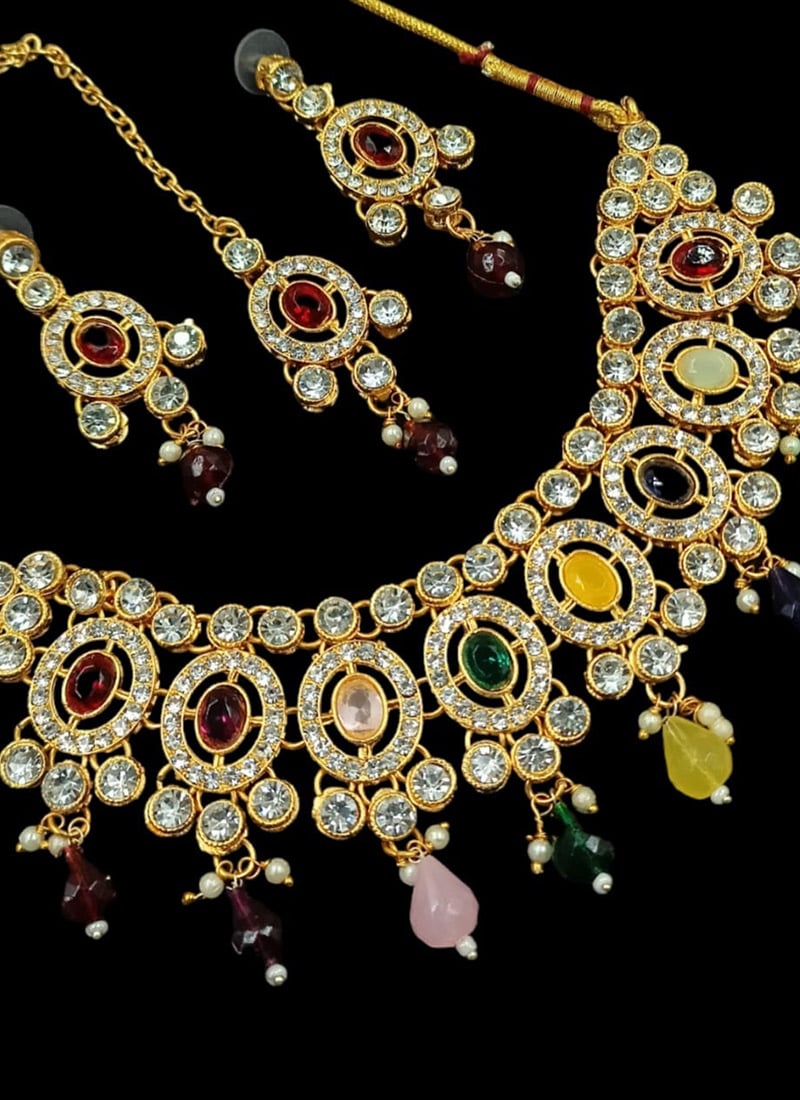
You can also introduce colour through a potli bag, juttis, bangles, earrings, hair accessories, or even a contrasting dupatta border. These smaller details allow you to experiment with the palette without committing to a completely multicoloured outfit.
Quick Janmashtami Colour Combinations
If you want a ready-made formula, start with one of these combinations:
Classic: Peacock Blue + Pitambar Yellow + Gold
Elegant: Peacock Green + Gold + Ivory
Contemporary: Peacock Blue + Peacock Green + Gold
Bright & Festive: Pitambar Yellow + Peacock Blue + Peacock Green
Minimal: Ivory + One Krishna-Inspired Accent
The trick is to choose one combination that matches your personal style rather than trying to incorporate every colour at once.
Building Your Own Colour Story
The real trick to styling Krishna-inspired colours well isn’t memorizing “correct” pairings; it’s picking one colour to lead and letting the other two support it thoughtfully, rather than trying to give all three equal weights in every single element.
Once you’ve chosen your anchor, the rest of the styling becomes considerably easier. Your dupatta, jewellery, footwear, borders, and accessories can then become intentional accents instead of competing elements.
At Cbazaar, our Krishna Jayanthi collection spans lehengas, sarees, salwar suits, kurtas, and dhotis across peacock blue, pitambar-inspired yellow, and peacock green, with gold detailing woven throughout to help tie different combinations together. With made-to-measure tailoring, you can achieve a more personalized fit, making it easier to bring your chosen colour story together with confidence.
Explore the collection at Cbazaar.com, pick your anchor colour, and create a Janmashtami look that feels festive, personal, and unmistakably yours.
Your colour. Your combination. Your Janmashtami style.


You May Also Like

Ganesh Chaturthi Family Dressing: Coordinated Ethnic Looks That Work
Top 5 Diwali Outfit Trends for 2024 with Accessorizing Tips