How to Get More Wear Out of Your Indian Ethnic Clothes for Every Special Occasion
You bought a gorgeous lehenga for your cousin’s wedding. You wore it once. Now it’s living in a garment bag at the back of your wardrobe, waiting for an occasion that never quite comes. Sound familiar? Here’s how to change that.
Indian ethnic wear is some of the most beautifully crafted clothing in the world — and some of the least worn. The average Indian occasion outfit in the US gets worn once or twice before being retired. But with a little creativity, the same pieces can work across multiple events,seasons, and styles.
Here’s a practical guide to making your Indian ethnic wardrobe work harder for you.
1. Think in components, not outfits
The biggest mindset shift is this: stop thinking of a lehenga or salwar suit as a single outfit and start thinking of it as a collection of components — each with its own potential.A lehenga, for example, has three parts: the skirt, the blouse (choli), and the dupatta. Each of those can be worn separately or combined with pieces from other outfits to create something that looks entirely new.
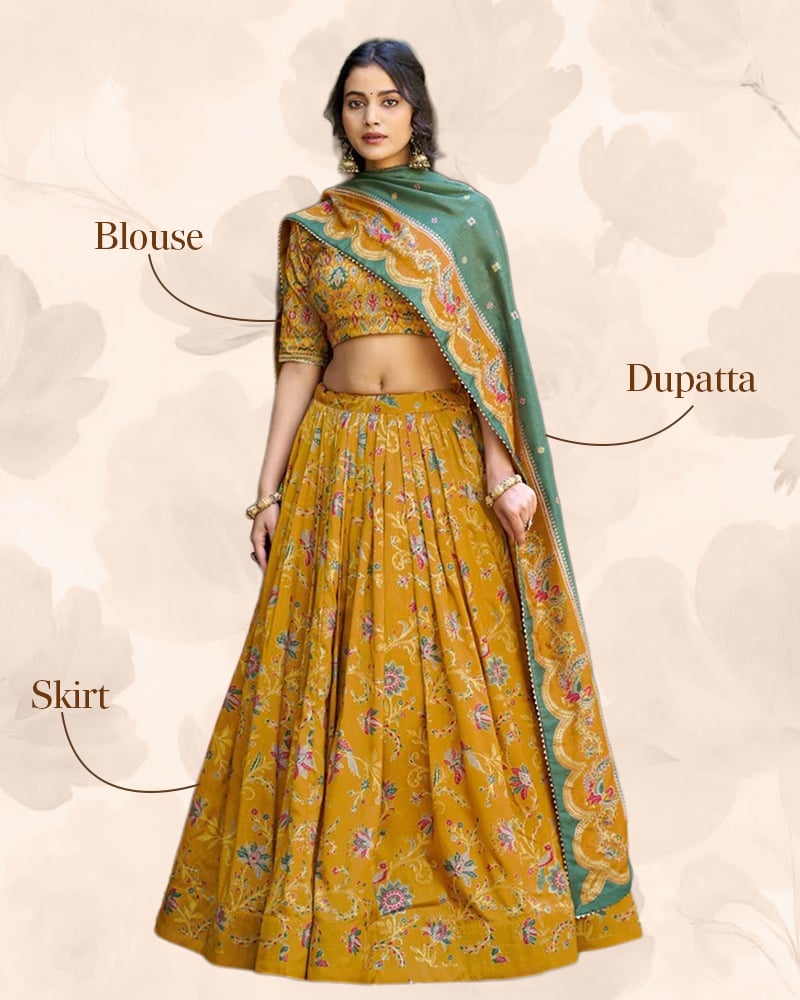
Lehenga skirt + new blouse
Pair a statement lehenga skirt with a solid-colour blouse in a complementary shade. The skirt reads as the anchor the blouse makes it look like a new outfit entirely.
Dupatta as a saree drape
A long, embellished dupatta can be draped over a plain kurta or paired with a solid lehenga skirt as a makeshift saree particularly effective for silk and georgette dupattas.
Salwar as wide-leg trousers
A straight or palazzo-cut salwar paired with a western top or fitted crop top creates an indo-western look that works for semi-formal events, dinner parties, or cultural evenings.
Anarkali kurta over jeans
Long Anarkali kurtas worn over slim jeans or trousers is a classic indo-western combination. The kurta becomes a statement layer rather than part of a traditional set.
2. Restyle with accessories
The same outfit can look dramatically different depending on how you style it. Accessories are the fastest way to change the mood of an Indian ethnic look without changing the outfit itself.
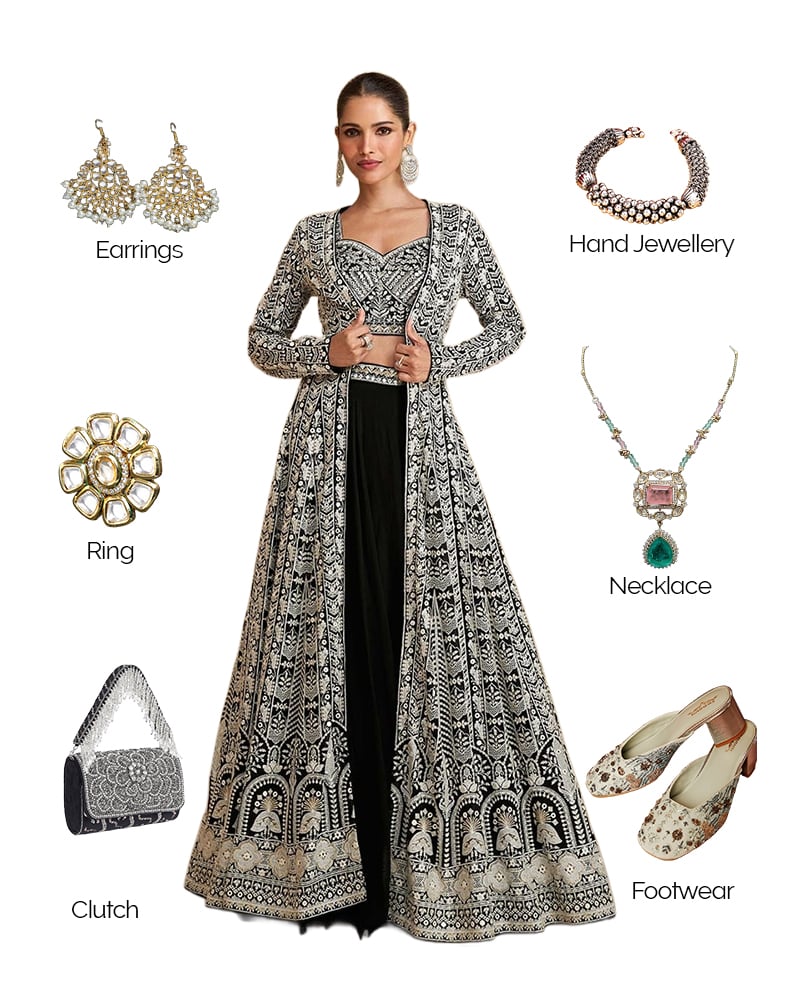
Jewellery
Heavy gold jewellery makes any outfit feel bridal or formal. Swap it for silver, oxidised, or minimal jewellery and the same lehenga instantly reads as a guest outfit or festive wear.
Footwear
Traditional juttis or embellished heels keep an outfit in occasion-wear territory. Flat sandals or even white sneakers (for indo-western looks) shift the same kurta into casual or street-style territory.
Dupatta styling
How you wear your dupatta changes everything. Draped over the shoulder is traditional. Tied at the waist is modern. Left off
Styling tip: Invest in one or two neutral dupattas ivory, champagne, or soft gold that can be paired with multiple outfits in your wardrobe. A plain silk dupatta can elevate a simple kurta to occasion-worthy in seconds.
3. Mix and match across outfits
- If you have more than a few Indian outfits, the mix-and-match possibilities multiply quickly. The key is to build around colour families and fabric weights.
- Pair a heavily embroidered blouse with a plain lehenga skirt let one piece do the talking
- Match dupattas across outfits a pink dupatta from one set may work beautifully with a neutral lehenga from another
- Combine festive and casual pieces — a simple cotton kurta with a silk skirt creates an effortlessly polished look
- Use a jacket (shrug or indo-western blazer) to transform a simple salwar set into a layered, structured look
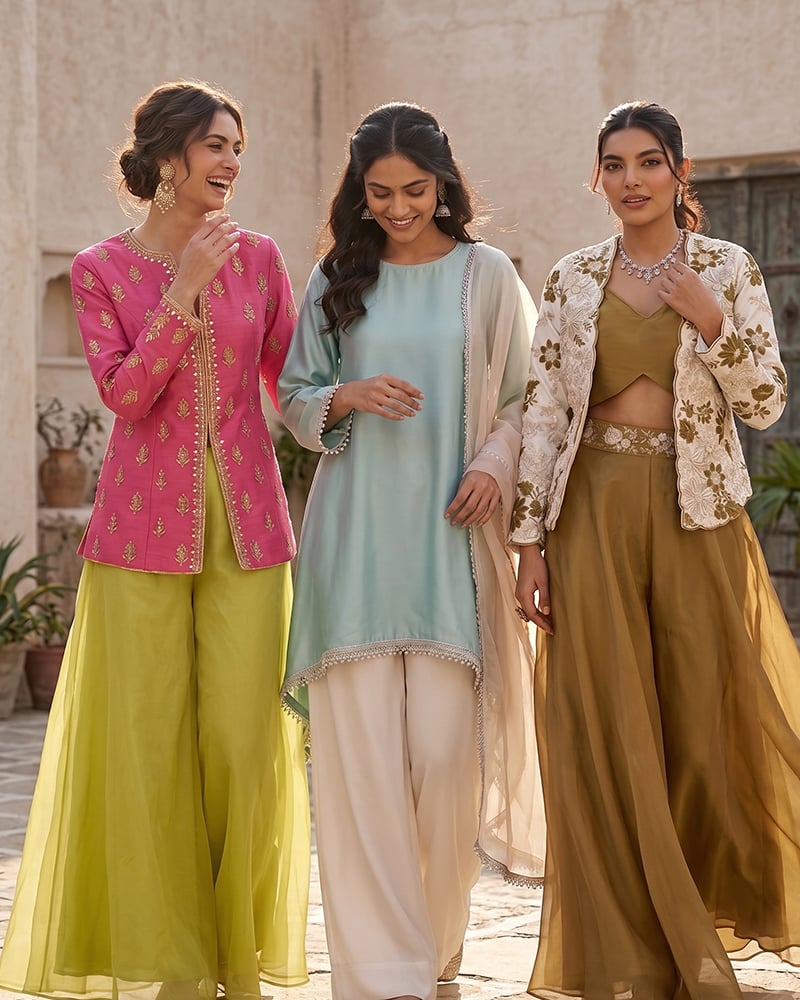
4. Add a new component to an existing outfit
Sometimes the smartest thing you can do isn’t restyle what you have — it’s add one new piece that makes an existing outfit feel completely new. Adding a new blouse in a contrasting colour to an old lehenga skirt. Buying a printed jacket to layer over a plain suit. Picking up a plain saree in a complementary shade that works with a blouse you already own. These are small investments that dramatically expand what your existing wardrobe can do.

A smarter way to fund your next piece — Cbazaar Value Guarantee
If you’ve purchased an outfit from Cbazaar with the Value Guarantee (CVG) programme,you’ve already earned store credit you can put toward exactly this. After wearing your outfit to your event, apply for your 40% store credit via My Account within 30 days of delivery.That credit typically $40–$80 on a single outfit can go directly toward adding a new component to an existing look. A new blouse. A plain saree. A jacket. A statement dupatta. Pieces that don’t just stand alone but multiply the value of everything already in your wardrobe. You’re not just buying a new outfit. You’re building a system where each purchase partially funds the next component, and your wardrobe grows smarter with every occasion.
5. Dress for the occasion, not just the event
One reason Indian outfits feel hard to rewear is that we tend to over-dress for casual occasions and under-consider how the same outfit might work at a different formality level.
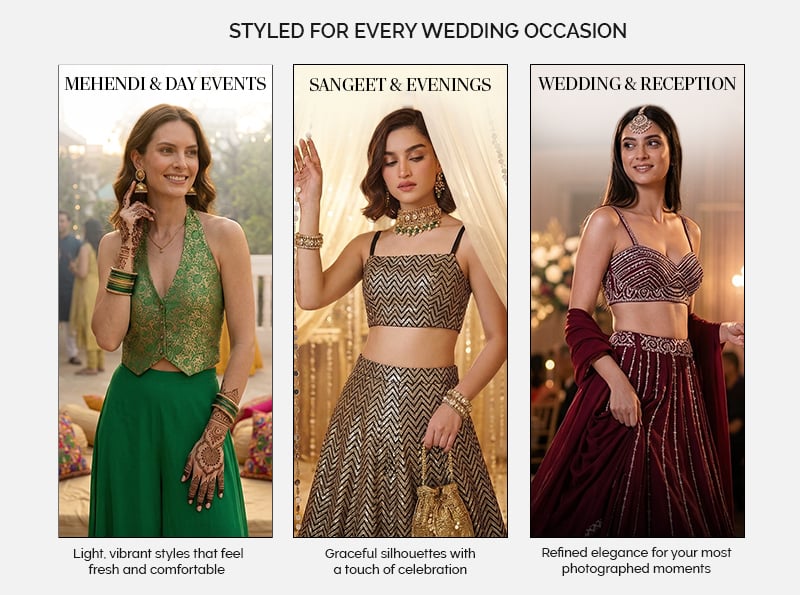
A lehenga worn to a formal wedding reception can be restyled simpler jewellery, flat sandals, half-dupatta for a Diwali party, a mehendi, or a festive family dinner. The dress hasn’t changed. The context has.
- Wedding reception → Diwali celebration: same lehenga, casual accessories, no heavy jewellery
- Formal salwar suit → office Eid: same kurta, straight trousers instead of salwar, minimal jewellery
- Heavily embellished anarkali → sangeet: bold earrings only, let the outfit carry the look
FAQs About Reusing Wedding Ethnic Wear
- I wore my lehenga once to a wedding. Can I really wear it again without looking like I’m repeating?
Yes the key is changing how you style it, not the outfit itself. Different jewellery, footwear, and
dupatta draping can make the same lehenga look completely different at a mehendi, Diwali
party, or festive dinner. Most guests won’t notice the outfit they’ll notice the look. - I have a heavily embroidered blouse but the lehenga skirt feels too formal for smaller events. What can I do?
Pair the skirt with a simpler blouse in a complementary colour and save the embroidered blouse
for a more formal occasion. You effectively get two outfits from one lehenga purchase. - Can I mix pieces from different Indian outfits together?
Absolutely. The best mix-and-match combinations come from working within the same colour
family or fabric weight. A silk dupatta from one outfit can work beautifully with a lehenga from
another. A plain salwar can pair with a kurta from a different set. - What single addition would give me the most new looks from my existing Indian wardrobe?
A plain or lightly embellished dupatta in a neutral shade — ivory, champagne, or gold — is the
most versatile addition. It can be paired across multiple outfits and dramatically changes the
formality of any look. - I bought a lehenga set but only really love the skirt. What can I do with the blouse and dupatta?
The blouse can be paired with a different skirt or even worn as a crop top with western bottoms.
The dupatta can be styled as a saree drape, a stole, or layered over a kurta. No component of
an Indian outfit needs to be limited to its original set. - I have store credit from Cbazaar’s Value Guarantee. What’s the smartest way to use
Use it to add a single component that multiplies your existing wardrobe — a new blouse in a
contrasting colour, a plain saree that works with a blouse you already own, or a jacket that transforms a simple suit. These smaller additions give existing outfits a completely new life
without requiring a full new purchase. - How do I make a formal Indian outfit work for a casual occasion?
Swap heavy jewellery for minimal or oxidised pieces, replace embellished heels with flat
sandals, and simplify your dupatta styling. The outfit stays the same — the accessories do the
work of adjusting the formality level.


You May Also Like
Start Your Own Ethnic Wear Business with Cbazaar Wholesale & Dropshipping Program
EthnoVogue’s DESIGN IT YOURSELF Workshop