Zardozi, Sequins & Mirror Work A Guide to Indian Embroidery Styles
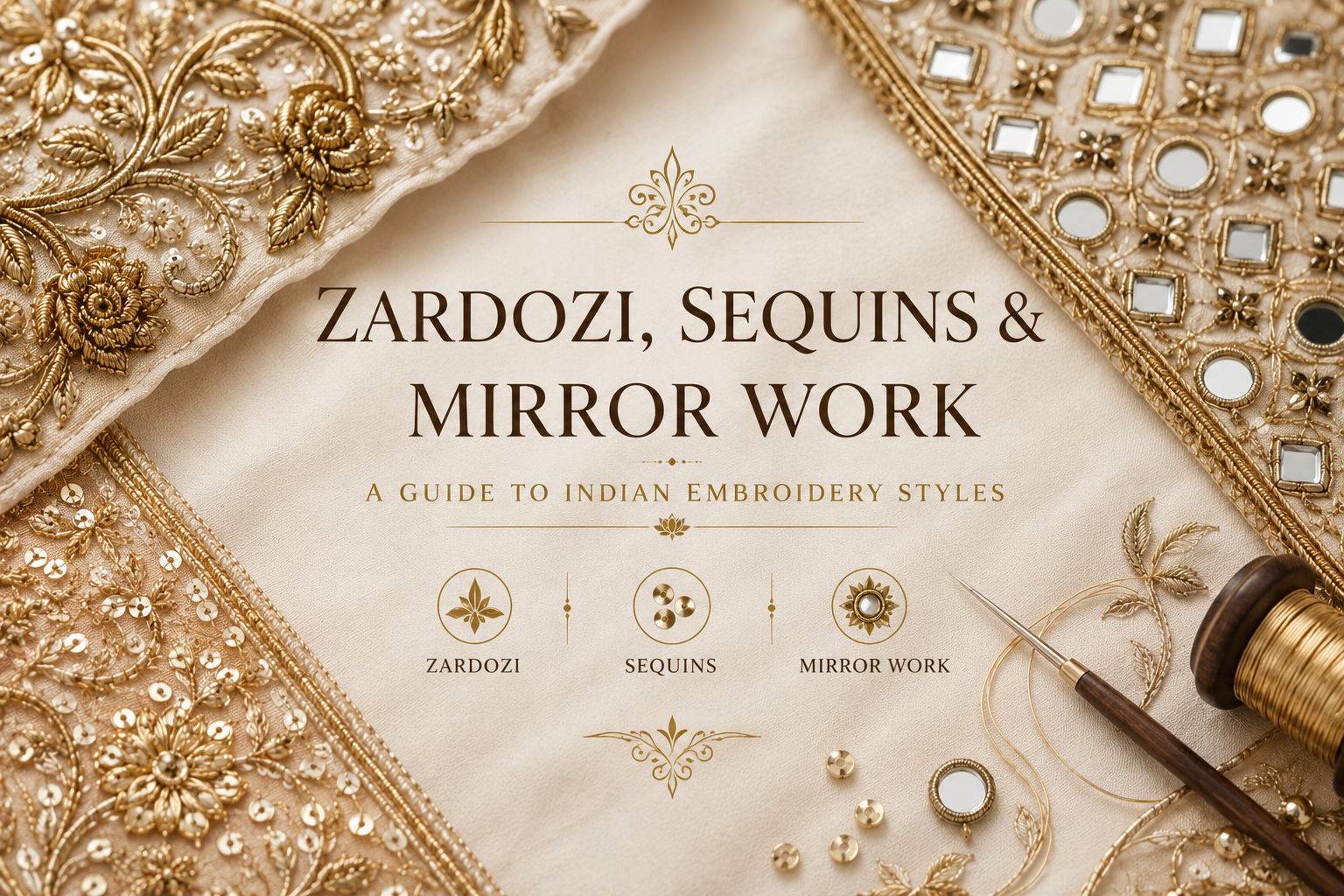
Indian embroidery is more than just decoration-it’s a reflection of centuries of craftsmanship, culture, and artistry.Among the most striking techniques are Zardozi, Sequin (Dabka/Cutdana) work, and Mirror (Shisha) embroidery. Every stitch tells a different story: one of Mughal opulence, one of glittering modern glamour, and one of folk artistry from the deserts of Gujarat and Rajasthan. This guide walks through their origins, techniques, and how to spot and care for each one. These timeless techniques have evolved over generations, finding their place in everything from bridal couture to contemporary ethnic fashion.
In this guide, we’ll explore some of India’s most loved embroidery techniques, their origins, unique characteristics, and where they’re best worn. At Cbazaar, we believe that every embroidered ensemble is more than just fashion-it’s a celebration of heritage, handcrafted beauty, and timeless elegance. Let’s discover the stories woven into every stitch.
Zardozi: The Royal Art of Indian Embroidery
Where every golden thread carries the legacy of emperors and every stitch transforms fabric into timeless luxury.
The word Zardozi comes from the Persian words zar (gold) and dozi (embroidery) and flourished in India under Mughal patronage, especially during Emperor Akbar’s reign. Today, Lucknow remains its most celebrated hub, along with Bhopal, Hyderabad, and Surat.
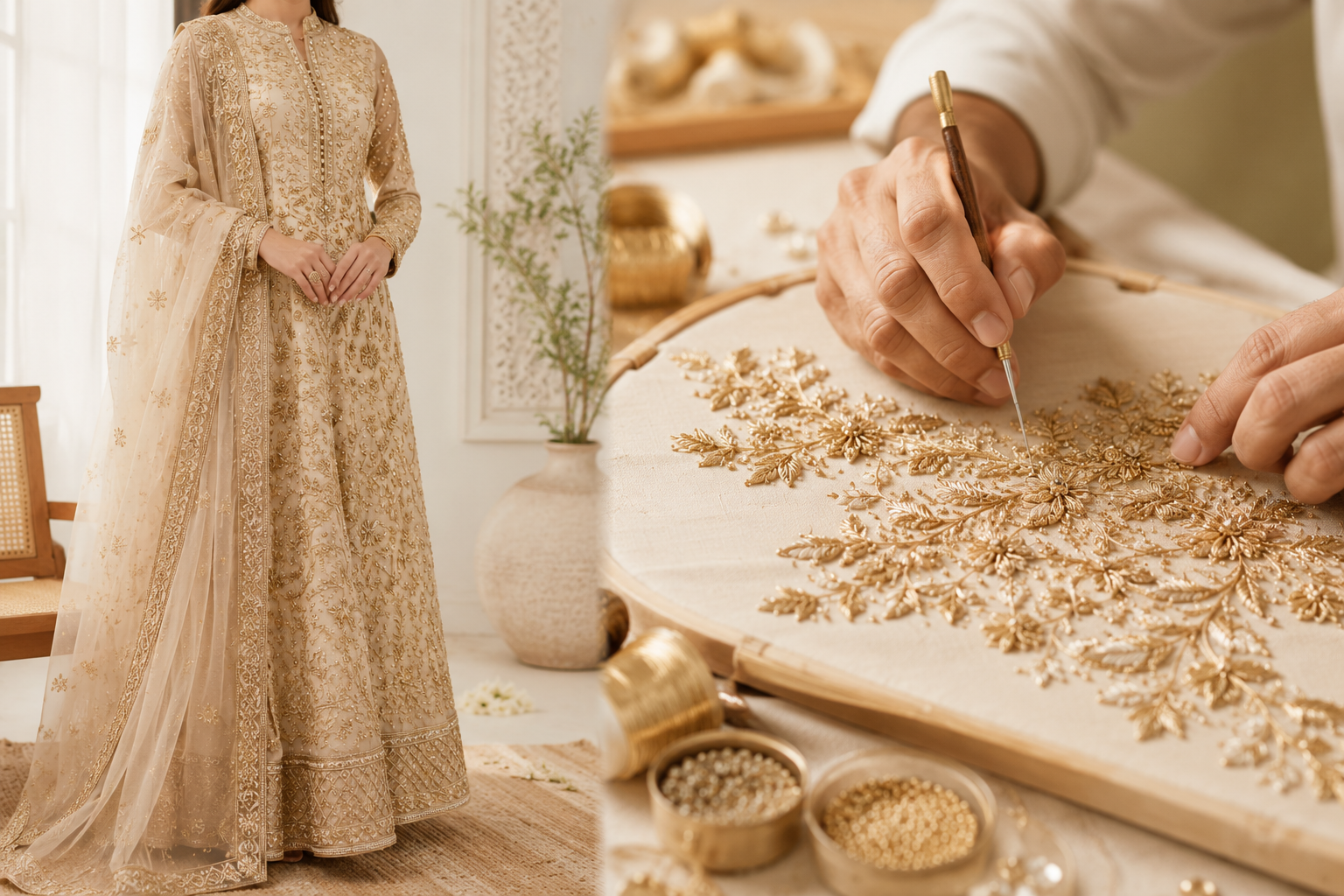
Traditionally, Zardozi embroidery was crafted using real gold and silver wires (kalabattu), though modern artisans often use metal-wrapped threads to achieve the same luxurious look at a more accessible price. The fabric is stretched over a wooden frame (adda), allowing skilled craftsmen to create intricate motifs using an aari hook or needle. Renowned for its rich texture and regal appeal, Zardozi is commonly seen on bridal lehengas, sherwanis, sarees, and luxury décor, making every piece a timeless symbol of elegance and celebration.
Sequins Work: Where Every Sparkle Tells a Story
Tiny embellishments, endless brilliance-adding light, movement, and glamour to every ensemble.
Though sequins date back to ancient civilizations, they became a prominent part of Indian embroidery during the 20th century. They beautifully blended with traditional embellishment techniques like dabka and cutdana, adding sparkle to ethnic fashion.
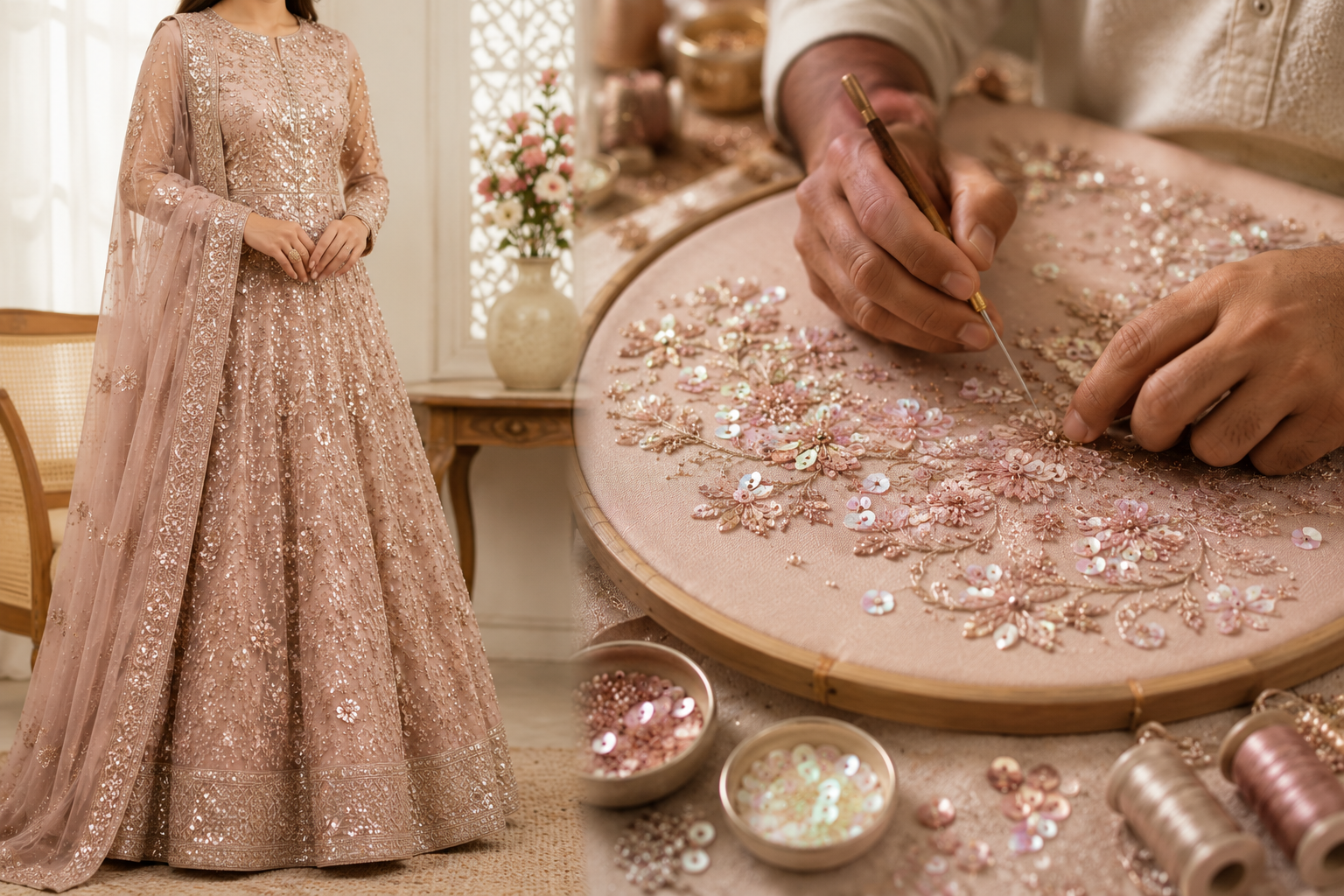
Sequins are stitched onto fabric using fine needles or the aari hook technique to create shimmering patterns. They are often paired with cutdana beads, dabka metal coils, and resham thread to add depth, texture, and elegance. Today, machine-assisted embroidery also helps create intricate sequin designs for modern fashion. From party wear and cocktail outfits to bridal ensembles and statement dupattas, sequins remain one of the most versatile embroidery styles in Indian fashion.
Mirror Work: Reflecting Tradition Through Every Detail
Tiny mirrors, timeless craftsmanship-bringing light, color, and celebration to every stitch.
Mirror Work, also known as Shisha or Abhla Bharat, originated in the folk embroidery traditions of Gujarat, Rajasthan, and Sindh. Once crafted using mica and hand-cut glass, it is now created with lightweight mirrors and remains a signature craft of communities like the Rabari, Banjara, and Ahir, adorning garments and decorative textiles alike.
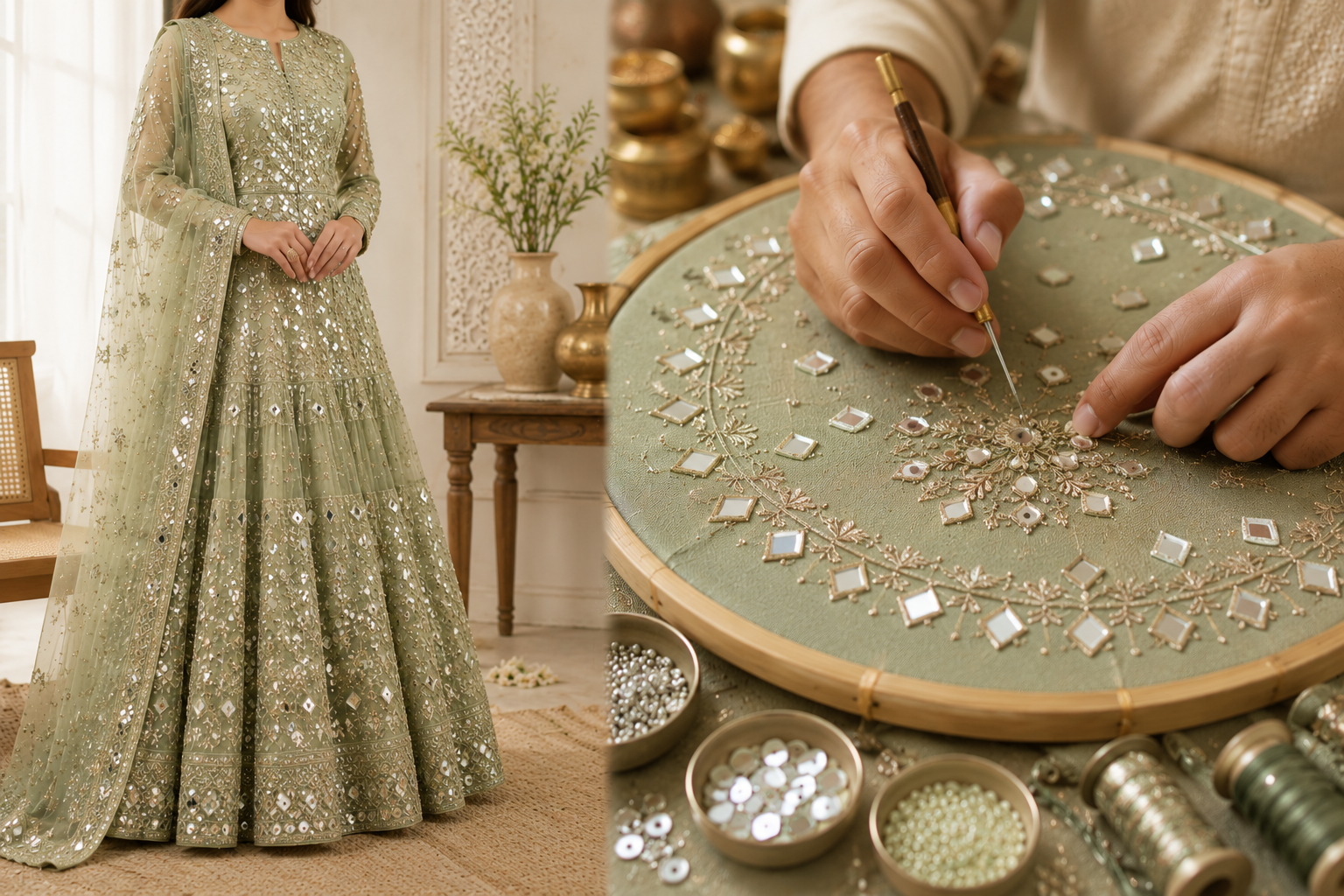
Mirror work is entirely hand-stitched, with each mirror securely held in place using decorative embroidery instead of glue. It is often combined with vibrant chain, herringbone, or silk thread embroidery, creating the colorful patterns that define Gujarat and Rajasthan’s folk art. Today, mirror work is widely seen on Bandhani dupattas, Kutchi blouses, Rajasthani ghagras, bohemian jackets, bags, and home décor, and has become a popular choice in contemporary boho fashion.
Every Stitch Tells a Story
Whether it’s the regal richness of Zardozi, the radiant sparkle of Sequins, or the vibrant charm of Mirror Work, Indian embroidery is a celebration of artistry, heritage, and timeless craftsmanship.
Each embroidery style carries its own legacy, shaped by generations of skilled artisans and regional traditions. Understanding these techniques not only helps you appreciate the craftsmanship behind every outfit but also makes choosing the perfect ensemble even more meaningful.
At Cbazaar, we celebrate these timeless crafts by bringing together traditional artistry and contemporary design, creating pieces that honour India’s rich textile heritage while fitting effortlessly into the modern wardrobe. Whether you’re dressing for a wedding, a festive celebration, or simply embracing the beauty of handcrafted fashion, let every stitch tell a story-and let your style reflect the artistry behind it.


You May Also Like
Effortlessly Stylish Outfits Ideas for the Modern Bride-to-Be
Kaftan-Sarees & Belted Drapes: Modernizing Tradition for the 2026 Gen-Z Crowd