

How can I stay healthy and energetic during long fasting hours?
Ramadan is a sacred month of reflection, discipline, and spiritual growth. While fasting from dawn to sunset brings immense spiritual rewards, it can also challenge your physical energy—especially during long summer days. With mindful planning and balanced nutrition, you can stay healthy, productive, and energized throughout the month.
Smart Suhoor Choices: Fuel for the Day
Suhoor is your foundation for sustained energy. Skipping it often leads to fatigue, headaches, and reduced concentration later in the day.
Focus on:
Complex Carbohydrates
Choose slow-digesting foods like oats, whole grain bread, brown rice, quinoa, or whole wheat roti. These release energy gradually and help maintain stable blood sugar levels.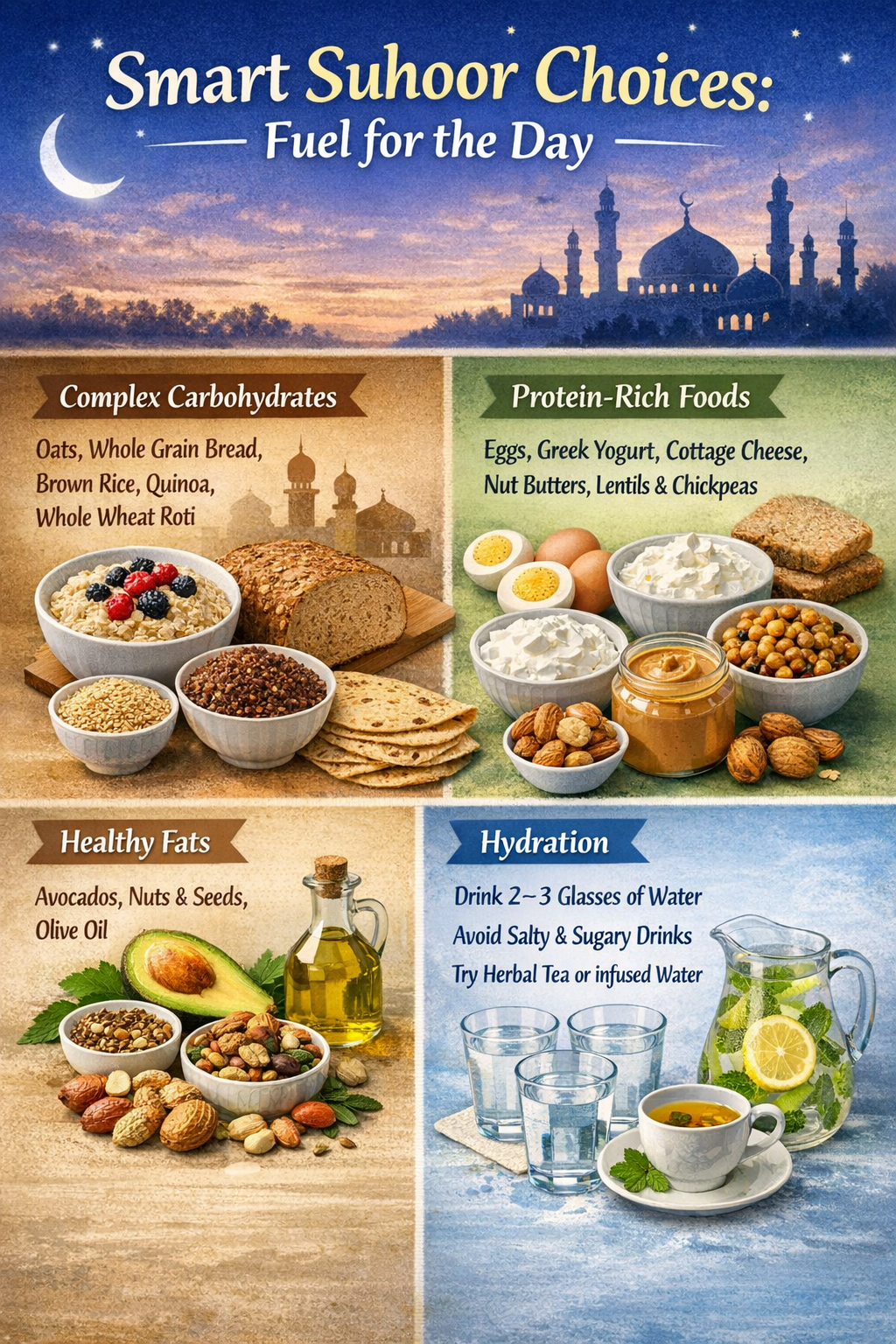
Protein-Rich Foods
Eggs, Greek yogurt, cottage cheese, nut butters, lentils, and chickpeas promote fullness and help prevent muscle loss during fasting hours.
Healthy Fats
Avocados, nuts, seeds, and olive oil support sustained energy and satiety.
Hydration
Drink 2–3 glasses of water at Suhoor. Avoid salty foods and sugary drinks, as they increase thirst. Herbal teas or infused water can also help maintain hydration.
Avoiding Dehydration
Dehydration is one of the most common challenges during Ramadan. To prevent it:
Aim for 8–10 glasses of water between Iftar and Suhoor.
Eat water-rich foods like cucumbers, watermelon, oranges, and soups.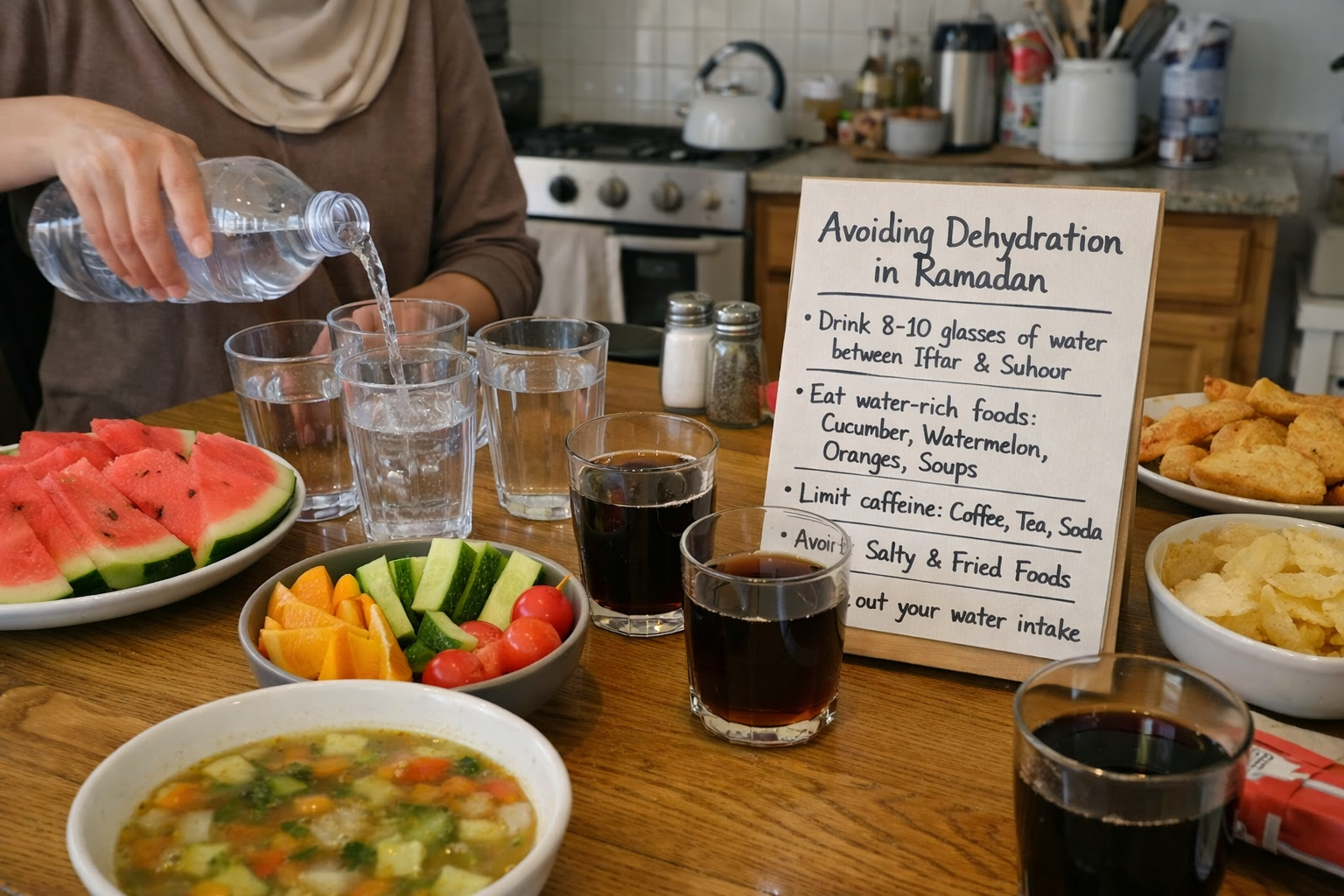
Limit caffeine intake (coffee, tea, soda), as it increases fluid loss.
Reduce salty, fried, and heavily spiced foods that trigger thirst.
Spacing your water intake rather than drinking it all at once is more effective for absorption.
Balanced Iftar: Refuel Wisely
After long fasting hours, it’s tempting to overeat—but moderation is key.
Start traditionally:
Break your fast with dates and water. Dates provide natural sugars for a gentle energy boost.
Follow with:
A light soup to rehydrate and prepare your stomach
Lean protein such as grilled chicken, fish, tofu, or legumes
Plenty of vegetables for fiber and nutrients
Moderate portions of whole grains
Limit fried snacks and sugary desserts to occasional treats to avoid sluggishness and digestive discomfort.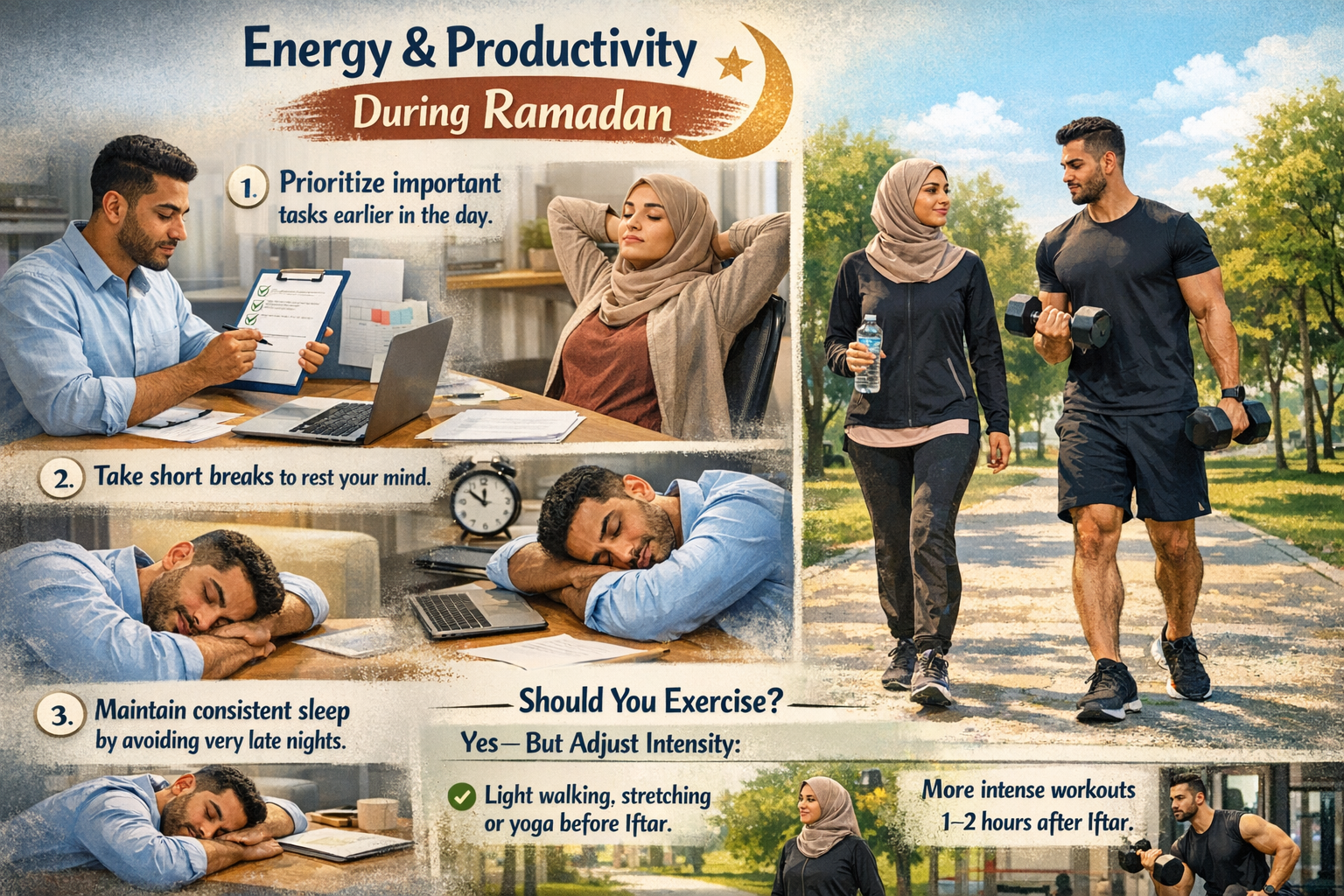
Energy & Productivity During Ramadan
To stay productive at work or school:
Prioritize important tasks earlier in the day.
Take short breaks to rest your mind.
Maintain consistent sleep by avoiding very late nights.
A short afternoon rest (20–30 minutes) can improve alertness.
Should You Exercise?
Yes—but adjust intensity. Light walking, stretching, or yoga before Iftar can be refreshing. More intense workouts are better 1–2 hours after Iftar when you are hydrated.
Looking Ahead to Eid
Caring for your health during Ramadan ensures you feel vibrant and joyful on Eid morning. Many families in North America and the UK begin Eid with early mosque prayers, followed by gatherings and celebrations. Planning ahead—whether for meals, hosting, or choosing modest yet festive attire—helps you fully embrace the beauty of the occasion.
Ramadan is about balance—not exhaustion. Nourish your body thoughtfully, rest intentionally, and honor both your spiritual and physical well-being throughout this blessed month.


You May Also Like

Unboxing Odors? Quick fixes for the packaging smell on Ethnic wear.

Cbazaar LIVE Experience The New Way To Shop