

What are the spiritual goals of Ramadan, and how can I maximize rewards?
Ramadan is not just about fasting from food and drink—it is a sacred journey of the soul. This blessed month offers Muslims a unique opportunity to reset spiritually, strengthen faith, and grow closer to Allah through conscious effort and sincere worship.
The Purpose of Ramadan
At its heart, Ramadan is a month of Taqwa (God-consciousness). By abstaining from worldly desires, believers learn self-control, humility, and dependence on Allah. It is also a time for deep reflection, allowing us to evaluate our actions, intentions, and relationship with our Creator.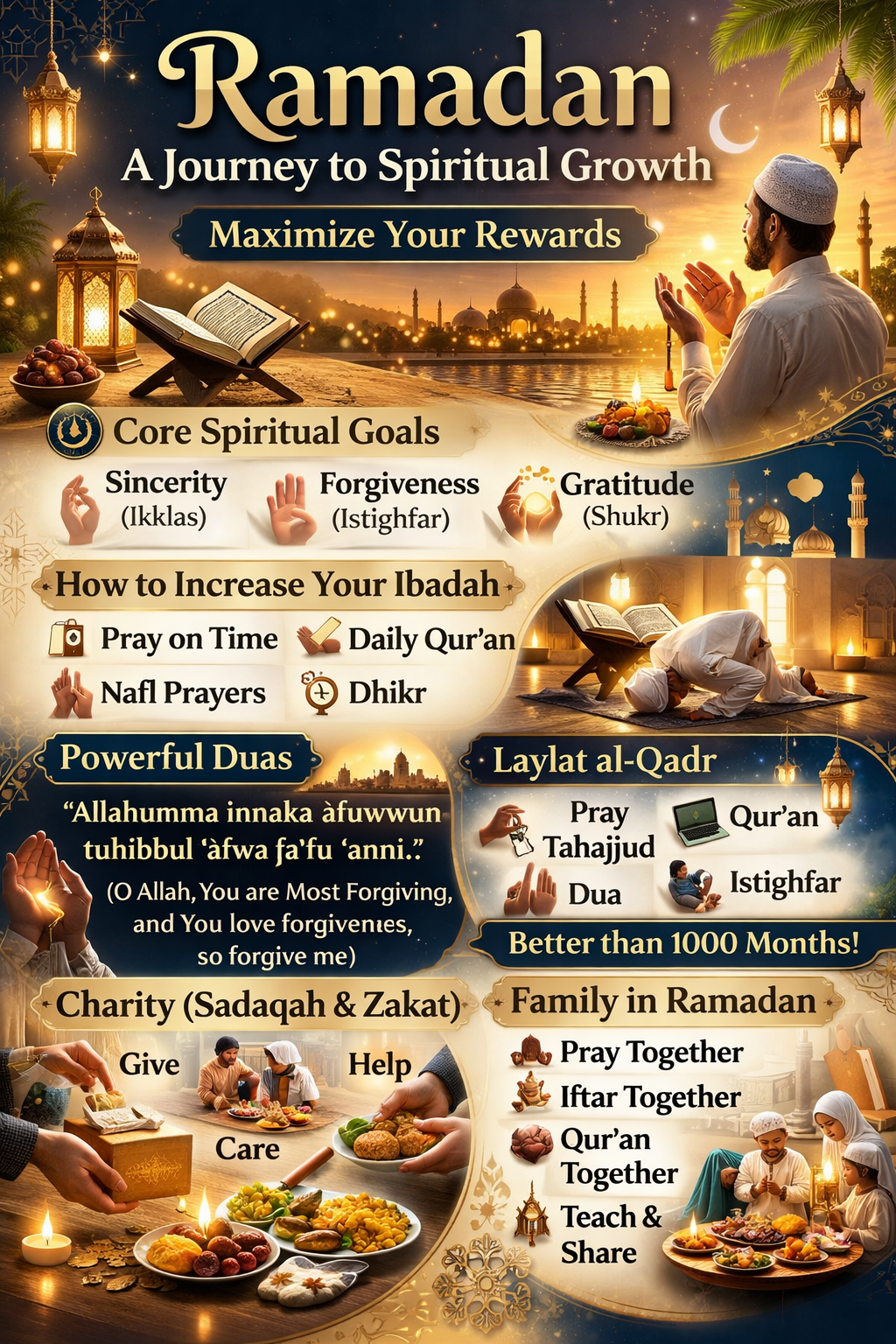
Ramadan nurtures gratitude, reminding us of the blessings we often take for granted, and builds self-discipline, which continues to benefit us long after the month ends. Every fast, prayer, and good deed becomes a step toward spiritual purification.
The Core Spiritual Goals of Ramadan
How can I increase my ibadah?
Focus on consistency over quantity. Pray on time, add voluntary (nafl) prayers, recite Qur’an daily—even a few verses—and remember Allah throughout the day with simple dhikr.
What duas should I recite?
There is no restriction on dua. Ask sincerely for forgiveness, guidance, health, and success in this world and the Hereafter. During the last ten nights, frequently recite:
“Allahumma innaka ‘afuwwun tuhibbul ‘afwa fa‘fu ‘anni.”
How do I make Laylat al-Qadr meaningful?
Dedicate the last ten nights to extra worship. Pray Tahajjud, read Qur’an, make heartfelt duas, and seek forgiveness. Even a few focused hours can bring rewards better than a thousand months.
How much charity should I give?
Give according to your capacity. Fulfill your Zakat obligation and increase Sadaqah—whether money, food, or helping others. Sincerity matters more than the amount.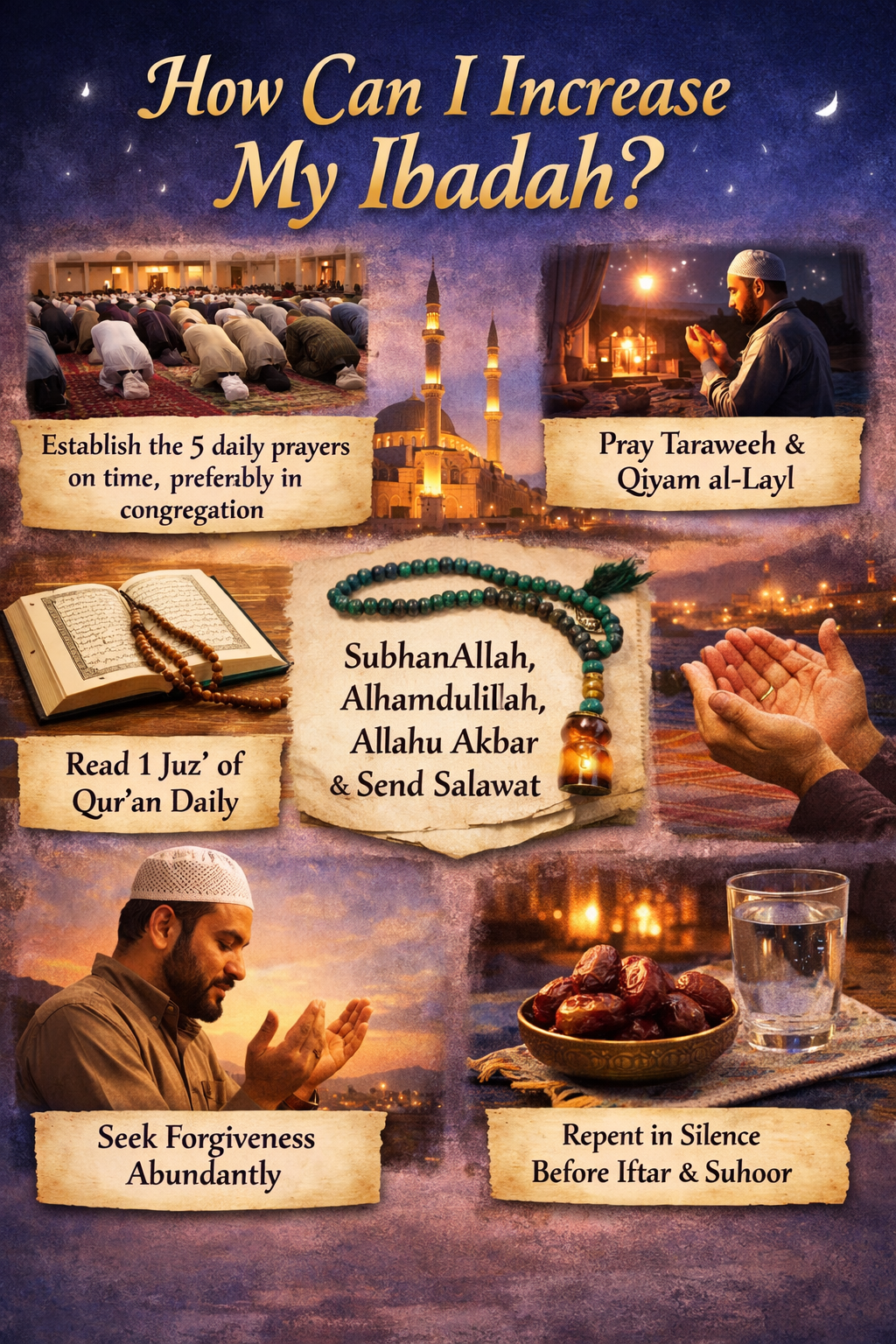
How can families observe Ramadan together?
Pray together, break fast as a family, read Qur’an collectively, and involve children in charity. These shared moments build faith and lasting memories.
How Can I Increase My Ibadah?
Establish the five daily prayers on time, preferably in congregation if possible.
Pray Taraweeh and add voluntary night prayer (qiyam al-layl).
Set a daily Qur’an goal—even one juz’ a day allows completion by month’s end.
Engage in dhikr: SubhanAllah, Alhamdulillah, Allahu Akbar, and sending salawat upon the Prophet ﷺ.
Seek forgiveness abundantly, especially during quiet moments before iftar and suhoor.
Powerful Duas to Recite
“Allahumma innaka ‘afuwwun tuhibbul-‘afwa fa’fu ‘anni” (O Allah, You are Most Forgiving and love forgiveness, so forgive me).
Ask for guidance, steadfastness, mercy for parents, and Jannah.
Make personal duas with sincerity—Allah loves heartfelt supplication.
Celebrating Completion with Dignity
Eid al-Fitr marks the spiritual achievement of a month of devotion. Wearing clean, beautiful clothes is a Sunnah that reflects gratitude, joy, and renewal. Thoughtful preparation allows you to celebrate without distraction after Ramadan’s intense worship.
Cbazaar’s Eid collection offers graceful abayas, festive lehengas, elegant men’s kurtas, and charming children’s Eid wear—perfect for honoring the spirit of the occasion.
Order ahead to avoid last-minute stress and use the final days of Ramadan to focus fully on prayer, reflection, and seeking Allah’s mercy.

You May Also Like

Clearance Sale on Clothes: Upgrade Your Wardrobe with Cbazaar’s Ethnic Fashion

Onam – A Potpourri of fun, festivities and Fashion