What to Do When the Invitation Just Says “Traditional”
You open the invitation, admire the beautiful design, and then reach the dress code.
Traditional.
One word.That’s it.
No examples. No Pinterest board. No color palette. No clue whether you’re expected to arrive in a silk saree, a heavily embroidered lehenga, or simply a well-tailored kurta.
Suddenly, choosing an outfit feels harder than it should. You start wondering whether a saree would be too formal, whether a lehenga would look too bridal, whether a simple suit would be too casual, and whether your idea of “traditional” is even the same as the family’s.
If you’ve ever been there, you’re not alone.
The good news is that “traditional” isn’t as complicated as it sounds. You just need to know what the hosts are really asking for, how much tradition you want to bring into your look, and a few clues that can help you make the right choice.
At Cbazaar, we’ve helped wedding guests navigate exactly this kind of dress-code confusion. Let’s decode that one mysterious word before you start changing outfits for the fifth time.
First, What Does “Traditional” Actually Mean
In most Indian wedding invitations, “traditional” is essentially an invitation to embrace Indian ethnic wear. Think sarees, lehengas, Anarkalis, salwar suits, shararas, kurtas, sherwanis, and other classic Indian silhouettes.
But here’s the important part: traditional doesn’t automatically mean heavily embellished.
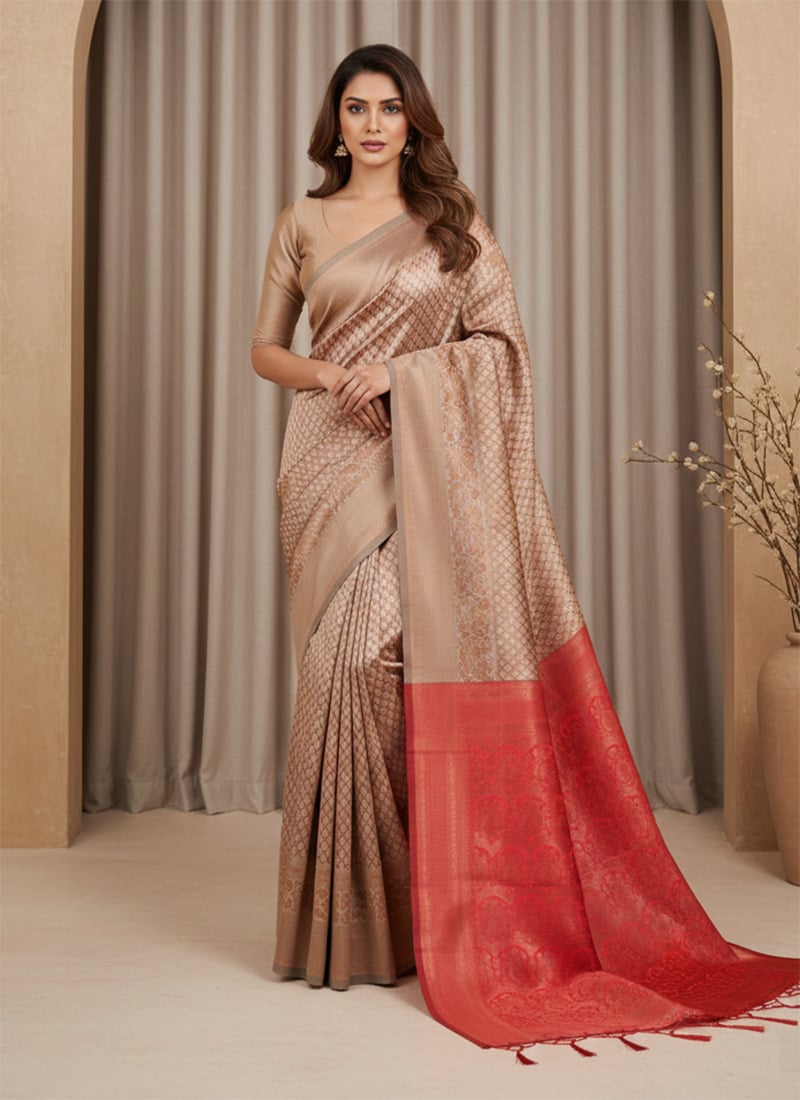
A lightweight silk saree can be just as traditional as an embroidered lehenga. A simple Anarkali can feel just as appropriate as a heavily worked suit. For men, a classic kurta pajama can fit the dress code perfectly without needing layers of embellishment.
The goal isn’t to look like you’re attending a royal procession. It’s to look like you’re genuinely participating in the celebration.
The Family’s Culture Can Give You the Biggest Clue
Here’s where the word “traditional” gets interesting: Indian tradition doesn’t look the same everywhere.
- South Indian Influence: You’ll often notice rich silk sarees, gold borders, temple jewellery, and classic silhouettes.
- Punjabi Celebrations: Bring vibrant colours, richly embroidered suits, glamorous lehengas, and plenty of sparkle.
- Gujarati & Rajasthani Weddings: Bandhani prints, mirror work, colourful Chaniya Cholis, and intricate embroidery are much more prominent.
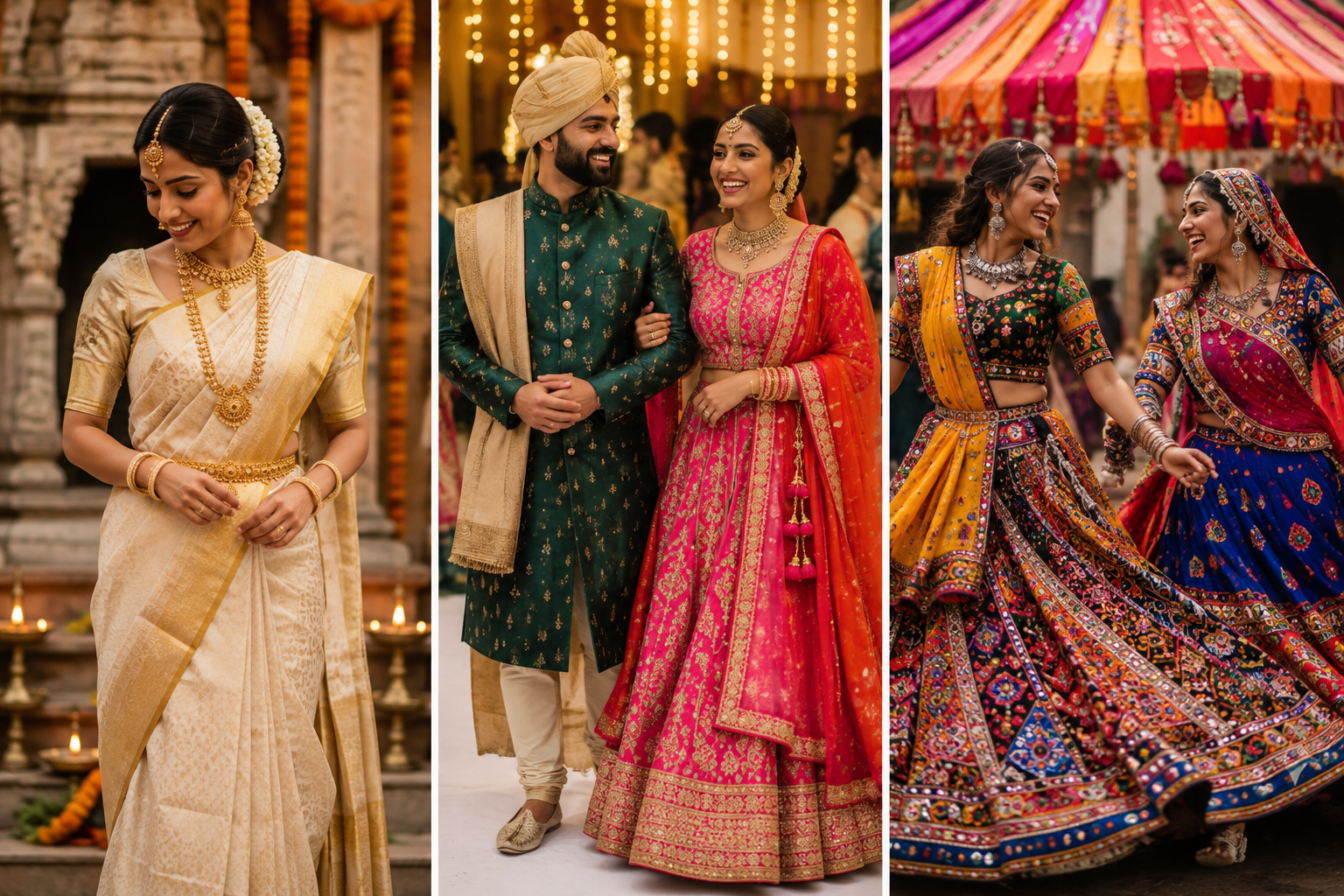
You don’t need to become an expert in regional fashion before attending the wedding. Even knowing the family’s cultural background can help you understand what kind of traditional style might feel most natural. Think of it as your first clue.
Traditional Doesn’t Mean “Wear the Heaviest Outfit You Own”
This is where many first-time guests go wrong. They see the word traditional and immediately imagine the most elaborate lehenga in the store. But traditional and extravagant aren’t synonyms.
If the celebration is an intimate daytime ceremony, a heavily sequined lehenga may feel completely out of place. A beautifully woven saree, an elegant Anarkali, or a refined embroidered suit may actually look more appropriate.
The same applies to menswear. A well-fitted kurta pajama can look incredibly polished without excessive embroidery. Add a Nehru jacket, and suddenly the same outfit feels more formal.
The trick is to dress for the occasion, not just the word on the invitation.
Use the Three-Part Traditional Test
Still staring at your wardrobe and wondering whether something counts as traditional? Try this simple test.
- Look at the Silhouette
Does the outfit have a recognizably Indian silhouette? Sarees, Anarkalis, salwar suits, lehengas, shararas, kurtas, and sherwanis are easy choices because their shapes immediately communicate traditional dressing. - Look at the Details
Embroidery, zari, woven borders, mirror work, traditional motifs, or an intricately finished dupatta can instantly make an outfit feel more rooted in Indian craftsmanship. - Look at the Overall Feel
Imagine yourself standing among the wedding guests. Does your outfit feel like it belongs at the celebration? If the answer is yes, you’ve probably decoded “traditional” correctly.
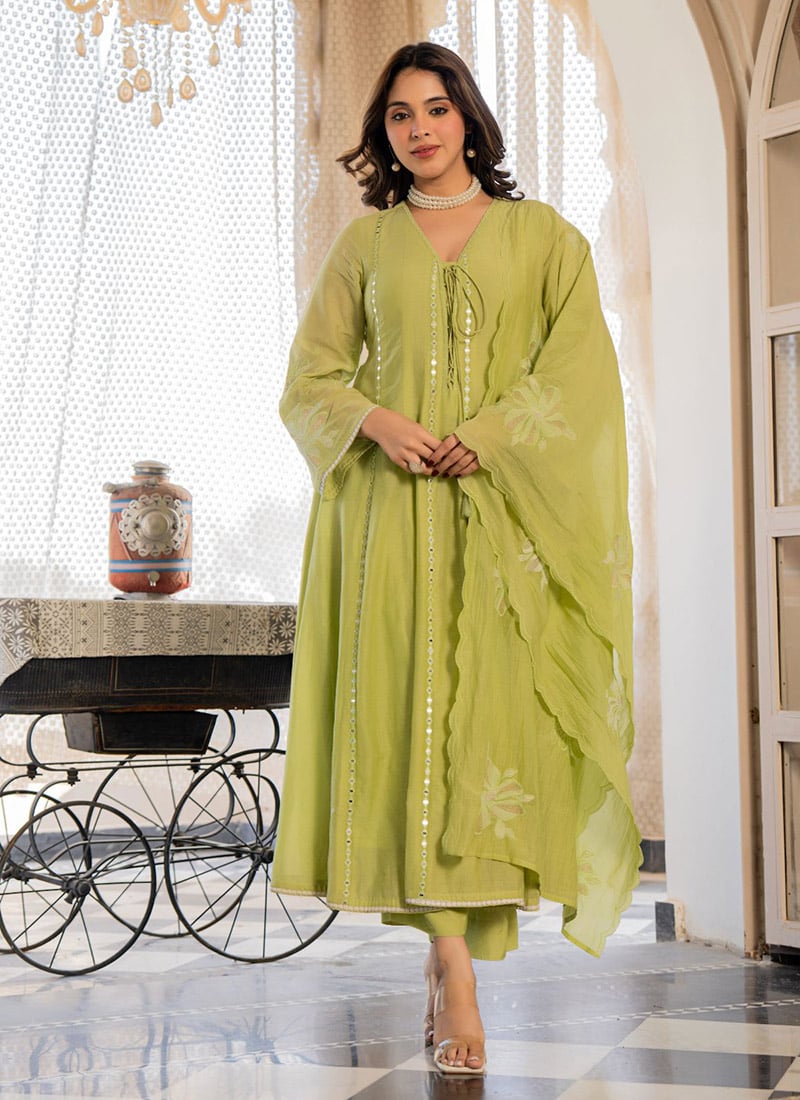
When in Doubt, Choose Festive Over Everyday
There’s a big difference between ethnic wear and festive ethnic wear. Your everyday cotton kurta may technically be Indian clothing, but it might not feel right for a wedding. Instead, look for fabrics, colours, embroidery, or styling details that give the outfit a celebratory feel.
- A silk saree with a beautiful border.
- An embroidered Anarkali.
- A festive sharara with a statement dupatta.
- A kurta paired with a structured Nehru jacket.
These pieces still feel traditional, but they’re clearly meant for a celebration.
Let the Colours Tell the Story
Indian weddings are rarely shy about colour. Walk into one and you’ll see jewel-toned outfits, vibrant flowers, colourful décor, gold details, and fabrics catching the light from every direction.
So if your invitation simply says traditional, don’t be afraid of colour. Emerald green, royal blue, maroon, mustard, coral, peach, lavender, deep pink, and rich jewel tones can all create a festive look.
For the main wedding ceremony, it’s generally wise to avoid all-white outfits and head-to-toe black, as these colours carry different cultural associations in many communities. Bridal red is also best avoided, when possible, particularly at Hindu weddings where the bride traditionally wears red.
When everything else feels uncertain, a rich festive colour is a simple way to make your outfit feel celebration ready.
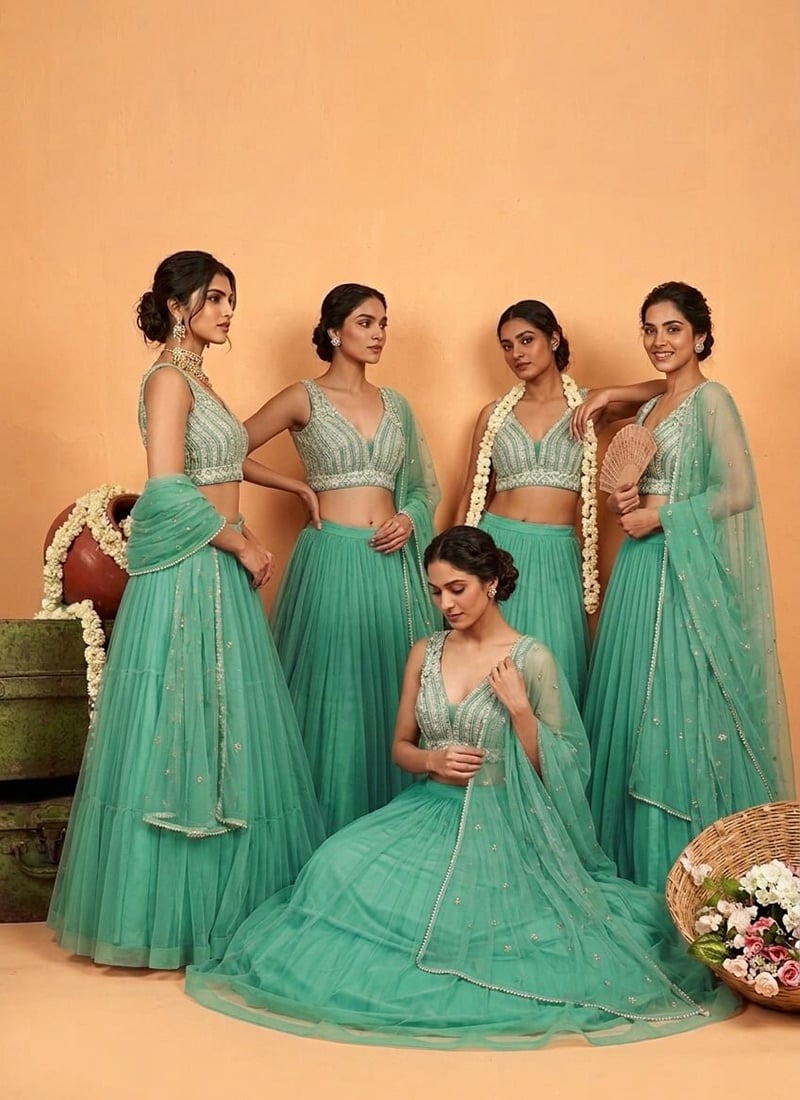
The Outfit Isn’t Finished Until You Style It
Here’s a little secret about traditional dressing: the same outfit can look completely different depending on how you style it.
A simple Anarkali paired with statement jhumkas and embellished footwear instantly feels more festive. A saree can move from understated to elegant with layered jewellery and a beautifully styled blouse. A kurta pajama can become reception-ready with a structured Nehru jacket and polished footwear.
You don’t necessarily need a new outfit for every level of formality. Sometimes, you just need the right finishing touches.
And If You Still Get Stuck, Reach Out
Sometimes the invitation really doesn’t give you enough information, and that’s okay.
A quick message to a friend attending the wedding, a family member, or even the couple can save you hours of second-guessing. You don’t need to ask for a complete fashion consultation. Even knowing whether the event is a daytime ceremony, an evening celebration, or a particularly formal affair can completely change your outfit choice.
Most hosts genuinely appreciate that you’re making an effort to dress appropriately.
Think Tradition, Not Costume
Perhaps the most important thing to remember is this: you don’t have to dress like you’ve stepped out of another century to look traditional.
Indian fashion has evolved beautifully. Contemporary silhouettes, modern fabrics, fresh colour combinations, and updated styling can still feel deeply rooted in tradition. Choose something that respects the occasion without losing your personality. That’s when traditional dressing feels natural rather than forced.
Make “Traditional” the Easiest Dress Code on the Invitation
At Cbazaar, we understand that finding the right Indian ethnic wear can feel overwhelming when you’re unfamiliar with the terminology, silhouettes, and regional styles.
That’s why our collections bring together everything from elegant sarees and graceful Anarkalis to festive suit sets, lehengas, shararas, and classic menswear. Whether your idea of traditional means timeless silk, intricate embroidery, vibrant colours, or a contemporary take on Indian craftsmanship, there’s a style that can make the dress code feel effortless.

With made-to-measure tailoring and worldwide shipping, you can find an outfit that doesn’t just meet the invitation’s dress code but feels like it was chosen specifically for you.
Because ultimately, “traditional” isn’t a test you need to pass, it’s an invitation to celebrate.
Explore Cbazaar’s Traditional Wear Collection today and find your celebration-ready look with complete confidence.


You May Also Like
Navratri Colors 2025: The Nine Days, Nine Hues of Celebration
Celebrate Christmas in Style: Indian Ethnic Wear Party Looks That Turn Heads