

9 Best Fabrics for a Wedding Sharara Dress Popular Among South Asian Brides in the USA
The sharara dress for wedding celebrations holds a special place in South Asian bridal fashion—it’s where tradition meets contemporary elegance. This three-piece ensemble featuring a short or mid-length kurta, flared palazzo-style pants, and a flowing dupatta has become a favorite among brides who want both comfort and show-stopping style. However, here’s what many brides don’t realize until they’re deep into wedding planning: the fabric you choose makes or breaks your entire look. It determines how your outfit drapes, how comfortable you’ll be during hours-long ceremonies, how well embellishments sit, and ultimately, how confident you feel. For South Asian brides in the USA, the fabric choice becomes even more crucial—you’re balancing cultural authenticity with American climate considerations, blending traditional aesthetics with modern sensibilities, and often planning for both indoor and outdoor events. The right fabric ensures your sharara looks stunning in photos, feels comfortable throughout your celebration, and creates those graceful, flowing movements that make this outfit so iconic.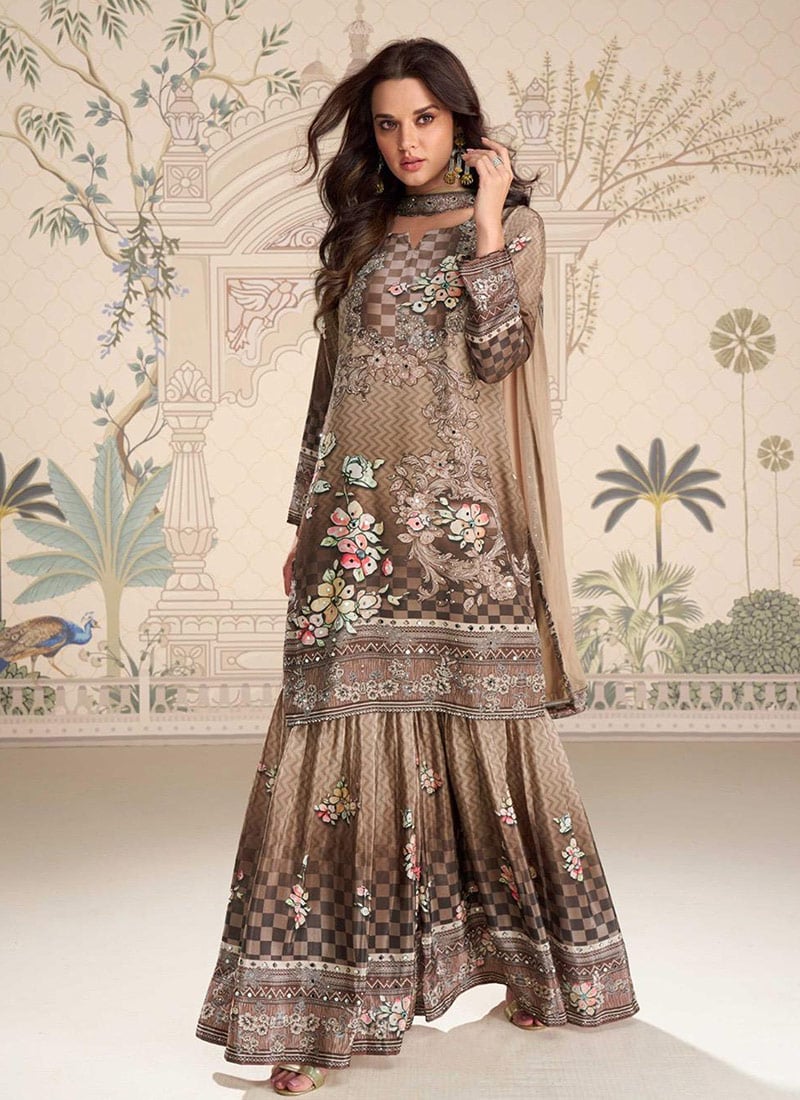
Why Fabric Matters When Choosing a Wedding Sharara Dress
Think of fabric as the foundation of your entire bridal look. No matter how beautiful the embroidery or how perfect the color, if the fabric doesn’t work, nothing else will. The drape is everything—it determines whether your fashion sharara flows elegantly or sits stiffly. Fabrics with good drape create that beautiful movement when you walk, adding grace to every step.
Comfort cannot be compromised, especially for wedding events that stretch for hours. You’ll be sitting through ceremonies, standing for photos, dancing at receptions, and greeting hundreds of guests. A fabric that looks gorgeous but feels suffocating or itchy will ruin your experience. Weather suitability matters tremendously, particularly in the USA where weddings happen across vastly different climates—from California heat to New York winters.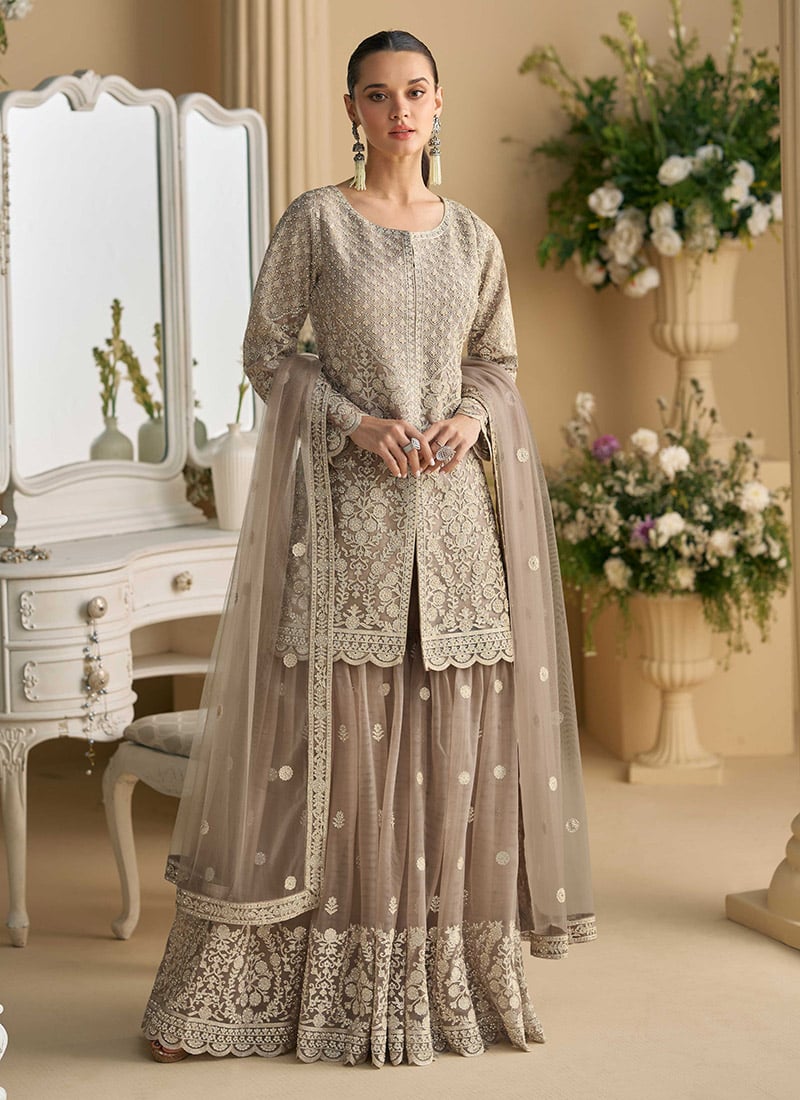
Grandeur is expected in wedding attire, and fabric delivers that luxury factor. Silk whispers elegance, velvet radiates opulence, and organza creates ethereal beauty. Your fabric choice also impacts how embellishments behave—some fabrics support heavy embroidery beautifully, while others buckle under the weight. Understanding these fabric properties helps you make informed decisions that align with your vision, comfort needs, and budget.
Top 9 Fabrics To Choose for a Sharara Dress for Wedding
Selecting the perfect fabric for your sharara for wedding requires understanding each material’s unique characteristics and how they align with your celebration’s style. From lightweight, breathable options ideal for summer ceremonies to rich, luxurious fabrics perfect for winter grandeur, each fabric brings distinct advantages. The sharara design you choose—whether traditional, contemporary, or fusion—works best with specific fabric types that enhance its silhouette and embellishments. This guide explores nine popular fabric choices that South Asian brides in the USA consistently love for their wedding shararas.
1. Organza Sharara
Organza is having a major moment in contemporary bridal fashion. This lightweight, structured fabric creates beautiful volume without adding bulk, making it perfect for modern wedding shararas. The fabric’s crisp texture holds its shape wonderfully, creating those dramatic flares that photograph so beautifully. Organza works exceptionally well for layering—designers often use organza overlays over silk or crepe bases to add dimension and visual interest.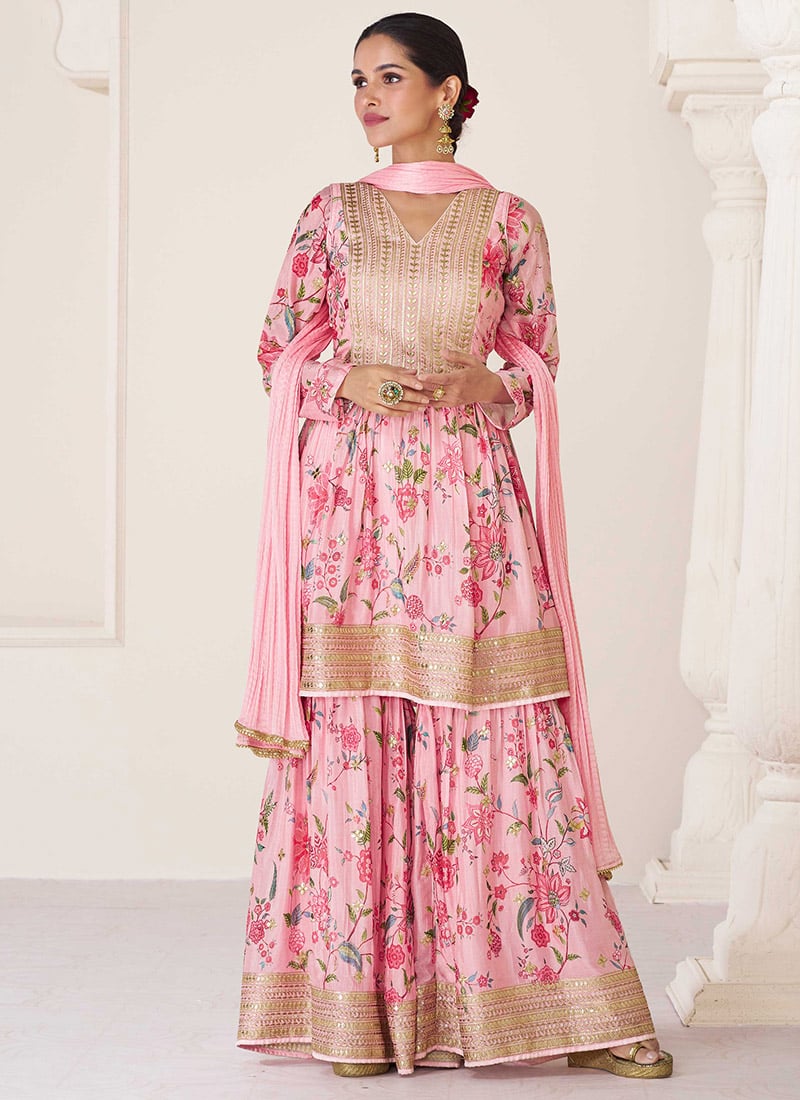
The semi-sheer quality of organza allows for creative design possibilities. You can have embroidery on multiple layers creating depth, or use contrasting colored linings for subtle color play. It’s particularly popular for Indo-fusion styles where brides want structured elegance with contemporary flair. The fabric catches light beautifully, making it ideal for evening receptions and formal photography sessions.
2. Georgette Fabric
Georgette is the go-to choice for brides prioritizing comfort without sacrificing style. This flowing, breathable fabric drapes beautifully while remaining easy to manage throughout long wedding celebrations. Unlike heavier fabrics that can feel constraining, georgette moves with your body, making it perfect for brides who want to dance freely at their reception.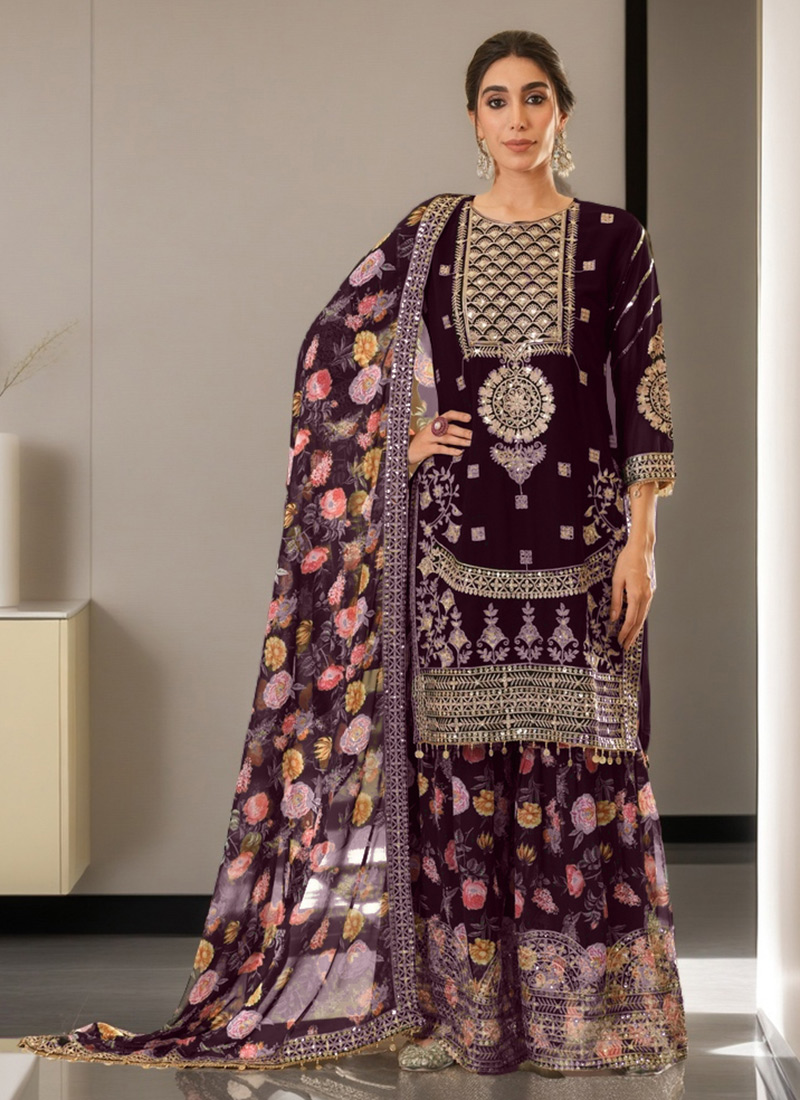
The fabric is particularly popular for Indo-western Indian sharara suit styles that blend traditional aesthetics with modern cuts. Georgette accepts embroidery well while maintaining its fluid drape. It works beautifully in both solid colors and prints, and it’s forgiving when it comes to body types—the fabric skims rather than clings. For USA-based brides attending multiple wedding functions, georgette offers versatility across different events.
3. Crepe Fabric
Soft, comfortable, and effortlessly elegant—crepe fabric offers a body-enhancing fall that flatters every figure. This fabric’s slightly textured surface gives it a sophisticated matte finish that photographs beautifully. Crepe is perfect for minimalist and contemporary marriage sharara designs where the cut and silhouette are the stars rather than heavy embellishments.
The fabric’s weight is substantial enough to drape well but light enough to remain comfortable. It doesn’t wrinkle easily, which is a huge plus during long wedding days. Crepe works particularly well for modern brides who prefer clean lines, subtle elegance, and understated luxury. It’s also an excellent choice for pre-wedding functions like engagement parties or bridal showers where you want sophistication without excessive formality.
4. Chiffon Fabric
Sheer, airy, and undeniably feminine chiffon brings ethereal beauty to any sharara design. This lightweight fabric is perfect for summer weddings or outdoor ceremonies where heavier fabrics would be uncomfortable. The fabric’s delicate transparency creates romantic, dreamy looks when layered properly, and it catches the slightest breeze, creating beautiful movement.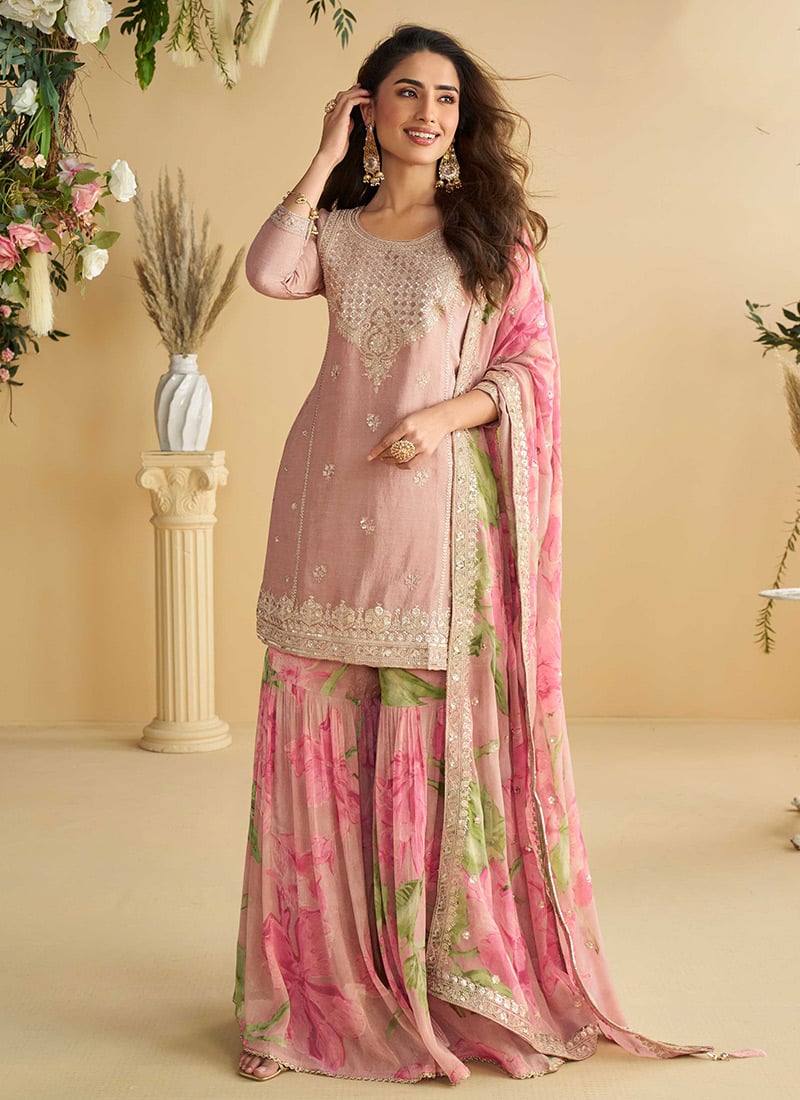
Chiffon is especially popular for Pakistani sharara dress styles that emphasize flowing silhouettes and feminine grace. While the fabric is delicate and requires careful handling, its beauty justifies the extra care. For brides in warmer USA states like Florida, Texas, or California, chiffon offers the traditional sharara aesthetic without the heat burden of heavier fabrics. It works wonderfully with lighter embroidery and delicate embellishments.
5. Brocade Fabric
When you want to channel royal heritage and traditional grandeur, brocade is your fabric. This rich material features woven patterns—often in gold or silver threads—that create texture and visual interest without additional embroidery. The fabric itself is the statement, making it ideal for regal Punjabi wedding sharara looks that command attention.
Brocade works particularly well for main wedding ceremonies where tradition and formality are priorities. The fabric’s substantial weight creates a luxurious feel and dramatic presence. While it’s heavier than other options, that weight contributes to its elegant drape. Brocade shararas often become heirloom pieces, passed down through generations because the fabric’s quality and timeless beauty endure.
6. Silk Fabric
Silk represents the gold standard in luxury bridal fabrics. Its natural sheen, smooth texture, and royal finish make it perfect for traditional ceremonies and high-end bridal wear. Silk drapes beautifully, holds embroidery exceptionally well, and photographs with a luminous quality that’s hard to match. From raw silk’s textured elegance to pure silk’s smooth sophistication, this fabric family offers various options.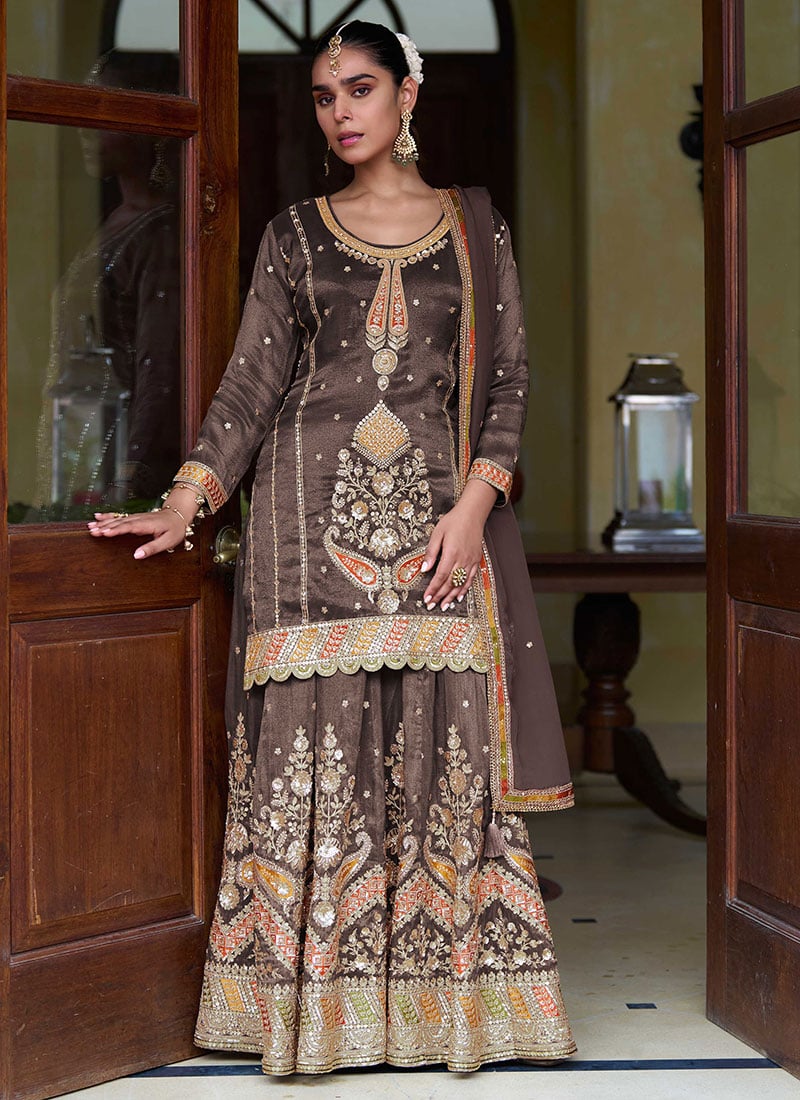
South Asian brides particularly appreciate silk for its cultural significance and timeless appeal. A silk sharara dress for a wedding becomes an investment piece you’ll treasure forever. The fabric ages beautifully and can be preserved for future generations. While silk requires proper care and comes with a higher price tag, many brides consider it worth the investment for their main wedding ceremony outfit.
7. Cotton Fabric
Don’t underestimate cotton’s place in wedding fashion. While it might seem too casual for a wedding sharara, premium cotton fabrics like cotton silk, cotton lawn, or heavily embellished cotton can be absolutely stunning. This comfortable, lightweight fabric is ideal for smaller functions, daytime ceremonies, or brides wanting simple elegance without heavy fabrics.
Cotton works particularly well for Mehendi and Haldi ceremonies where you’ll be sitting on the ground, moving around, and possibly getting colorful stains. It’s breathable, easy to manage, and much more affordable than luxury fabrics—allowing you to allocate your budget toward your main ceremony outfit. For eco-conscious brides or those planning casual, intimate weddings, cotton offers sustainable elegance.
8. Velvet Fabric
Velvet screams winter luxury. This rich, textured fabric is perfect for cold-weather weddings, offering both warmth and unparalleled elegance. Velvet enhances embellishments and embroidery beautifully—the fabric’s plush surface creates depth that makes embroidery appear more three-dimensional and luxurious. 
For winter weddings in northern USA states, velvet provides practical warmth while delivering visual richness. The fabric photographs gorgeously, particularly under indoor lighting where its texture creates beautiful shadows and highlights. While velvet is heavy and may not suit everyone, brides planning formal winter weddings often find it the perfect choice. Consider velvet for your reception or main ceremony if your wedding falls between November and February.
9. Net Fabric
Net fabric brings drama and volume like nothing else. This sheer, structured material is often used in layered marriage sharara sets, particularly for receptions where you want maximum visual impact. Net allows designers to create multiple layers without adding too much weight, resulting in those voluminous, fairy-tale silhouettes that photograph spectacularly.
The fabric works beautifully with embroidery, sequins, and embellishments—the sheer base allows these decorative elements to stand out prominently. Net is frequently combined with other fabrics; for example, a silk base with net overlay creates structured elegance. While net requires an inner lining for modesty, this layering actually adds to the outfit’s richness and depth.
How to Choose the Right Fabric Based on Season & Wedding Venue
USA weather varies dramatically by region and season, making fabric selection a practical necessity beyond aesthetics. Summer weddings, particularly outdoor ceremonies in southern states, demand breathable fabrics like chiffon, georgette, or lightweight cotton. These materials allow air circulation and prevent overheating during long ceremonies. Avoid heavy fabrics like velvet or thick brocade in summer—you’ll be uncomfortable, and it’ll show in your photos.
Winter weddings open the door to richer, heavier fabrics. Velvet, heavy silk, and brocade provide warmth while delivering luxury and grandeur. If your wedding falls in colder months in states like New York, Michigan, or Illinois, these substantial fabrics make sense both practically and aesthetically. You can even layer—a silk sharara with a velvet jacket or shawl gives you flexibility.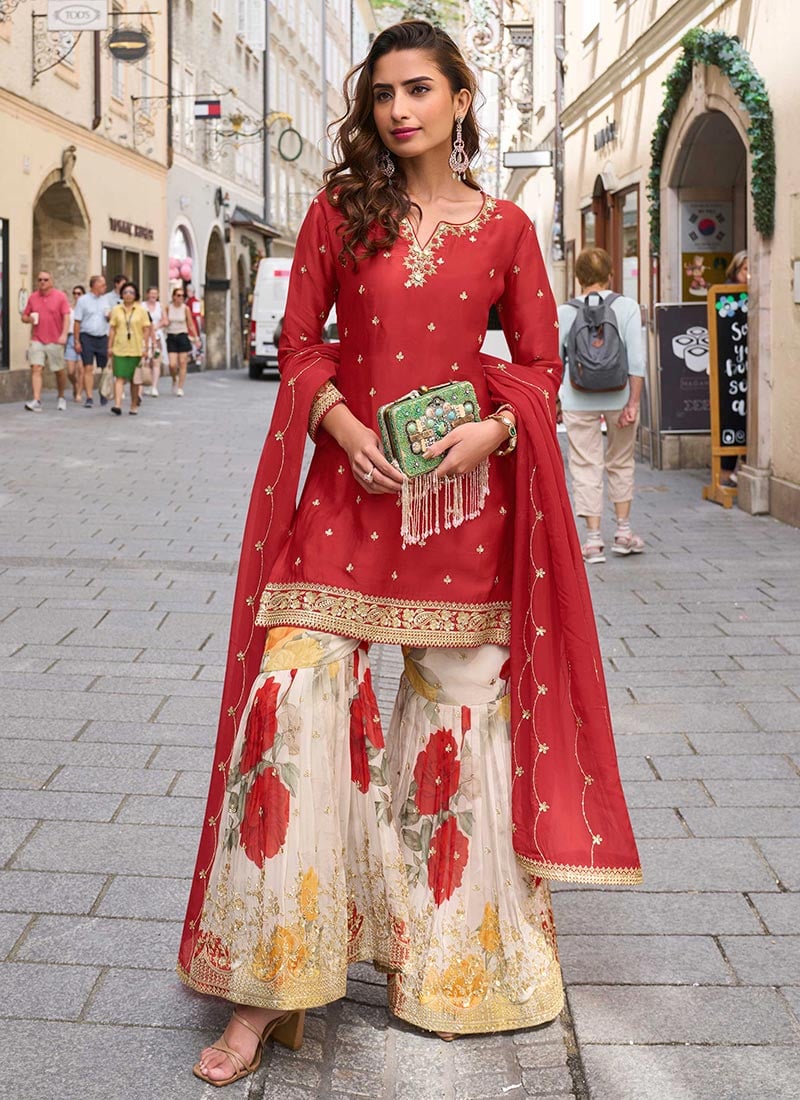
Indoor versus outdoor venue considerations matter too. Indoor venues with climate control offer more fabric flexibility—you can choose based purely on aesthetics rather than temperature concerns. Outdoor venues require more practical thinking. A breezy outdoor ceremony makes lightweight fabrics like chiffon or georgette perfect, as they’ll move beautifully in the wind. However, outdoor evening events might get cold, making layers or heavier fabrics necessary.
The eternal comfort versus glamour debate often comes down to venue. If you’re having a full-day celebration moving between multiple venues, prioritize comfort with fabrics like georgette or crepe. For a single, short ceremony followed by a reception where you’ll change outfits, you can opt for more dramatic, less comfortable fabrics knowing you won’t wear them long.
Fabric Trends Among South Asian Brides in the USA
South Asian brides in America are creating their own unique style narrative, blending homeland traditions with western sensibilities. There’s a notable preference shift toward lightweight fabrics even for formal weddings. Brides want to look traditional but feel comfortable, leading to increased popularity of georgette, crepe, and lighter silks over very heavy brocades and velvets.
Fusion styles are dominating the scene—modern cuts executed in traditional fabrics, or traditional silhouettes in contemporary materials. For example, you might see a classic sharara silhouette in modern crepe with minimalist embroidery, or an Indo-western cut sharara in traditional silk. This fusion reflects the bicultural reality of South Asian Americans who want to honor heritage while expressing their contemporary identity.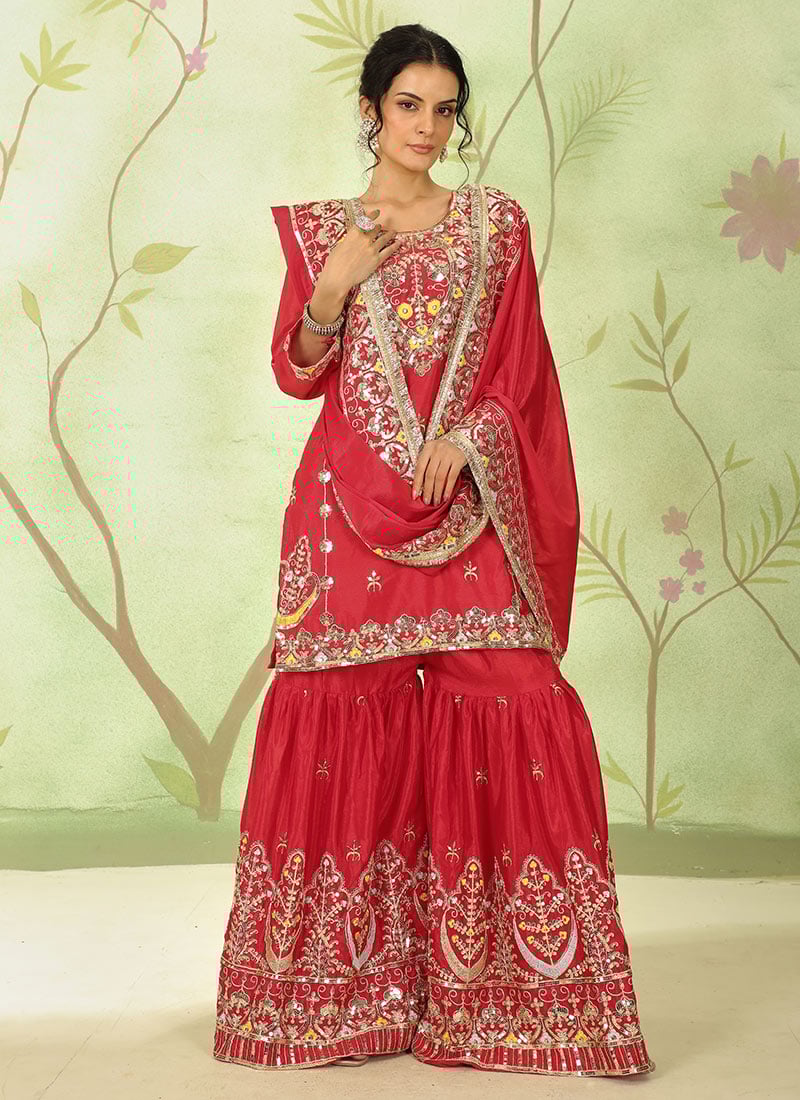
Fabric combinations are particularly trendy. Designers are mixing silk bases with chiffon dupattas, creating organza overlays on velvet shararas, or combining georgette kurtas with net sharara pants. These combinations allow for interesting texture play, practical comfort, and visual complexity. A georgette-velvet mix, for instance, gives you velvet’s luxury where it matters (like on the kurta which shows most in photos) while using lighter georgette for the sharara pants where comfort during movement is crucial.
Styling Tips for a Sharara Dress for Women
Once you’ve selected your fabric, styling becomes crucial. Embellishment styles should complement your fabric choice—heavy embroidery works beautifully on silk, velvet, and brocade which can support the weight. Lighter fabrics like chiffon and georgette need lighter embellishment techniques like sequins, thread work, or minimal embroidery to avoid weighing down the fabric.
Dupatta pairing requires thoughtful consideration. A contrasting dupatta can add visual interest—for example, a velvet sharara dress for women looks stunning with a lighter georgette or net dupatta that provides contrast in both texture and weight. Alternatively, matching fabric dupattas create a cohesive, coordinated look perfect for traditional ceremonies.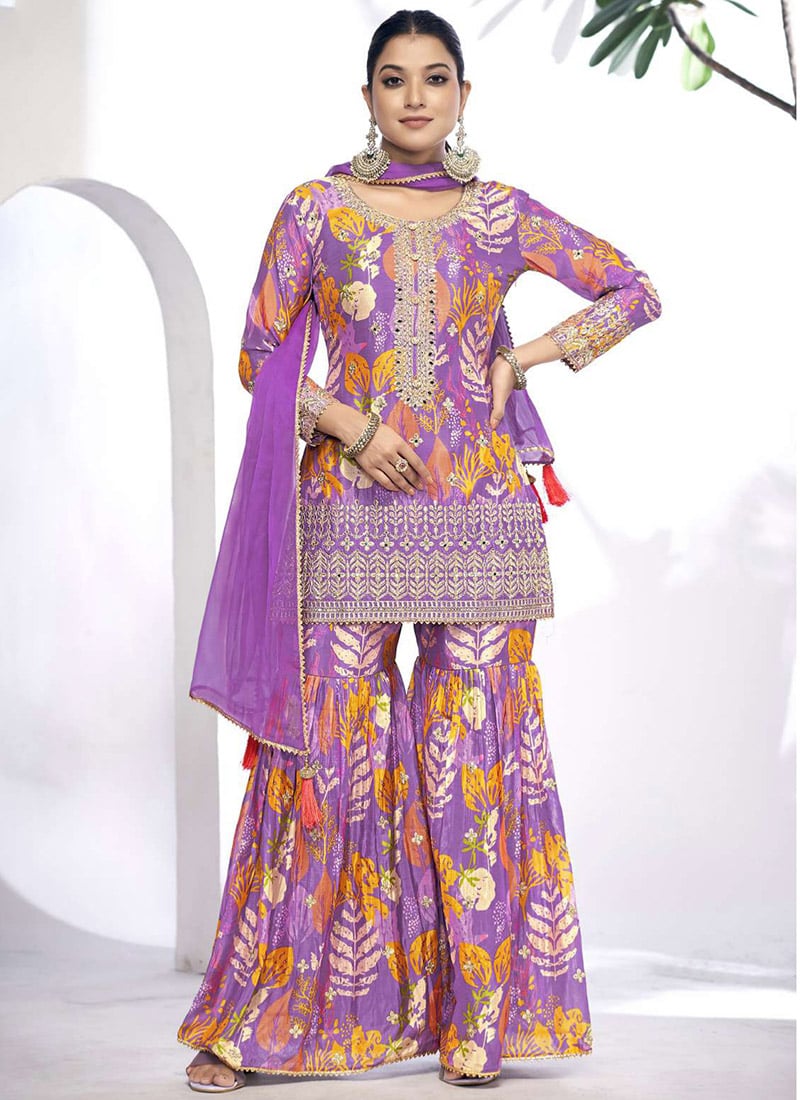
Footwear should balance your fabric’s weight and style. Heavier fabrics like velvet and brocade pair well with substantial footwear like embellished heels or traditional khussa. Lighter fabrics work with more delicate footwear like strappy sandals or minimal juttis. Ensure your footwear is broken in before the wedding day—beautiful shoes that cause blisters will ruin your experience.
Jewelry recommendations vary with fabric richness. Heavy, ornate fabrics need less jewelry to avoid overwhelming your look—statement earrings might be sufficient. Lighter, simpler fabrics welcome heavier jewelry that adds the glamour factor. Consider your neckline too; higher necklines work with statement earrings, while deeper necklines pair beautifully with layered necklaces.
Final Checklist Before Choosing Your Sharara Fabric
Before making your final fabric decision, work through this essential checklist to ensure you’re choosing wisely. Comfort should be your top priority—you’ll wear this outfit for hours, through multiple activities. Test how the fabric feels against your skin if possible. Does it breathe well? Is it itchy? Can you sit, stand, and move comfortably? Never sacrifice comfort for looks; discomfort shows in photos and ruins your experience.
Weather suitability cannot be ignored. Check typical weather patterns for your wedding date and location. If you’re planning a July wedding in Arizona, velvet is impractical no matter how beautiful. If you’re getting married in December in Boston, chiffon will leave you freezing. Choose fabrics appropriate for your specific climate and season.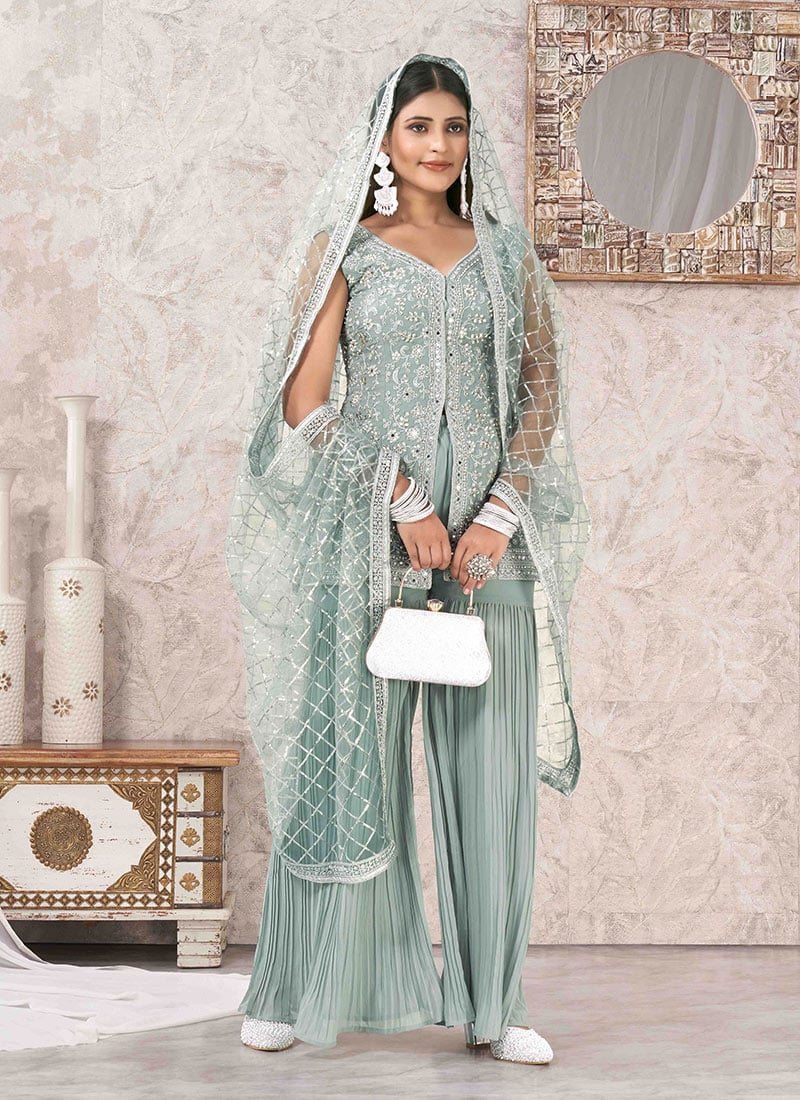
Embroidery compatibility matters if you’re planning elaborate embellishments. Discuss with your designer or the Cbazaar online shopping site team whether your chosen fabric supports your desired embroidery level. Some fabrics pucker under heavy embroidery, while others handle it beautifully. Understanding these technical aspects prevents disappointment later.
Draping style considerations affect how your sharara kurta set will look and move. Some fabrics create structured, voluminous drapes (like organza), while others flow softly (like chiffon). Decide which aesthetic you prefer, then choose fabrics that achieve that look. Request to see how fabric drapes before committing if you’re shopping in person.
Budget realistically—fabric costs vary enormously. Silk and velvet cost significantly more than cotton or georgette. Factor in not just the base fabric cost but also embellishment expenses, since some fabrics require specific embroidery techniques. Being honest about your budget helps narrow options to realistic choices rather than falling in love with unaffordable options.
Conclusion
Selecting the right fabric is absolutely essential to creating your dream sharara dress for a wedding—it affects everything from how you look in photos to how you feel during your celebration. The perfect fabric brings together aesthetics, comfort, cultural authenticity, and practical considerations like weather and venue. Whether you choose flowing georgette for its comfort, luxurious silk for its traditional appeal, or dramatic velvet for winter grandeur, let your personal style and wedding theme guide your decision. Remember, there’s no single “best” fabric—only the best fabric for YOUR specific wedding, YOUR body, YOUR comfort preferences, and YOUR vision. Take time with this decision, try samples when possible, and trust your instincts. When everything aligns—fabric, fit, style, and comfort—you’ll know you’ve found the one. Your wedding sharara should make you feel like the most beautiful, confident, comfortable version of yourself as you celebrate one of life’s most important moments.
Wedding Sharara Dress Popular South Asian Brides in USA FAQ
- Are lightweight fabrics suitable for a wedding sharara?
Yes, lightweight fabrics like chiffon, georgette, or silk are suitable for a wedding sharara. They offer graceful drape, comfort, and ease of movement, while allowing intricate embroidery or embellishments to stand out without adding bulk, making the outfit elegant and festive.
- What is a sharara dress, and why is it popular for South Asian weddings?
A sharara dress is a traditional South Asian outfit featuring a flared, wide-legged pant paired with a short or long top. It’s popular for weddings due to its elegant, festive look, combining comfort and grace, while offering intricate embroidery and luxurious fabric.
- Why is silk a popular fabric for wedding sharara dresses?
Silk is popular for wedding sharara dresses because of its luxurious texture, natural sheen, and elegant drape. It enhances intricate embroidery, provides comfort despite heavy embellishments, and exudes a rich, festive look, making it ideal for traditional and celebratory occasions.
- What fabric gives the most luxurious feel for a wedding sharara?
For a luxurious wedding sharara, fabrics like silk, satin, and chiffon are ideal. Silk offers a rich, smooth texture, satin adds a glossy sheen, and chiffon provides an ethereal, flowing look. These materials elevate the design with their soft, elegant drape.
- Should I choose a custom-made or ready-made sharara dress?
Choosing between a custom-made or ready-made sharara dress depends on your priorities. A custom-made dress offers personalized fit and unique design, perfect for special occasions. However, a ready-made dress is more affordable and convenient, saving you time without compromising style.

You May Also Like

Viscose The Artificial Silk – Style In These Viscose Palazzo Suits
Full Sleeve Statement Making Salwars
